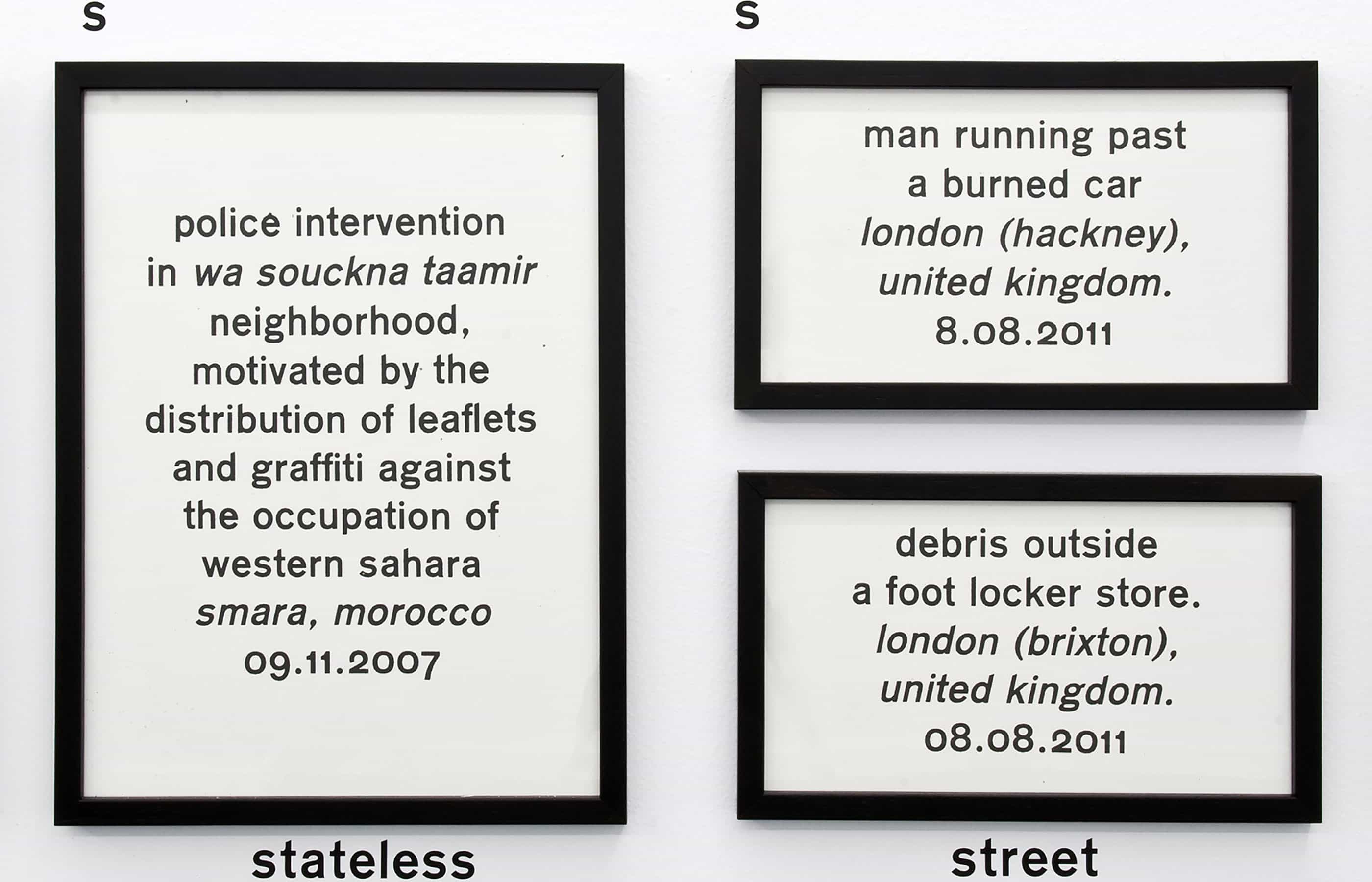
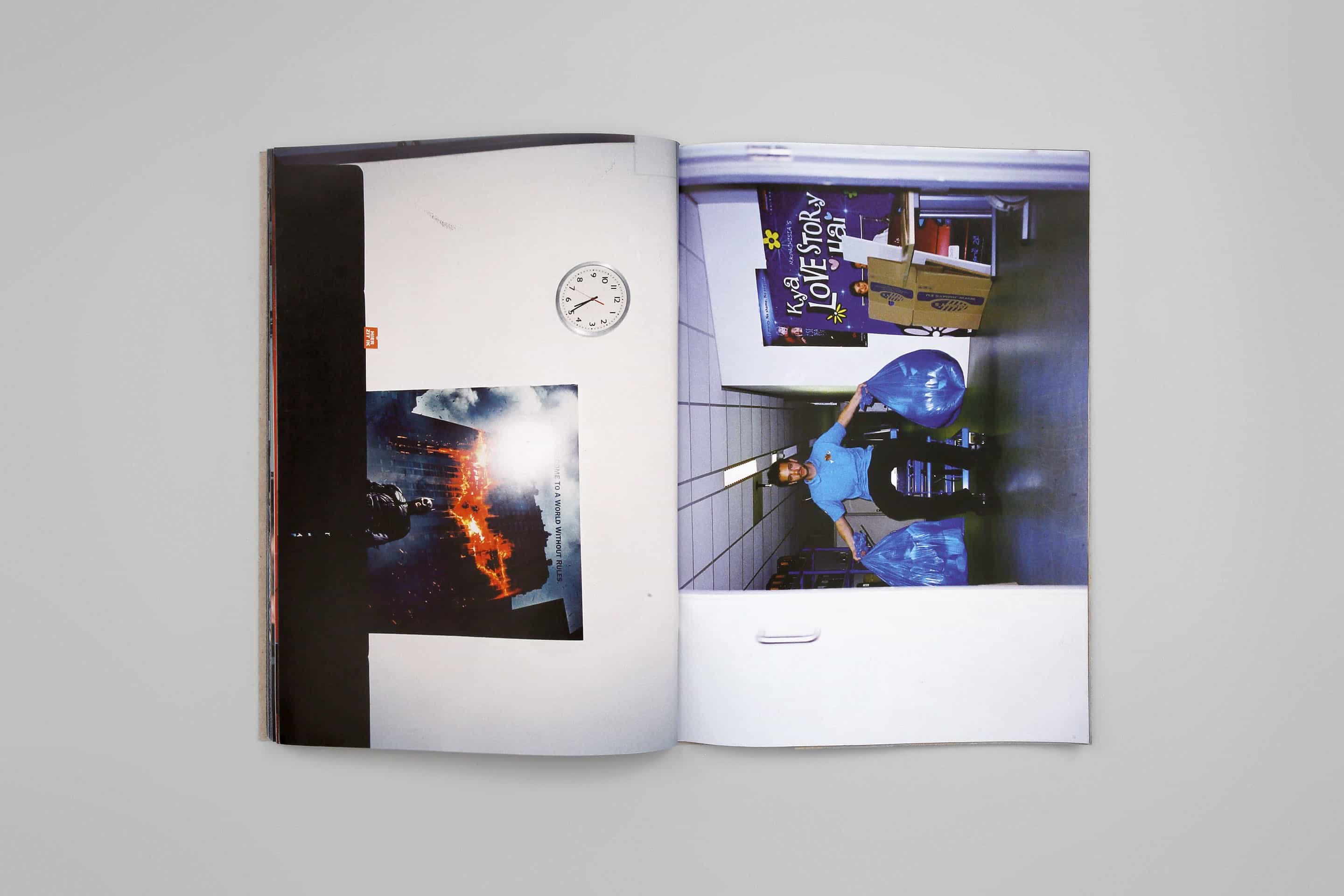
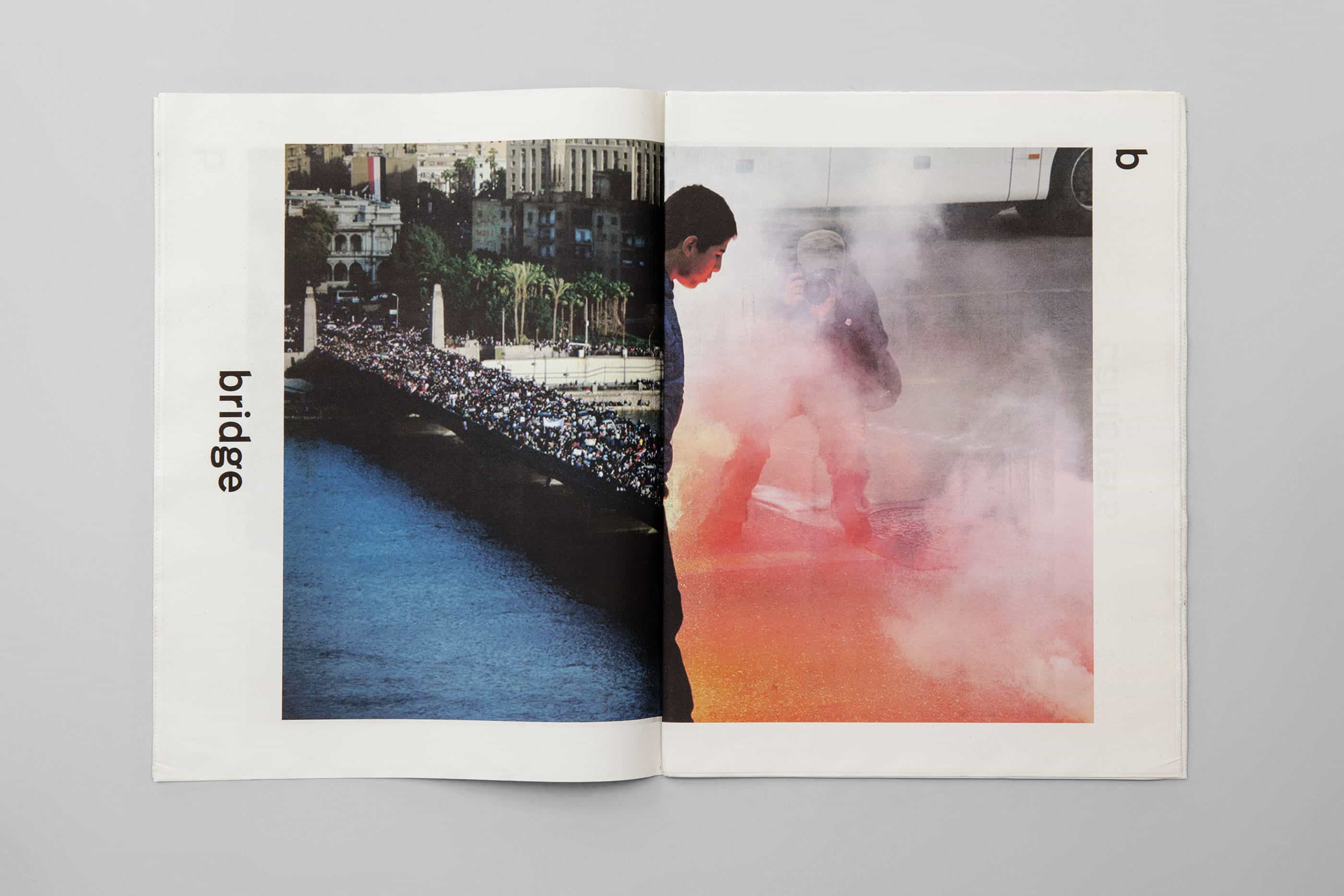
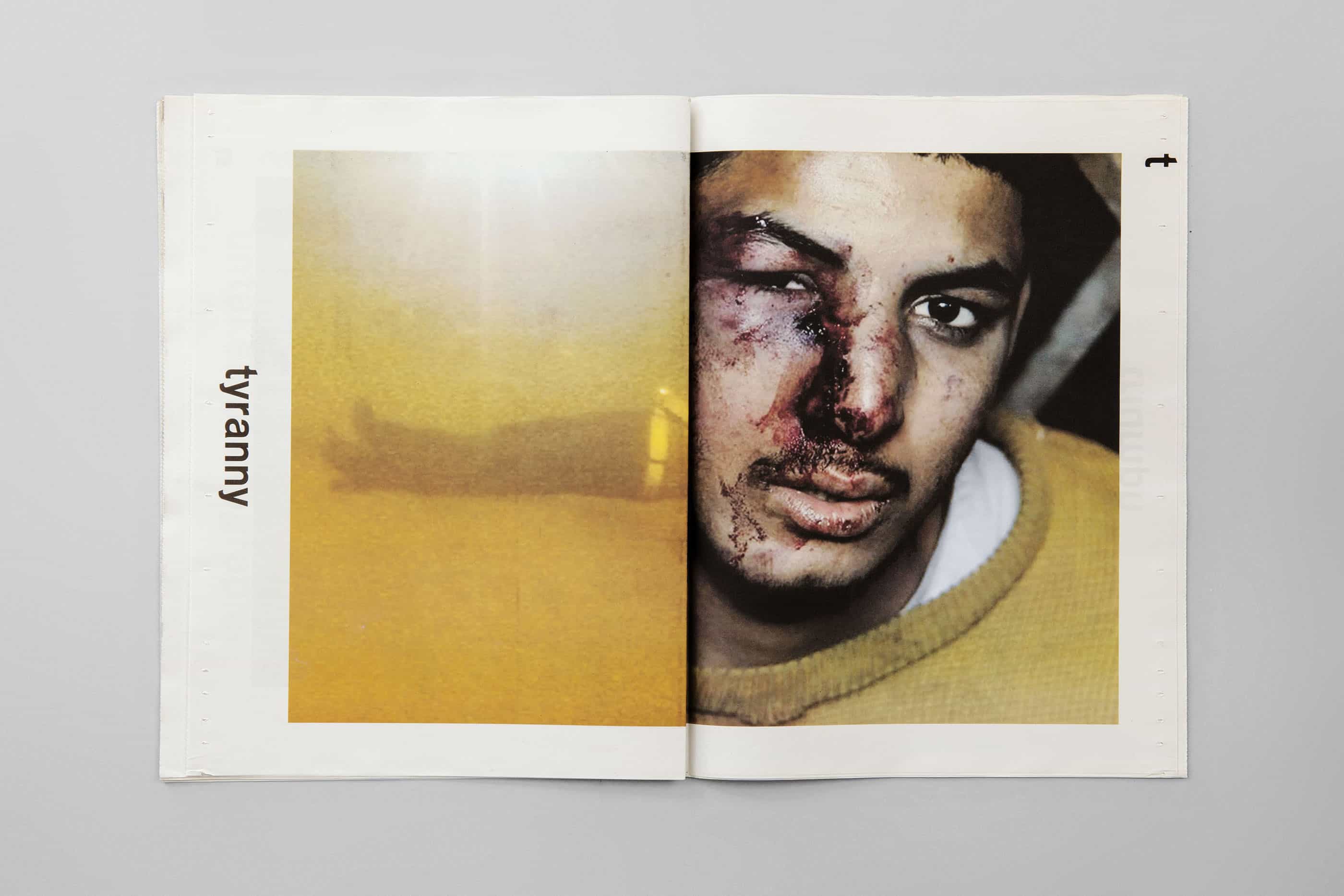
WERKER operates at the intersection of labour, ecofeminism and LGBTQIA+ movements, advocating for an image critique of daily life to analyze what becomes visible and what remains hidden or silenced in different political contexts. It was founded by Marc Roig Blesa and Rogier Delfos in Amsterdam in 2009, by releasing ten issues of a publication called WERKER Magazine. Since then, WERKER has expanded their publishing practice including performance, installation, video, sound and textile.
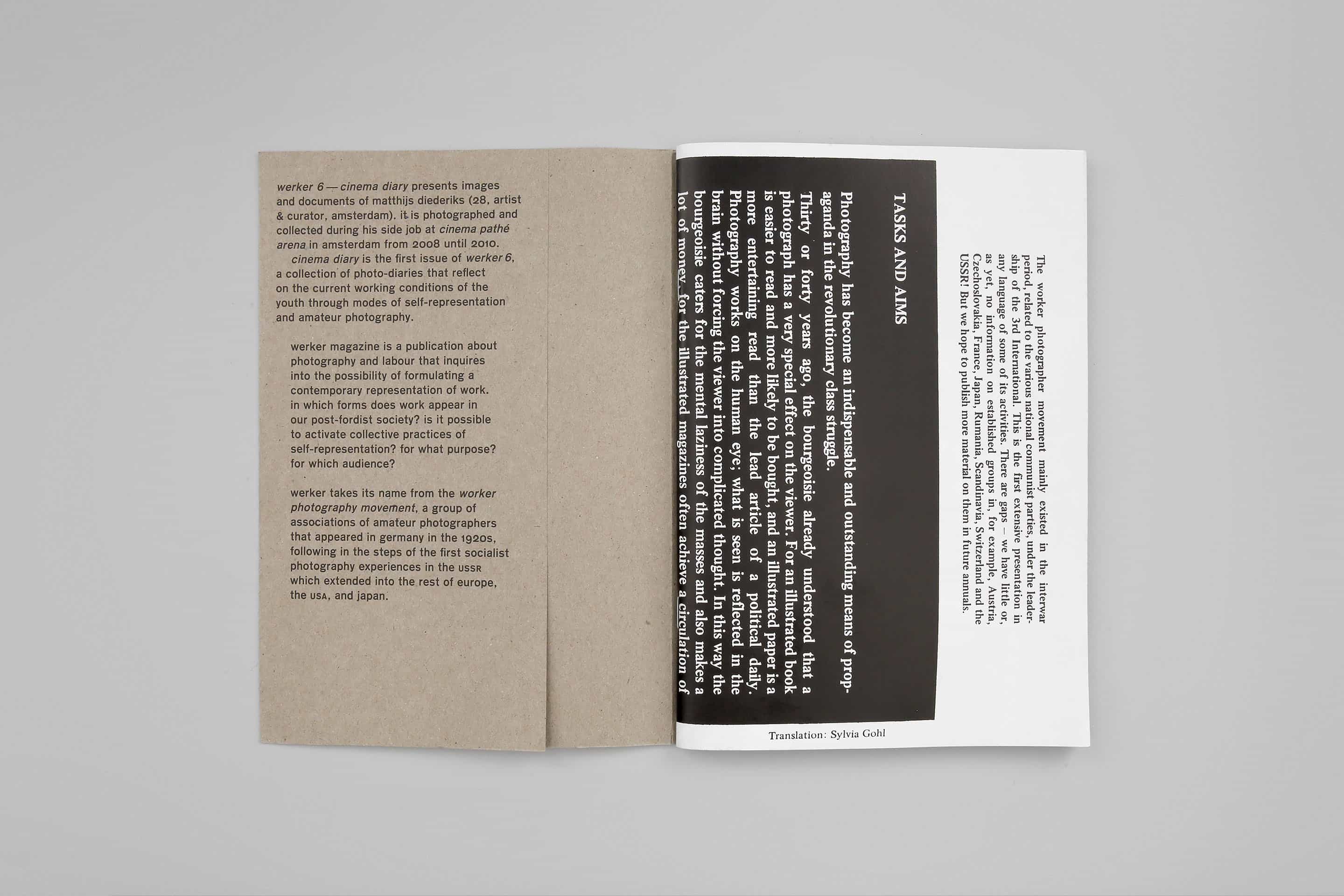
Taking inspiration from Der Vereinigung der Arbeiter-Fotografen (the association of worker photographers), a group of politicized photo-clubs that emerged in Germany in the 1920s, WERKER follows in the footsteps of the first socialist photography experiments in the USSR, which extended to Europe, the United States, and Japan. Their methods revolved around self-representation, image critique, self-publishing, collective authorship, and counter-archiving.
Image: Improvised photo-lab in a living-room. Amateur worker-photographers. Berlin 1920’s.
Under the name WERKER Collective we organise study groups, cine-clubs, self-publishing and counter-archive workshops, producing media from below with cultural workers, students, self-organized unions, activist groups and grassroots organisations in affinity. These workshops are weaving an intersectional network of allies, reactivating oppressed histories, and investigate worker solidarity through collaborative artistic practice.
WERKER Archief is our home base, rooted in the Nieuwmarkt neighborhood of Amsterdam, it comprises over 3000 documents, (photo)books, posters, pamphlets, movies, textiles and paraphernalia. These documents originate from secondhand books and flea markets, are donated by friends and comrades, or are produced during our practice and collaborations. The archive's mission is to make publications produced by local and international social movements accessible in the city centre of Amsterdam.
Since its foundation, WERKER has collaborated with numerous artists, activists, researchers, and unions on various projects in schools, museums, archives and community centres. Some of these collaborations include: Activestills, Ariella Aïsha Azoulay, Casco Art Institute, CCPPO (Groupes Medvedkine), Centro de Arte 2 de Mayo, Der Arbeiter-Fotograf, Dutch Art Institute, Georgy Mamedov, International Institute of Social History, Jo Spence Memorial Archive, Manifesta Biennial, Silvia Federici, MayDay Rooms, Mokum Kraakt, Museu d’Art Contemporani de Barcelona, Niet te Koop, Photography Workshop, Rijksakademie van Beeldende Kunsten, Sindillar: Sindicato de Trabajadoras del Hogar y los Cuidados, Susoespai: Creació i Salut Mental, Stedelijk Museum, Steve Edwards, Sonsbeek, Tate Modern, The Showroom, The Voice of Domestic Workers, and We Are Here.
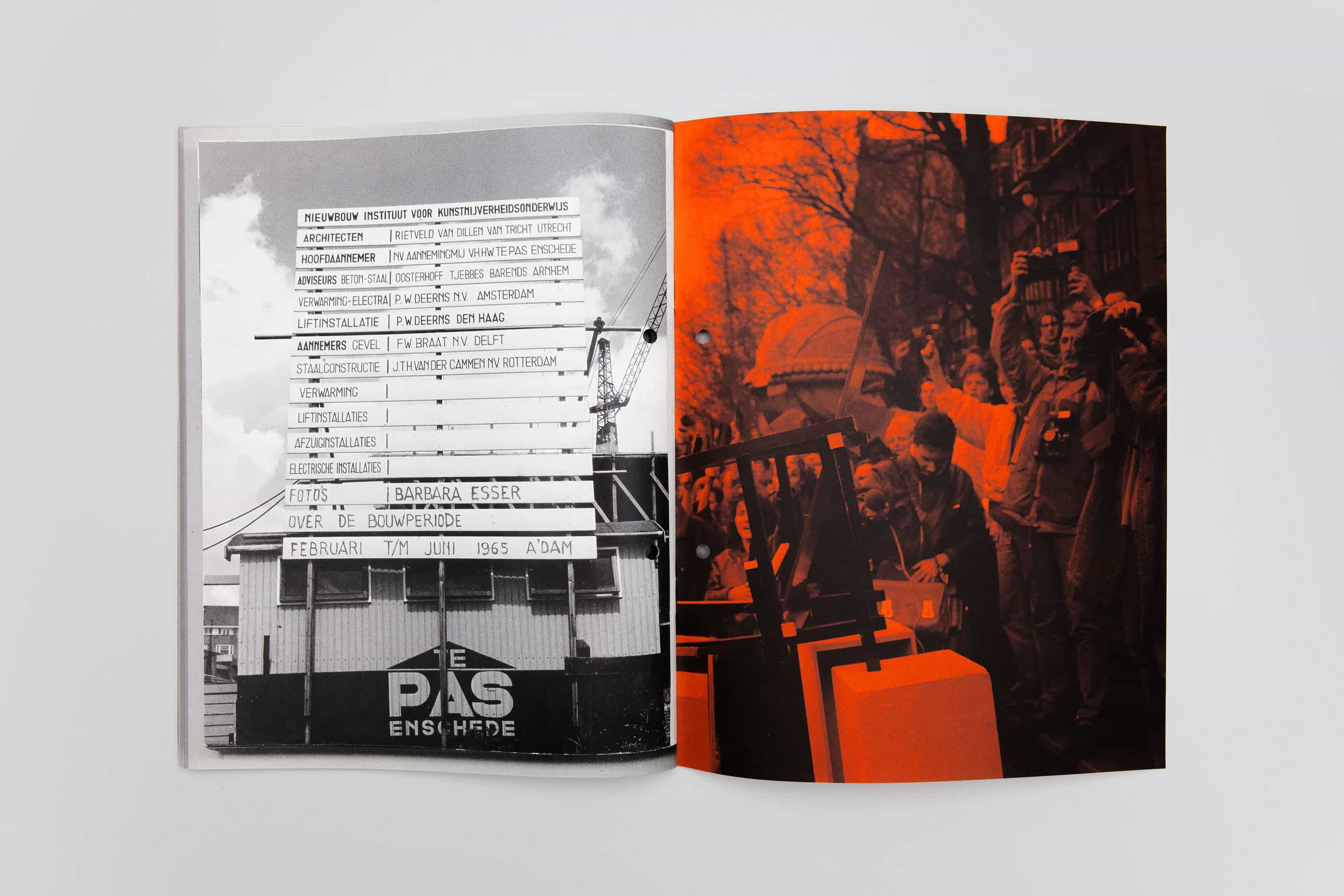
The film installation examines the history of the international labor movement from a queer perspective. The way in which the body of the worker is depicted in different geographical and political circumstances plays an important role. The research for the film started in 2018, organising a queer cine club at U-Jazdowski CCA in Warsaw. Werker was inspired by the worker cine-club culture that emerged in Poland during the Soviet era, when workers produced their own amateur films with film equipment that was made accessible to them at the factories. Polish worker cine-clubs managed to circumvent the official narratives that were prevalent in the dominant media at the time, addressing questions around gender, desire, consumerism, mass-media, sexuality, work, family, housing, leisure etc.
In 2025, we continued our research in Leeuwarden inspired by Ferdinand Domela Nieuwenhuis (1846–1919), godfather of anarchism in the Netherlands. A Moving History of the Young Worker brings together film fragments from very different sources: feature films, documentaries, amateur films, TV broadcasts, educational films, commercials, using an editing technique introduced in 1925 by the Soviet filmmaker Sergei Eisenstein, who in this way strove to make political films more attractive to the general public. The structure of A Moving History of the Young Worker is determined by ‘the five K’s’ that, according to Domela Nieuwenhuis oppressed the worker: KERK (church), KONING (king), KAPITAAL (capital), KAZERNE (army) and KROEG (pub)—and which are still relevant today.
Credits:
Beeld & Geluid, Hilversum. Enthusiasts Archive, Warsaw. London Community Video Archive, London. Fries Film & Audio Archief, Leeuwarden. IISG: Internationaal Instituut voor Sociale Geschiedenis, Amsterdam. Vrije Archief Nieuwmarkt, Amsterdam.
Specifications:
5 Channel Video Installation, 56 Minutes
Presentations:
Becoming Uncommon Subjects. Radius: Centre for Contemporary Art & Ecology. Delft 2025.
A Moving History of the Young Worker. Paradys, Arcadia Triennial. Leeuwarden 2025.
(1)
↑ A Moving History of the Young Worker, Installation view. Becoming Uncommon Subjects. Radius Center for Contemporary Art and Ecology, Delft, 2025. Photo: Gunnar Meier
(2)
↑ A Moving History of the Young Worker, Installation view. Becoming Uncommon Subjects. Radius Center for Contemporary Art and Ecology, Delft, 2025. Photo: Gunnar Meier
(3)
↑ A Moving History of the Young Worker, Installation view. Becoming Uncommon Subjects. Radius Center for Contemporary Art and Ecology, Delft, 2025. Photo: Gunnar Meier
(4)
↑ A Moving History of the Young Worker, Installation view. Becoming Uncommon Subjects. Radius Center for Contemporary Art and Ecology, Delft, 2025. Photo: Gunnar Meier
(5)
↑ A Moving History of the Young Worker, Installation view. Becoming Uncommon Subjects. Radius Center for Contemporary Art and Ecology, Delft, 2025. Photo: Gunnar Meier
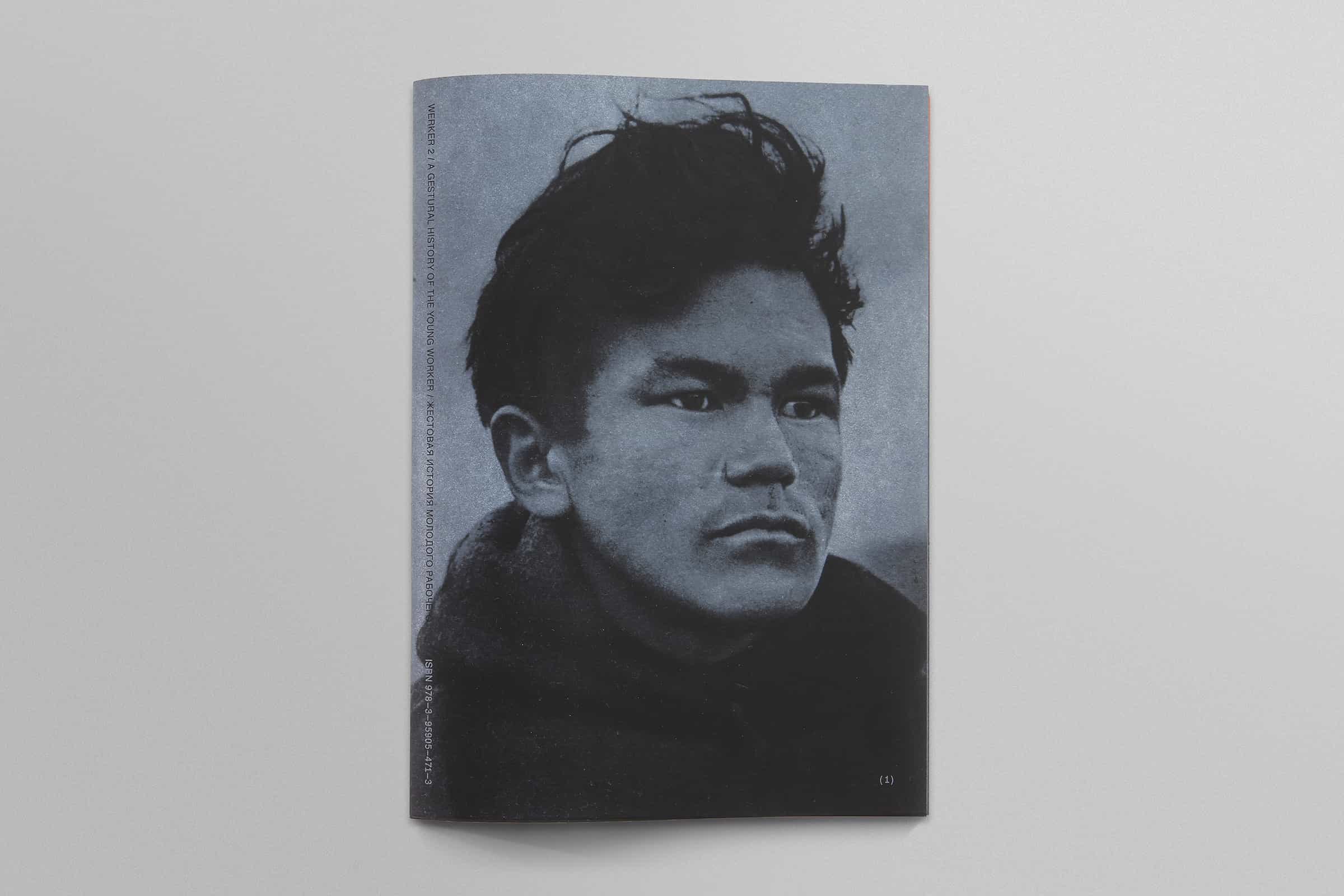
A Gestural History of the Young Worker
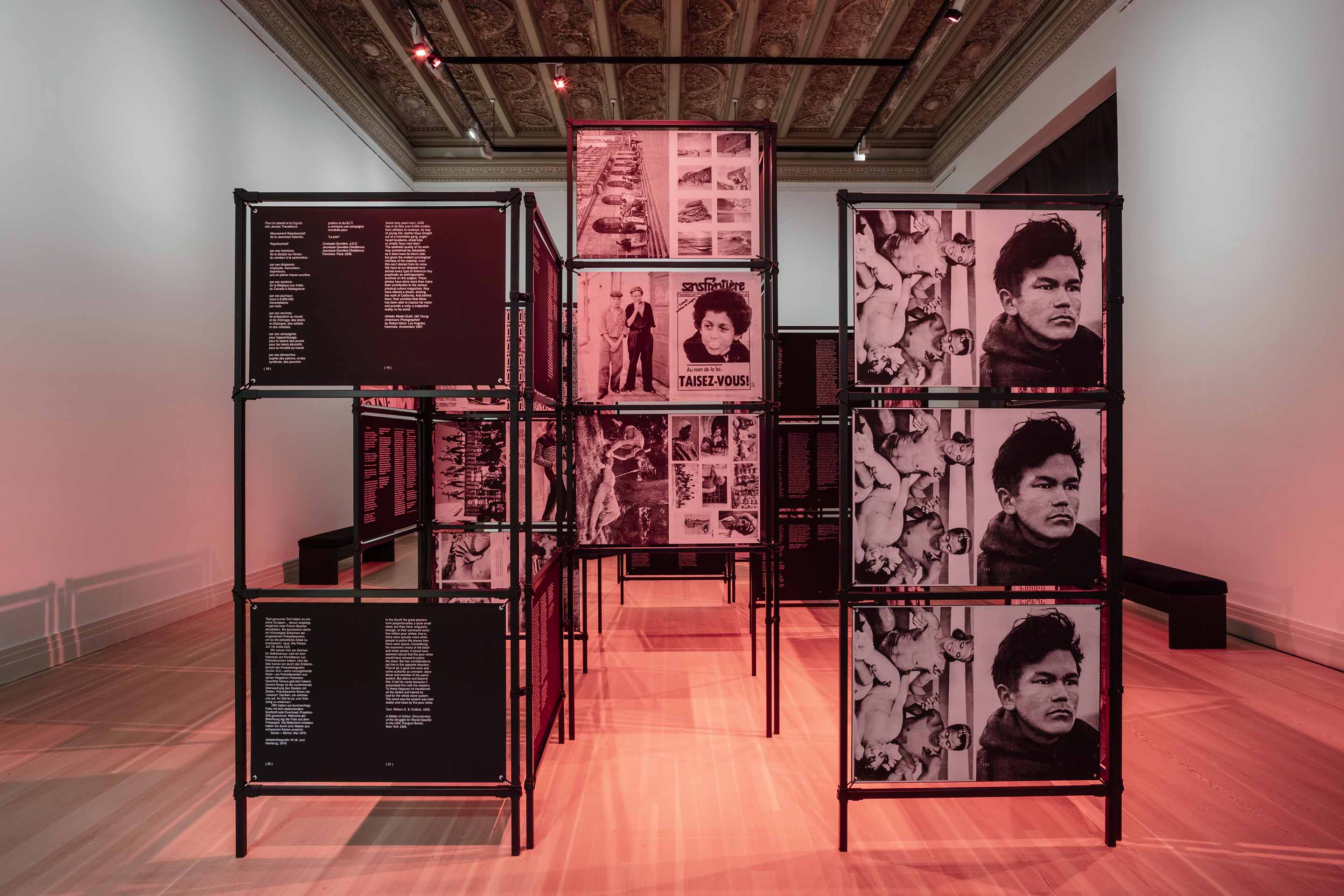
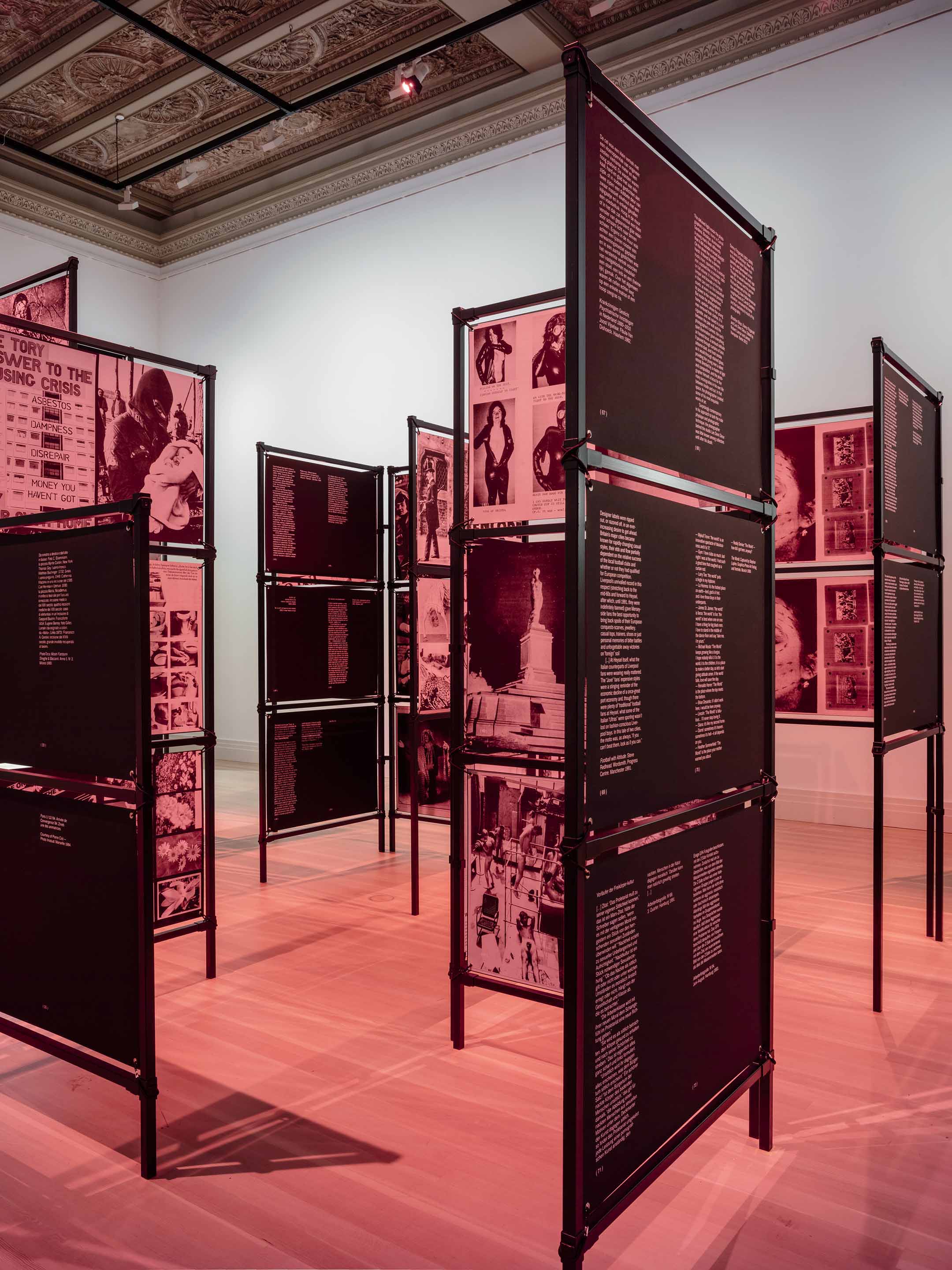
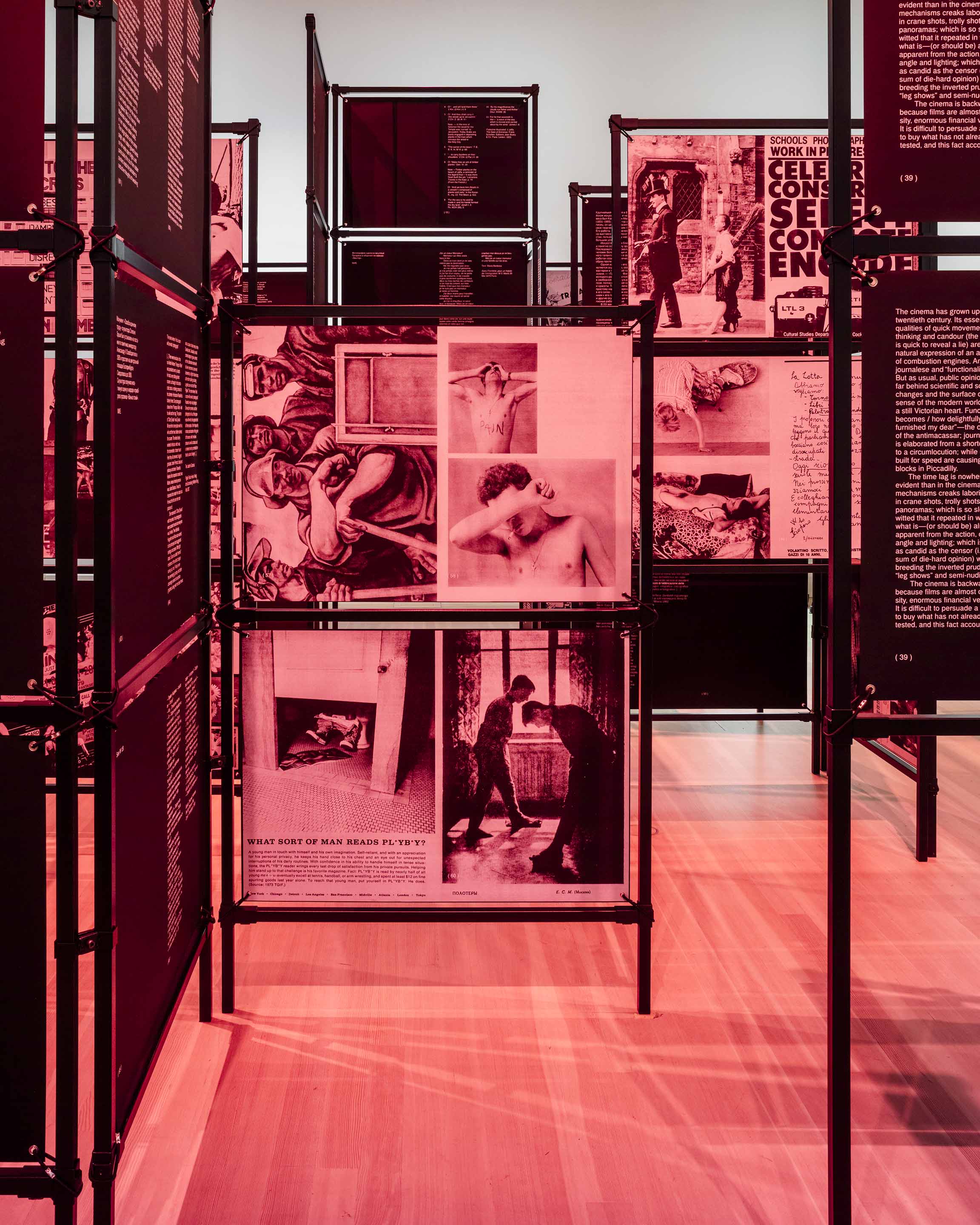
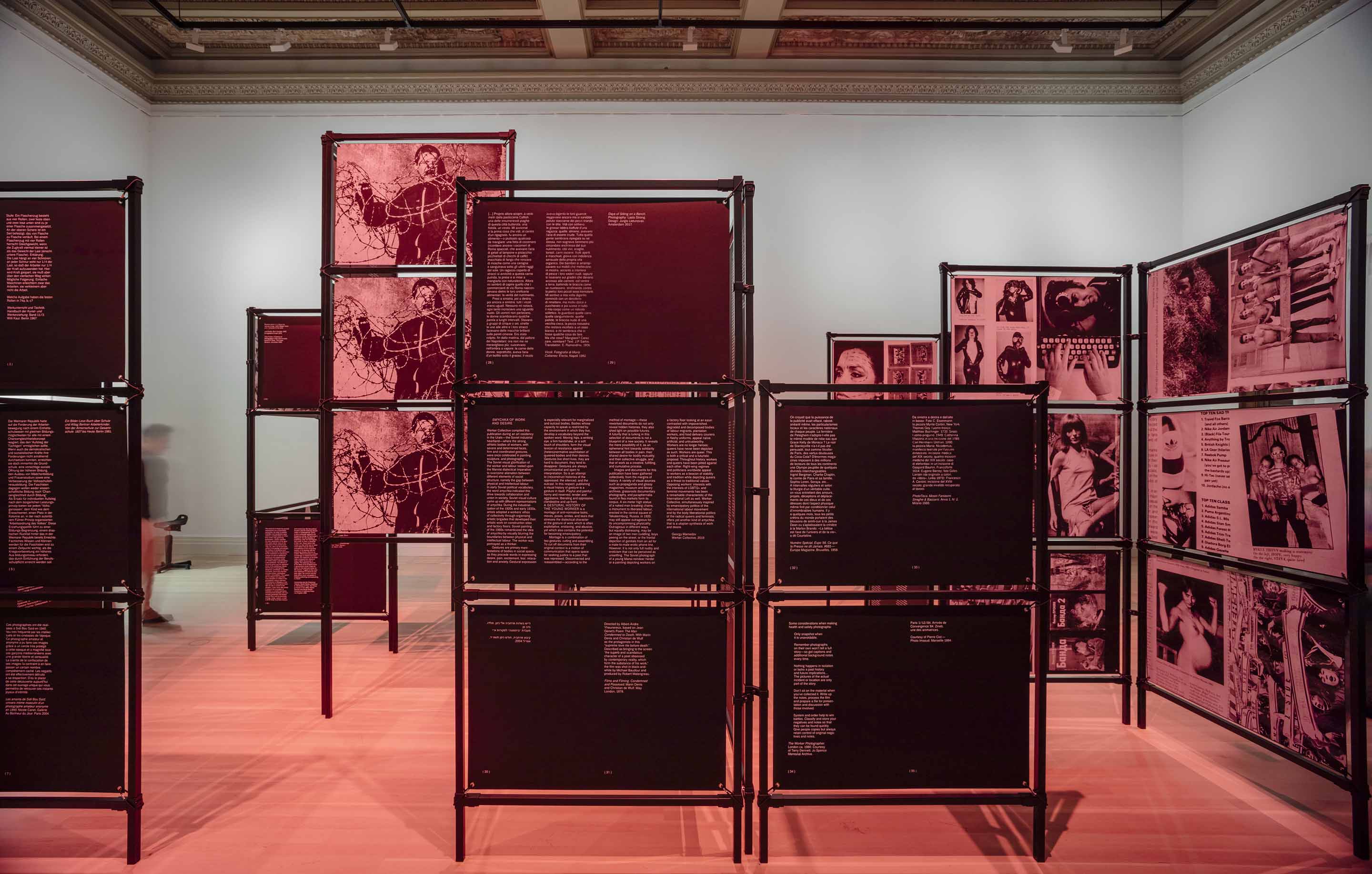
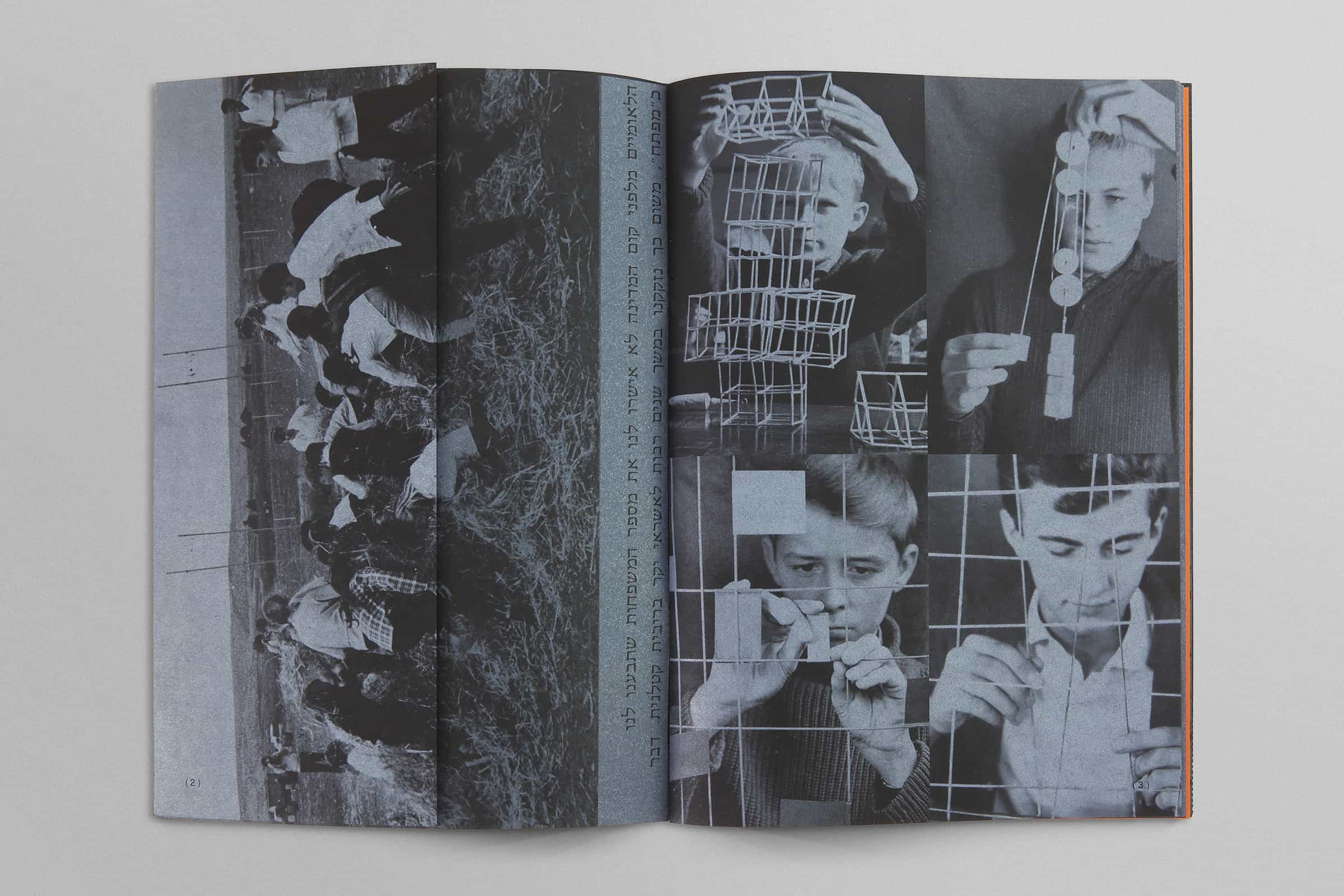
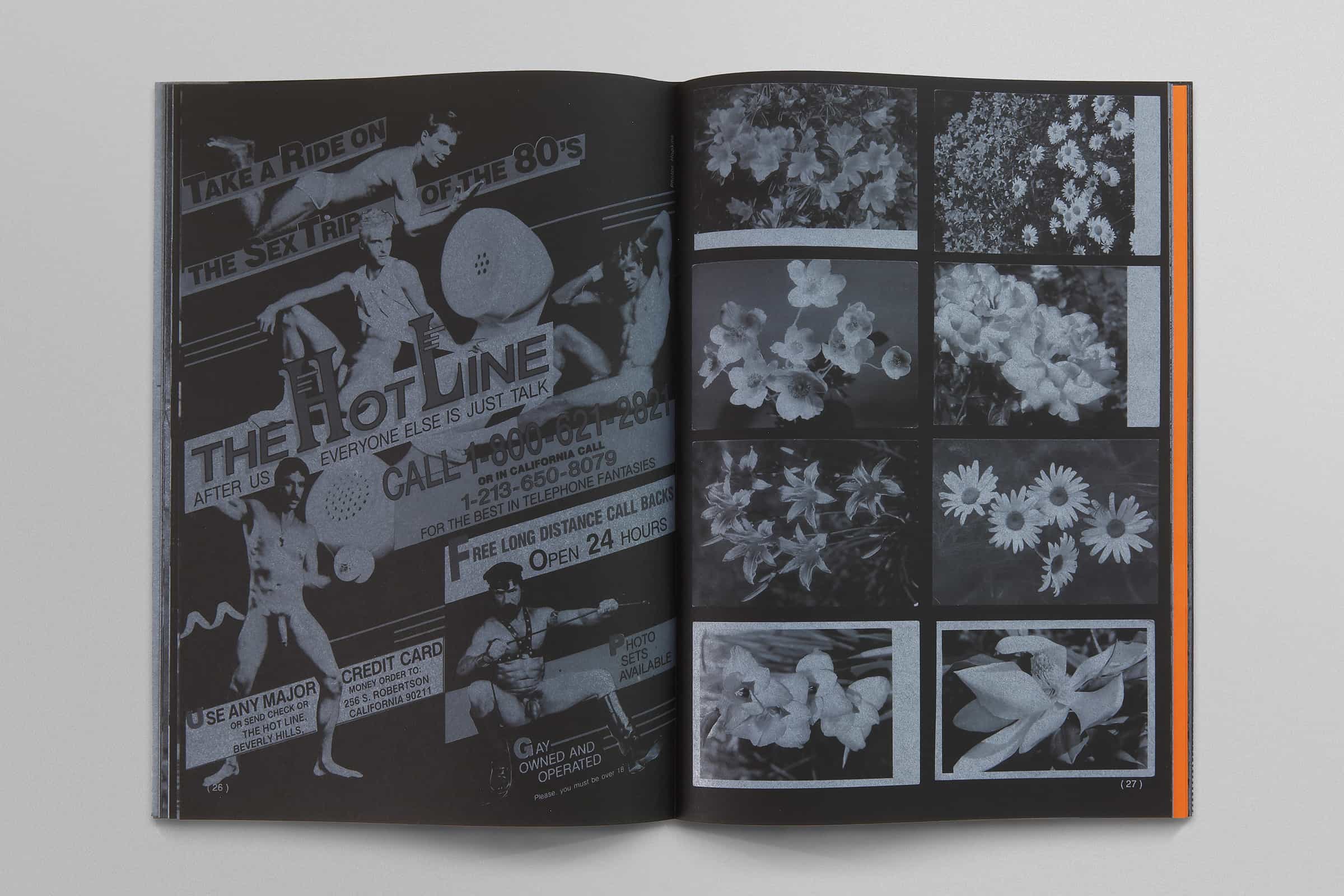
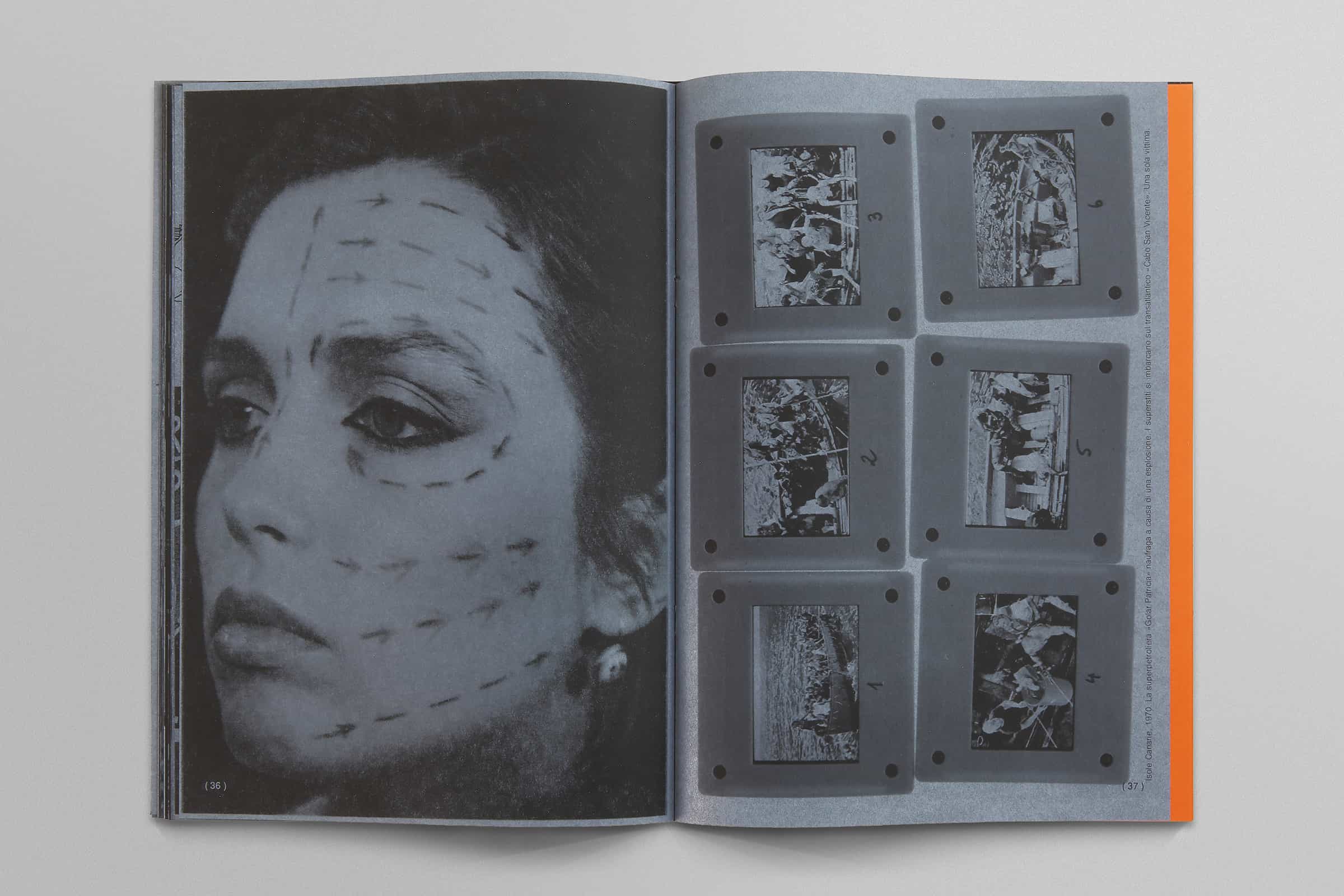
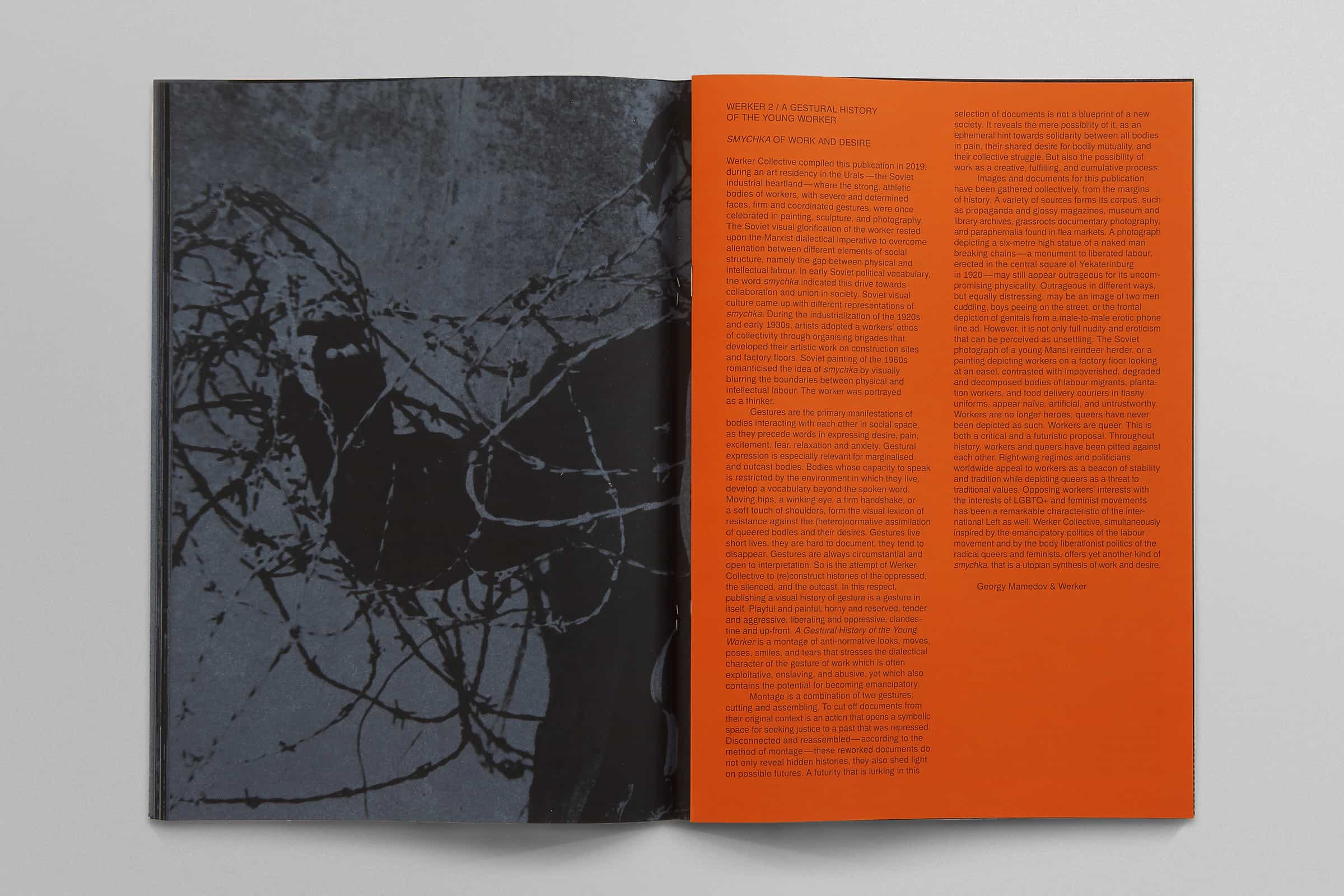
A Gestural History of the Young Worker is an attempt to reconstruct histories of the oppressed. Gestures are primary manifestations of bodies in social space, as they precede words in expressing desire, pain, excitement, relaxation and anxiety. Bodies whose capacity to speak is restricted by the environment in which they live, develop a vocabulary beyond the spoken word.
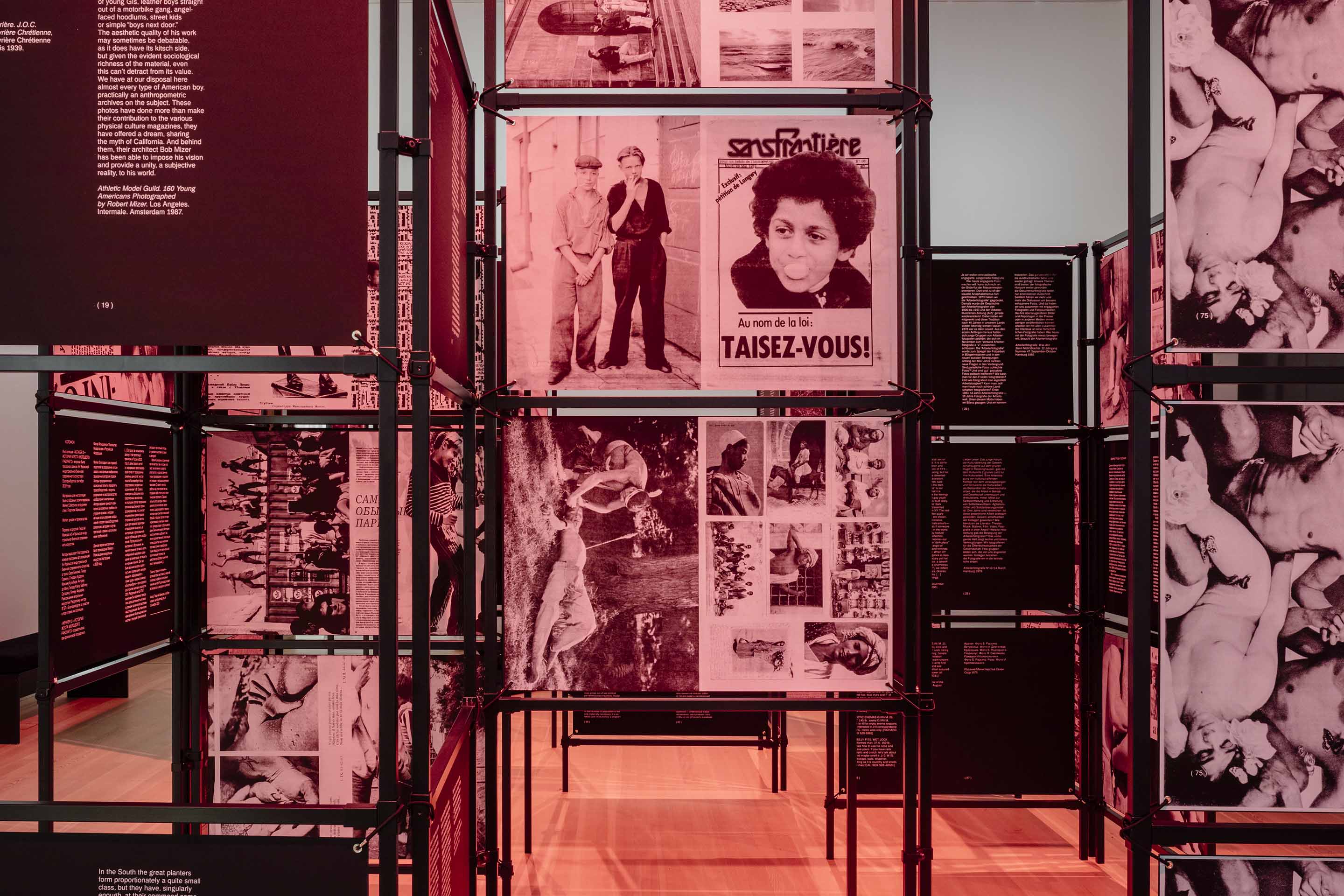
Images and documents for this project have been gathered collectively from the variety of visual sources such as propaganda and glossy magazines, museum and library archives, grassroots documentary photography, and paraphernalia found in flea markets. Presented together these pictures create an image of the worker as queer; the radical emancipative struggle of the worker is aligned with political practices of LGBTQ+. Highlighting these analogies, Werker Collective creates a utopian image of synthesis of work and desire.
In collaboration with Georgy Mamedov.
Specifications:
Installation (modular system with metal bars and screenprints on paper, red light), publication.
Presentations:
El Vértigo de las Imágenes. Fotonoviembre, TEA, Tenerife 2026.
General Idea: Retrospective. Gropius Bau. Berlin, 2023.
The Work of Love, the Queer of Labor. Pratt Manhattan Gallery, New York 2022.
Rats! Rats! Rats! The Poetic Grammar of Hacking. CaixaForum, Barcelona 2022.
In the Presence of Absence. Proposals for the Museum Collection. Stedelijk Museum, Amsterdam 2020.
5th Ural Industrial Biennial of Contemporary Art, Yekaterinburg 2019.
(1)
↑ A Gestural History of the Young Worker, Installation view. In the framework of General Idea: Retrospective. Gropius Bau. Berlin, 2023. Photo: Luca Girardini.
(2)
↑ A Gestural History of the Young Worker, Installation view. In the framework of General Idea: Retrospective. Gropius Bau. Berlin, 2023. Photo: Luca Girardini.
(3)
↑ A Gestural History of the Young Worker, Installation view. In the framework of General Idea: Retrospective. Gropius Bau. Berlin, 2023. Photo: Luca Girardini.
(4)
↑ A Gestural History of the Young Worker, Installation view. In the framework of General Idea: Retrospective. Gropius Bau. Berlin, 2023. Photo: Luca Girardini.
(5)
↑ A Gestural History of the Young Worker, Installation view. In the framework of General Idea: Retrospective. Gropius Bau. Berlin, 2023. Photo: Luca Girardini.
A Gestural History of the Young Worker, Condition Report
In the context of Public Research Residency II: On Censorship, Erasure and Invisible Labour at Looiersgracht 60, Amsterdam, and in collaboration with Kyrgyzstani LGBTQ+ activist, artist and curator Georgy Mamedov, Werker revisited A Gestural History of the Young Worker (2019), an installation first conceptualized for the 5th Industrial Biennial of Contemporary Art in Yekaterinburg, Russia.
The original installation consists of a series of archival images built into a free-standing framework and takes a critical look at the visualization and representation of the body of the labourer, interrogating the normative glorification of the worker’s body, and the associated oppression of non-normative bodies. The work faced several instances of debilitating censorship within Russia over the past four years, and the terms of this censorship have only become more dramatic and destabilizing with time. Considering the context that the work was made in and how the situation has elevated, Werker re-framed this work into a new installation and sound piece.
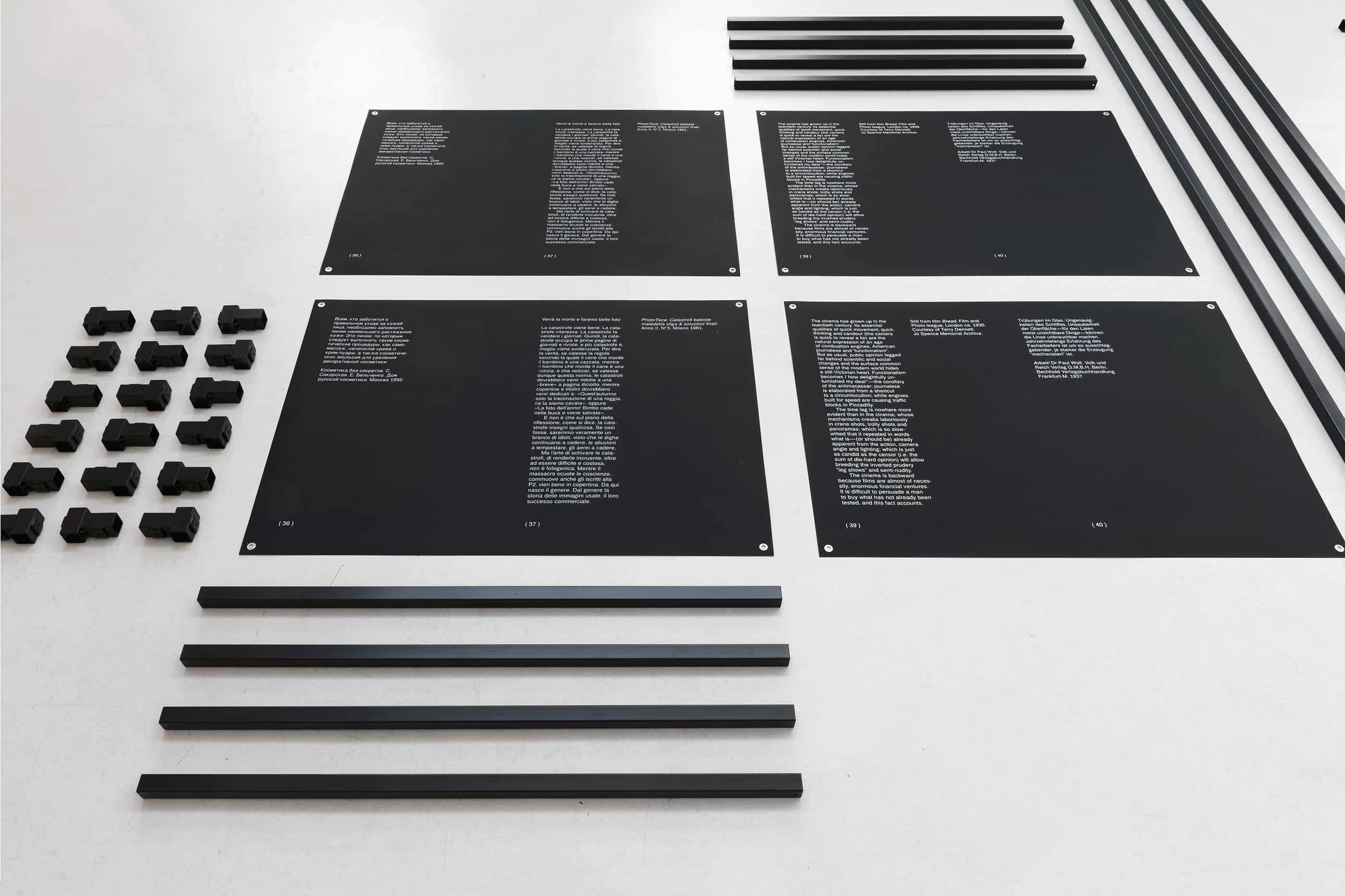
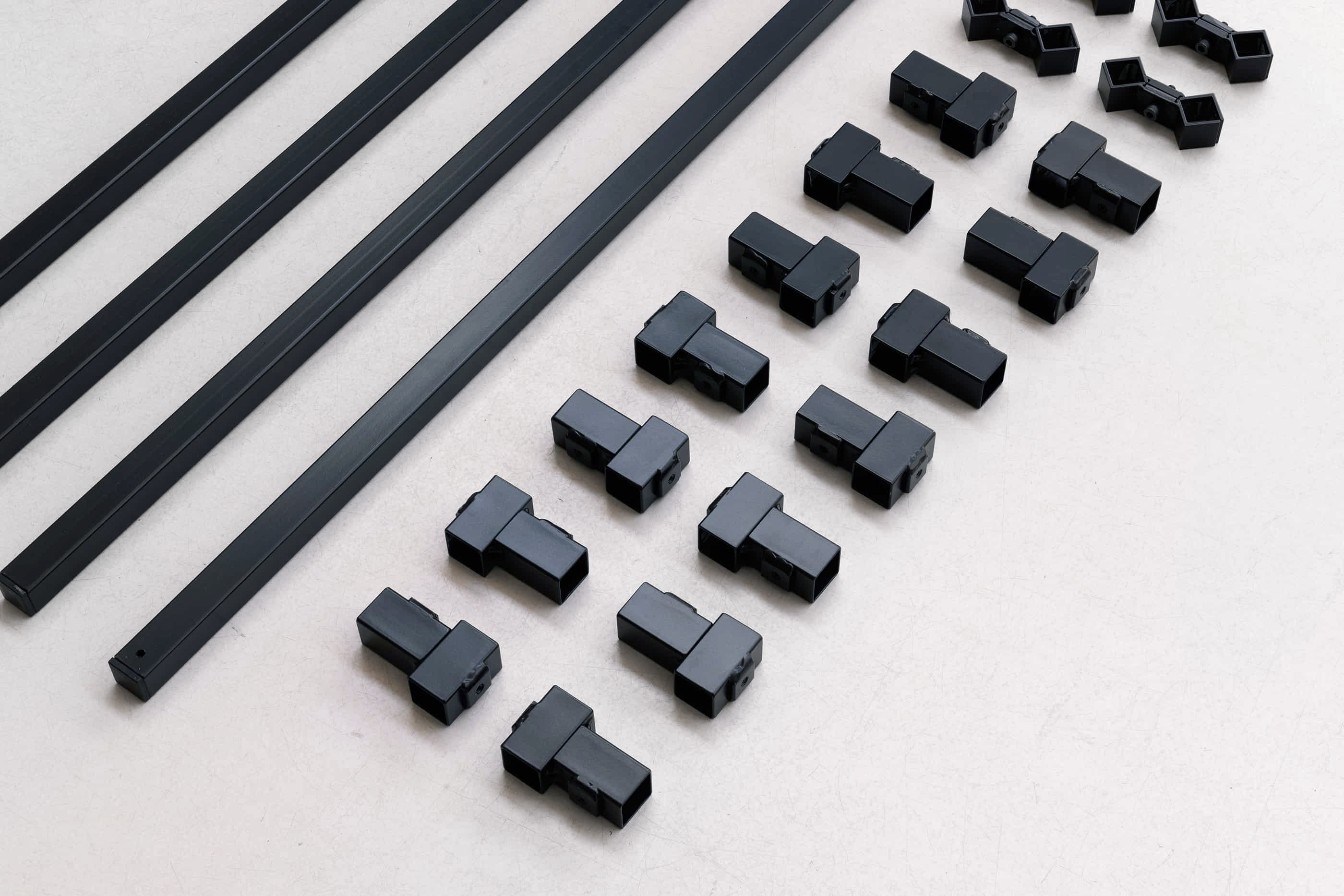
A Gestural History of the Young Worker, Condition report (2023), presented in the former factory floor of Looiersgracht 60 the unassembled elements from the original installation together with a sound piece that is based on transcribed conversations by the artists surrounding their experiences as artists working under challenging conditions. Instead of producing a new work Werker takes the time to reflect on how different political regimes influence their working conditions and artworks.
Specifications:
Installation, double-sided screen prints, metal bars, metal components, sound piece (18:20 min)
Presentations:
Public Research Residency, Looiersgracht 60, Amsterdam 2023.
(1)
↑ A Gestural History of the Young Worker, Condition Report, 2023. Looiersgracht 60, Amsterdam. Installation view. (Image: LNDW Studio)
(2)
↑ A Gestural History of the Young Worker, Condition Report, 2023. Looiersgracht 60, Amsterdam. Installation view. (Image: LNDW Studio)
(3)
↑ A Gestural History of the Young Worker, Condition Report, 2023. Looiersgracht 60, Amsterdam. Installation view. (Image: LNDW Studio)
(4)
↑ A Gestural History of the Young Worker, Condition Report, 2023. Looiersgracht 60, Amsterdam. Installation view. (Image: LNDW Studio)
(5)
↑ A Gestural History of the Young Worker, Condition Report, 2023. Looiersgracht 60, Amsterdam. Installation view. (Image: LNDW Studio)
Amator Archives: On Queer Reproduction
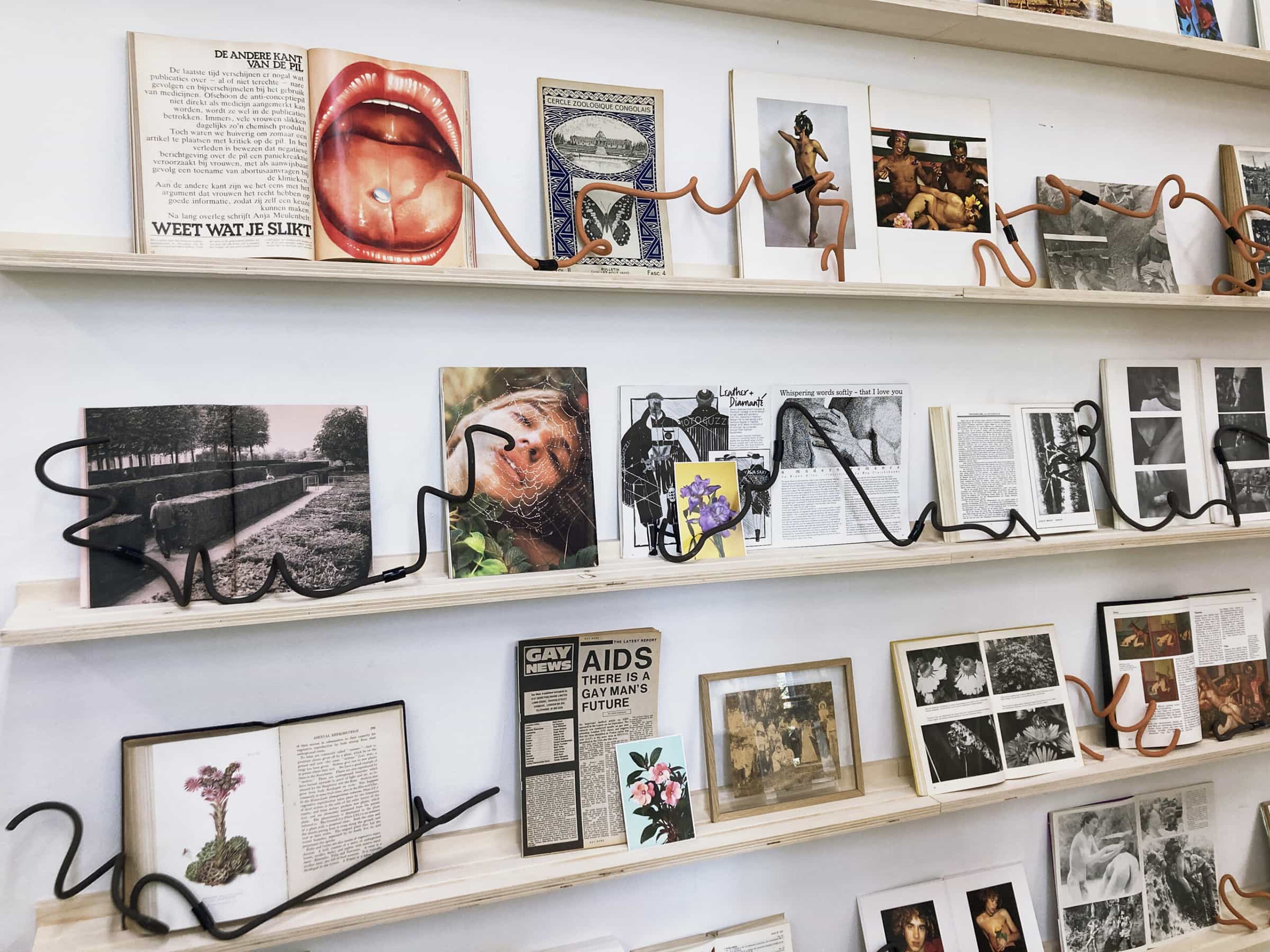
Archiving and counter-archiving are central to the practice of Werker Collective. Their work revolves around an ever-expanding collection of books, photographs, magazines and other print matter on subjects such as labour, solidarity and the body. Comprising several thousand documents, the archive is continuously activated by people working in different constellations: to collectively explore marginalised histories and to generate new political imaginaries. These explorations take the form of workshops and publications, performances and installations.
Currently, Werker is doing research around the topic of queer reproduction, a term that has been used academically to address how non-heteronormative people access assisted reproductive technology in order to reproduce asexually. More so than biological reproduction, we are interested in queer reproduction as a passing on of knowledge and (counter)cultures, from generation to generation, through gatherings, parties, art, literature, music, publications, and forms of care and touch. Embracing a social and cultural understanding of what a queer reproduction might be allows us to celebrate our queer past, present, and future hxstories, beyond mere comparisons to heteronormative modes of living.
Specifications:
Installation, workshops, and website
Presentations:
Rijksakademie Open Studios, Amsterdam 2022.
Manifesta 14, Prishtina 2022.
(1)
↑ Amator Archives: On Queer Reproduction at Rijks OPEN 2022, Installation view. Photo: Sander van Wettum.
(2)
↑ Amator Archives: On Queer Reproduction at Rijks OPEN 2022, Installation detail.
(3)
↑ Amator Archives: On Queer Reproduction at Rijks OPEN 2022, Installation detail.
(4)
↑ Amator Archives: On Queer Reproduction at Rijks OPEN 2022, Installation detail.
(5)
↑ Amator Archives: On Queer Reproduction at Rijks OPEN 2022, Reading Rehearsal. Photo: Sander van Wettum.
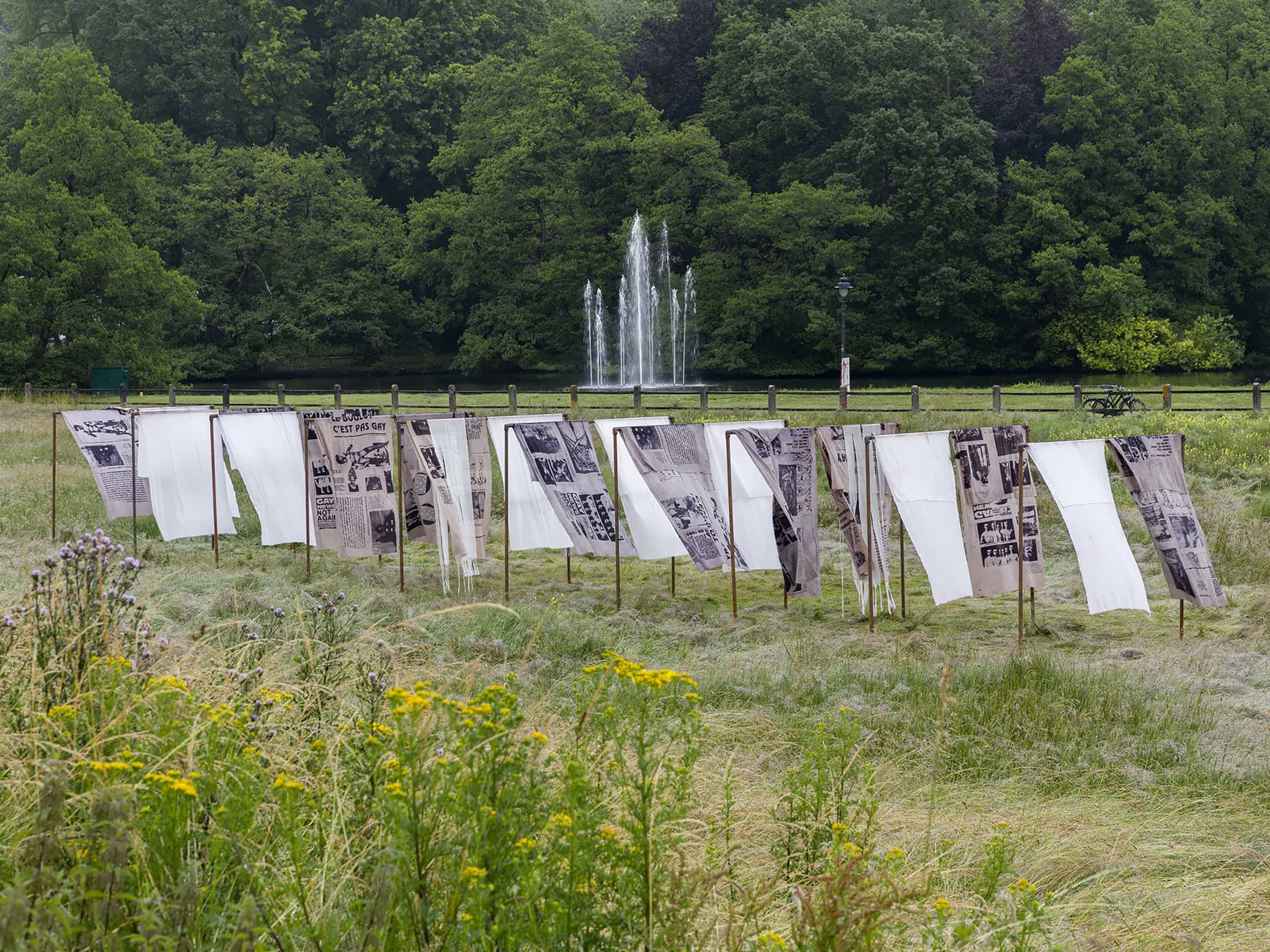
Textiles of Resistance: Growing, Weaving, Printing, Archiving
Textiles of Resistance: Growing, Weaving, Printing, Archiving uses the eponymous processes to question the material basis of the own archive: paper, a substance that must be isolated to be preserved, and which is emblematic of the human/nature divide. In translating the archive onto fabric, a greater interaction between nature and non-human forms of life incurs, experimenting with the labour and ecology of craft in artisanal production. A gardening practice is developed alongside. By working with plants, the project also traces the craft of colour: its social, political, symbolic and ecological implications.
Conversations with different collectives and individuals around documents that differentiate between non-human bodies and ecosystems inform relations to care and work to reveal the tension between information and rhythm—relations to content ingrained in patterns—such as reading and wearing, touching and embodying. A selection from the archive generates a participatory platform with source materials for designing textiles that physically manifest the archive and address the project’s core question: How can Werker Collective’s design and artistic practice be rearticulated to enable and support an ecosystem of care in balance with nature and non-human forms of life?
Project in collaboration with Gleb Maiboroda and studio bonbon.
Specifications:
Installation, metal frames, silkscreen prints on recycled textiles, handwoven textiles, archival material, series of workshops.
Presentations:
RIJKS OPEN. Amsterdam 2021.
Sonsbeek 20–24: Force, Times, Distance. On Labour and its Sonic Ecologies. Arnhem 2021
(1)
↑ Textiles of Resistance, Installation view. Sonsbeek 20–24: Force, Times, Distance. On Labour and its Sonic Ecologies. Arnhem 2021
(2)
↑ Textiles of Resistance, Installation view. Sonsbeek 20–24: Force, Times, Distance. On Labour and its Sonic Ecologies. Arnhem 2021
(3)
↑ Textiles of Resistance, Installation view. Sonsbeek 20–24: Force, Times, Distance. On Labour and its Sonic Ecologies. Arnhem 2021
(4)
↑ Textiles of Resistance, Installation view. Sonsbeek 20–24: Force, Times, Distance. On Labour and its Sonic Ecologies. Arnhem 2021
(5)
↑ Textiles of Resistance, Workshop. Rijksakademie van Beeldende Kunsten. Amsterdam, 2021.
(6)
↑ Textiles of Resistance, Installation view. Rijksakademie van Beeldende Kunsten. Amsterdam, 2021.
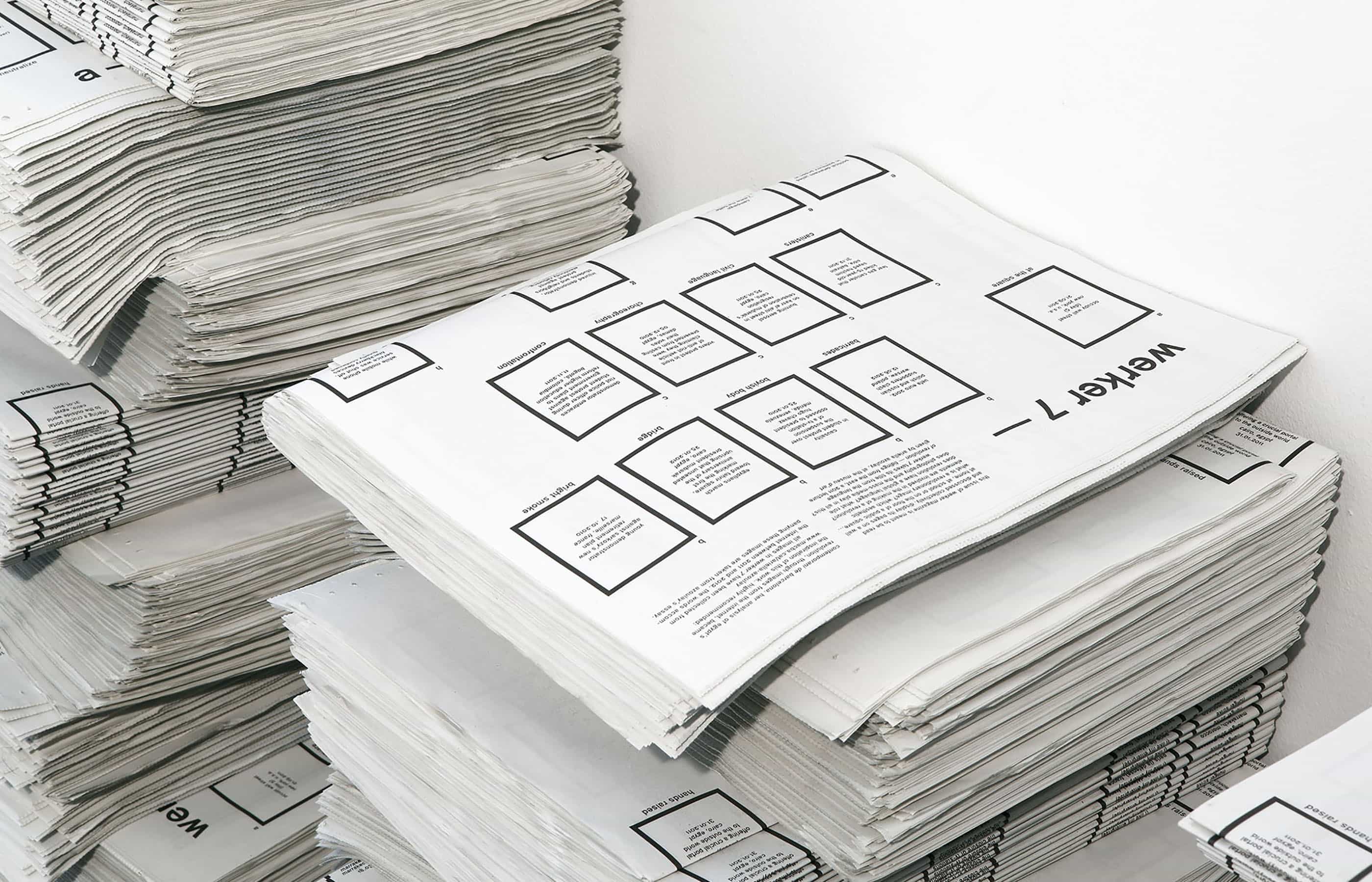
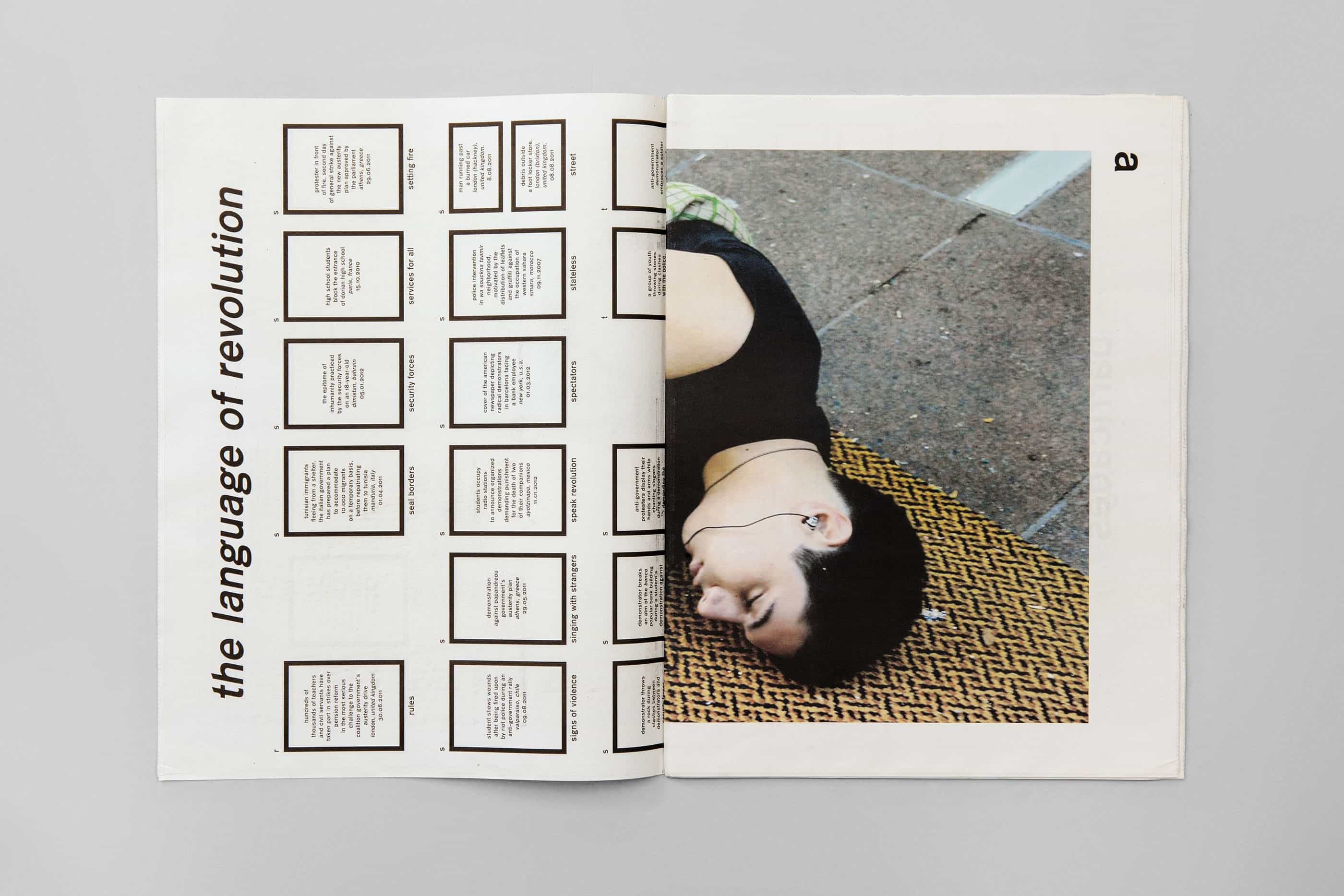
The Language of Revolution, Index
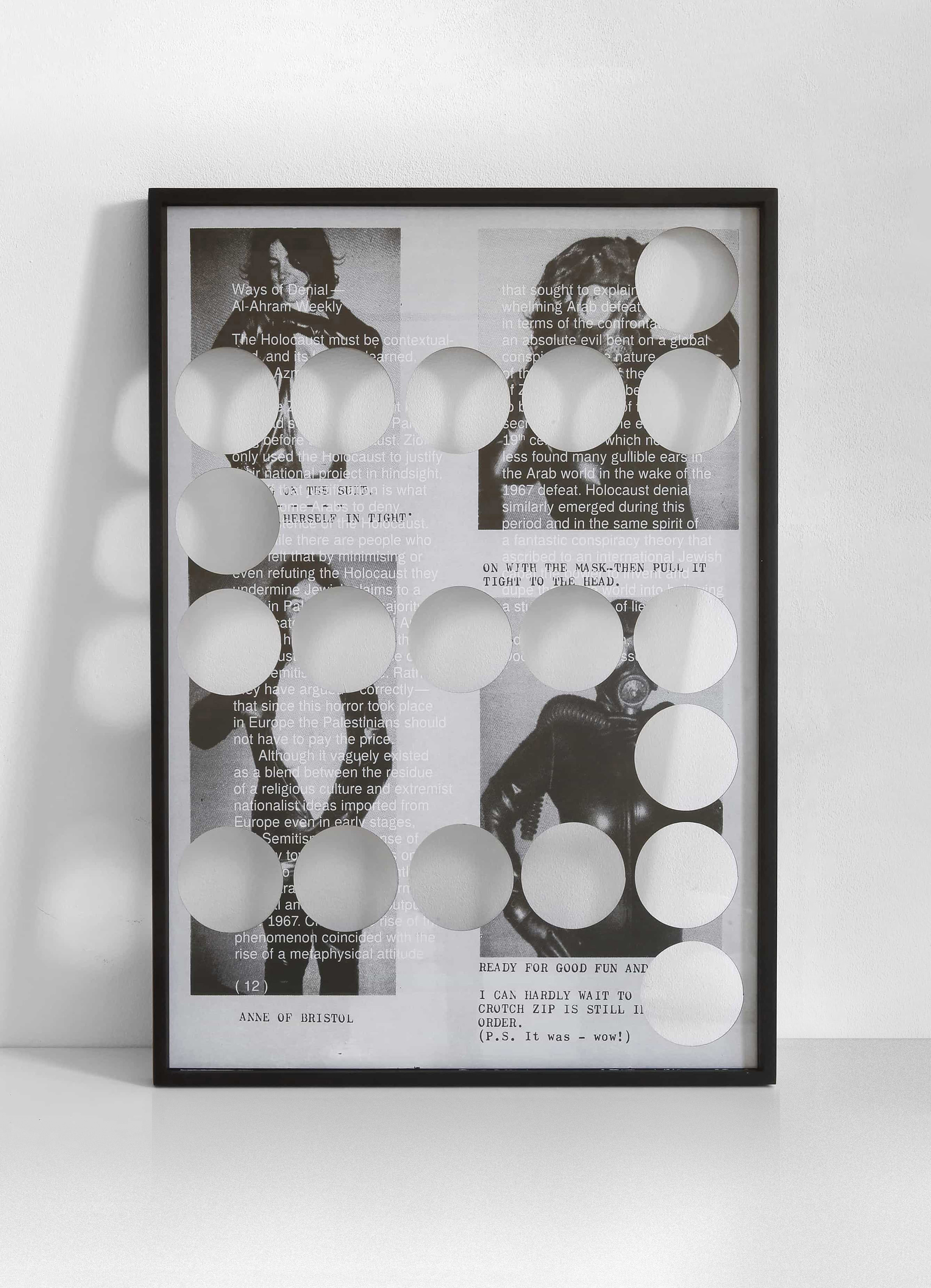
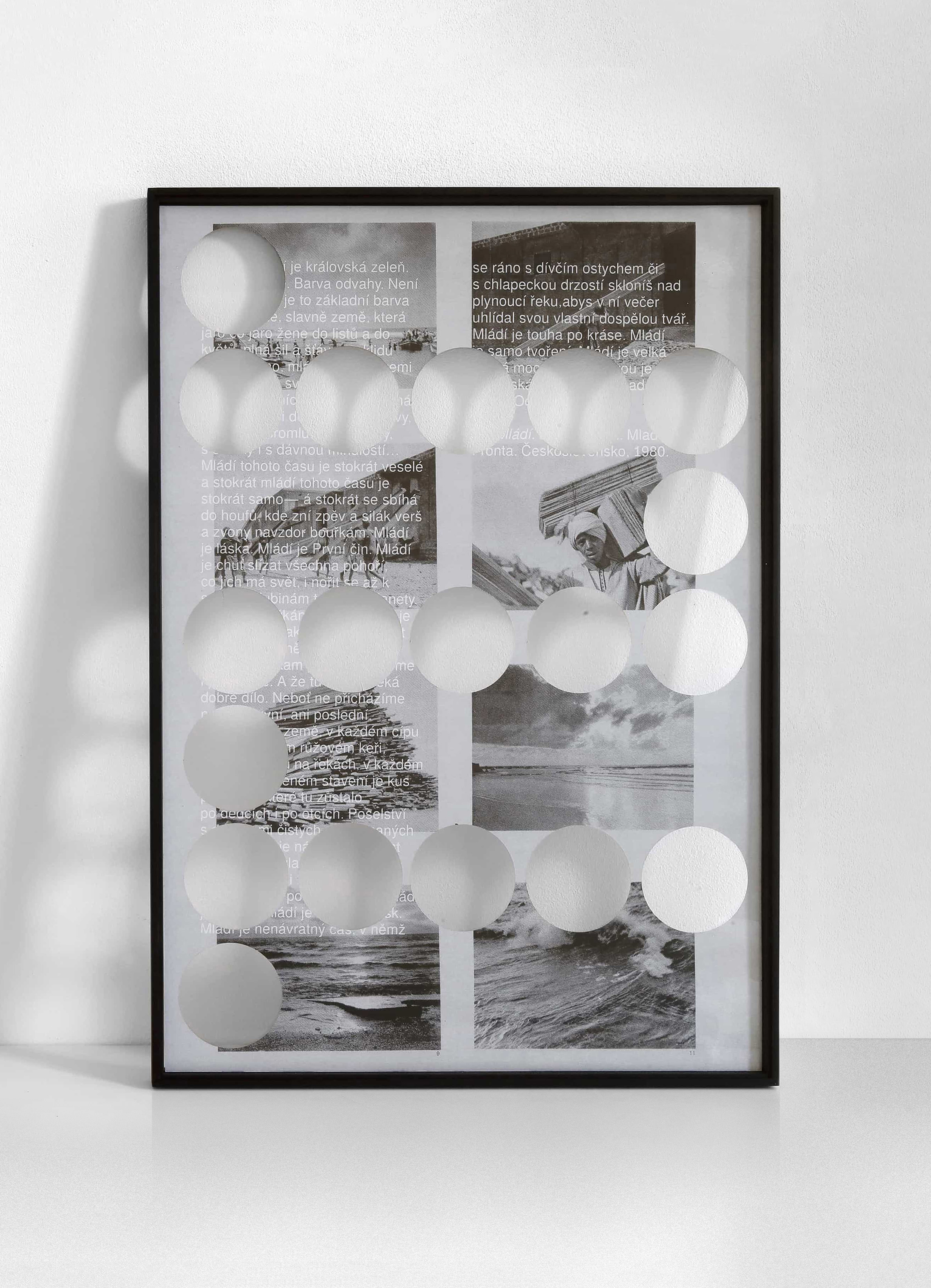
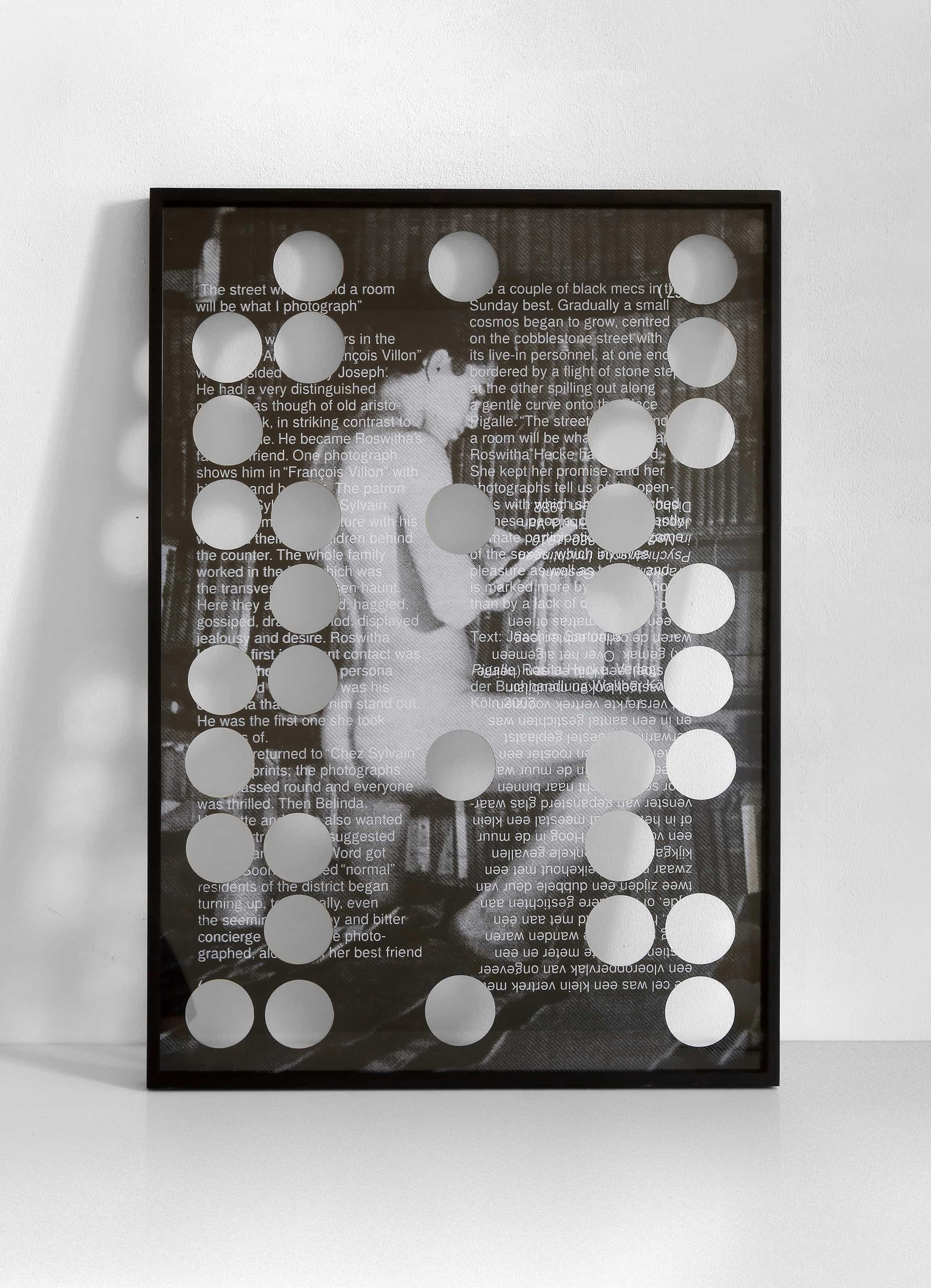
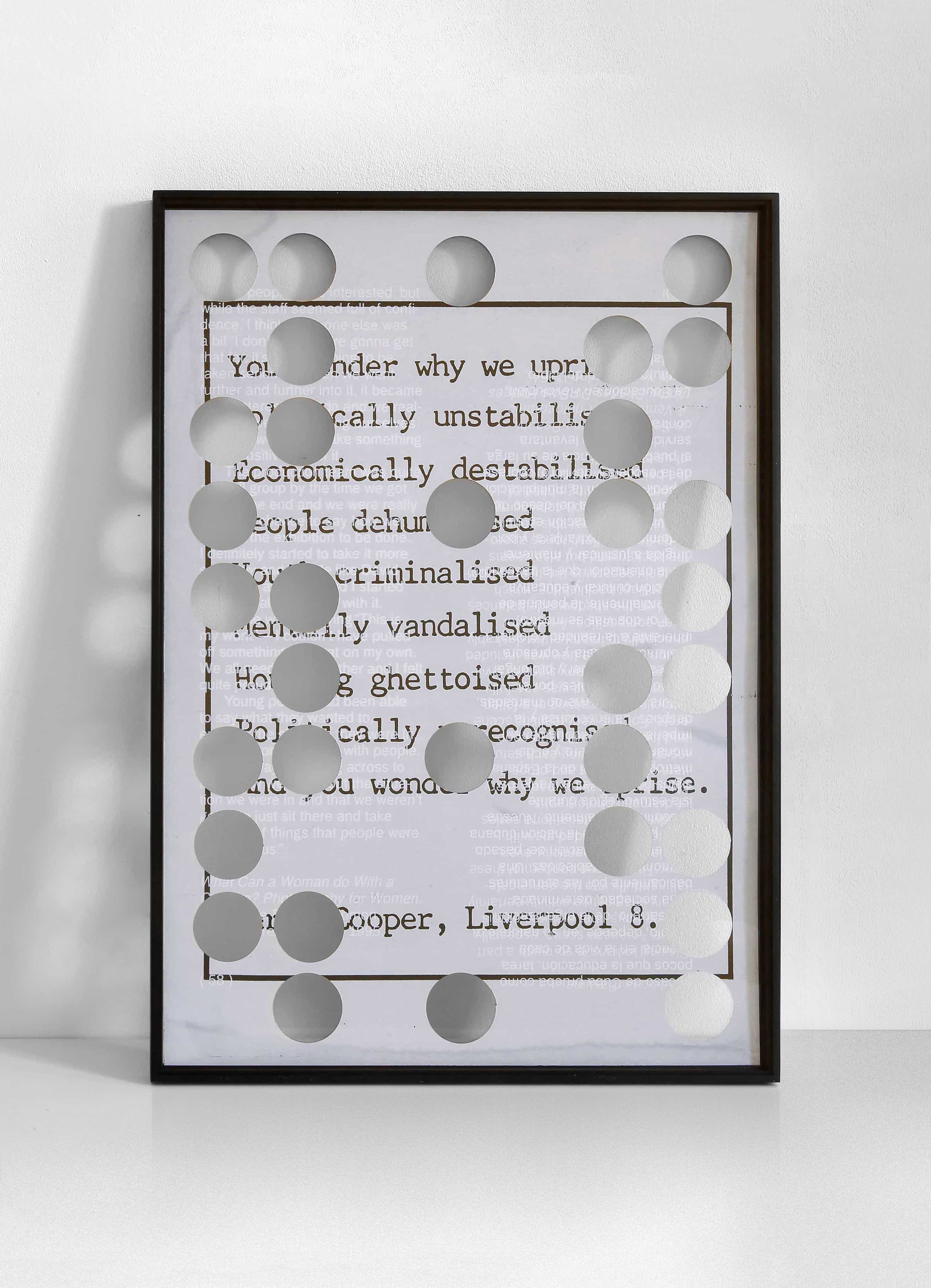
What is the function carried out by photography in the construction of a global revolutionary language? If revolution is a language, wrote Azoulay, photography is the paper we write it on. Werker 7 borrowed its title from the conference 'The Language of Revolution — Tidings from the East', given by Ariella Azoulay at the Museu d’Art Contemporani de Barcelona in 2011, and was initially presented in the form of a newspaper, combining images taken from the Internet with concepts from Azoulay’s text. On this occasion, its index page is materialised as an installation from which images are absent.
Specifications:
Framed xerographies, vinyl lettering.
Presentations:
Tomorrow is a Different Day. Collection 1980–Now. Stedelijk Museum Amsterdam, The Netherlands, 2022.
A Short Century: MACBA Collection. Museu d'Art Contemporani de Barcelona, Spain, 2018.
Fotografies com a espai públic. Sala Bòlit. Girona 2018.
Fotografies com a espai públic. Arts Santa Mónica. Barcelona 2017.
On the Move. Stedelijk Museum. Amsterdam, 2014.
Werker Sweatshop. García Galería. Madrid 2013.
Part of the collection of (link: https://www.stedelijk.nl/nl/collectie/96403-werker-collective-werker-7-the-language-of-revolution text: Stedelijk Museum Amsterdam) ↗︎
Part of the collection of (link: https://www.macba.cat/en/obra/r5497-werker-7---the-language-of-revolution-index/ text: MACBA Barcelona) ↗︎
(1)
↑ The Language of Revolution, Index. Installation view. Tomorrow is a Different Day. Collection 1980–Now. Stedelijk Museum, Amsterdam.
(2)
↑ The Language of Revolution, Index. Installation view. Tomorrow is a Different Day. Collection 1980–Now. Stedelijk Museum, Amsterdam.
(3)
↑ The Language of Revolution, Index. Installation view. Tomorrow is a Different Day. Collection 1980–Now. Stedelijk Museum, Amsterdam.
(4)
↑ The Language of Revolution, Index. Installation view. Tomorrow is a Different Day. Collection 1980–Now. Stedelijk Museum, Amsterdam.
(5)
↑ Werker 7 — The Language of Revolution, publication.
(6)
↑ Werker 7 — The Language of Revolution, installation view.
(7)
↑ Werker 7 — The Language of Revolution, installation view.
The Right to the City XXX
The Right to the City XXX is a podcast that explores Amsterdam’s grassroots resistance against homelessness and unaffordable housing, and its consequent fuel of counterculture platforms in the city, in the past and in the present.
The project defines an alternative map of the city through a series of conversations and sound-pieces raising questions such as: How to survive today’s neoliberal policy in Amsterdam? Is it possible to create alliances from different positions and privileges to claim back together our Right to the City? What role does art and artists have to play in the ongoing housing struggle, as they are often used as agents of gentrification?
The Right to the City XXX merges Loma Doom (Femke Dekker) and Werker Collective’s long term practices which investigate the role of archives as a tools for resistance and political imagination with contributions by Mokum Kraakt, Niet te Koop, OCCII, W139, We Are Here, Adam Adriss, Ad de Jong, Guilly Koster, Teferi Mekonen, Boudewijn Ruckert, Sjoerd Stolk, Wouter Stroet, Alite Thijsen, Elke Uitentuis, Annegriet Wietsma.
An edition of screen-printed bandanas has been designed by Werker to help spread the sound waves through the city. A selection of archival materials from Werker's Amator Archive on the topic of housing struggle in Amsterdam, from the first rent strikes of the 1930’s until today is on display at San Serriffe.
With the generous support of Social Practice Workshop (Rijksakademie van Beeldende Kunsten), Education from Below (European Culture Fonds), San Serriffe (Mondriaan Fund).
Mzhk-1980: Place On Earth. 6Th Ural Industrial Biennial Of Contemporary Art. Yeltsin Center Gallery, 2021. Yekaterinburg, Russia.
(1)
↑ The Right to the City. San Serrife, 2023.
(2)
↑ The Right to the City. San Serrife, 2023.
(3)
↑ The Right to the City. Mzhk-1980: Place On Earth. 6Th Ural Industrial Biennial Of Contemporary Art. Yeltsin Center Gallery, 2021. Yekaterinburg, Russia.
(4)
↑ The Right to the City. Mzhk-1980: Place On Earth. 6Th Ural Industrial Biennial Of Contemporary Art. Yeltsin Center Gallery, 2021. Yekaterinburg, Russia.
Community Darkroom
Community Darkroom takes its name from the North Paddington Community Darkroom (NPCD), local to The Showroom Gallery in London, which played a key role in the Community Photography Movement of the 1970s. Acting not in the interests of nostalgia, but in order to explore the possibilities of social photography within a contemporary context, Werker have been collaborating with local groups to explore how photography can portray and analyse issues of invisible labour. Domestic, unpaid and volunteer work are just some of the forms of labour recorded or depicted by the subjects themselves. The act of self-representation not only empowers the subject, it makes the invisible visible, and serves as a resistance to dominant representations in the media.
Specifications:
Itinerant school of radical documentary: a library, workshops, mobile archival and display device.
Presentations:
Werker 10 — Escola de Fotografia Popular. Fundació Tàpies, Barcelona 2018.
Werker 10 — Community Darkroom. Fondazione MAST, Bologna 2015.
Werker 10 — Escuela de Fotografía Popular. Centro de Arte 2 de Mayo, Móstoles 2015.
Sin oficio, ni beneficio. XII Bienal de Arte de la Habana, Cuba 2015.
Puisqu’on vous dit que c’est possible. Institut Supérieur des Beaux Arts / Saline Royale d'Arc-et-Senans, 2014.
Communal Knowledge. The Showroom. London 2014.
(1)
↑ Community Darkroom. Installation view. Fundació Antoni Tàpies. Barcelona, Spain.
(2)
↑ Community Darkroom. Installation view. Fundació Antoni Tàpies. Barcelona, Spain.
(3)
↑ Community Darkroom. Installation view. Fundació Antoni Tàpies. Barcelona, Spain.
(4)
↑ Community Darkroom. Installation view. Fundació Antoni Tàpies. Barcelona, Spain.
(5)
↑ Community Darkroom. Workshop. Labour, Motion, Machinery. TENT, Rotterdam, The Netherlands.
(6)
↑ Community Darkroom. Workshop. Labour, Motion, Machinery. TENT, Rotterdam, The Netherlands.
Domestic Worker Photographer Network
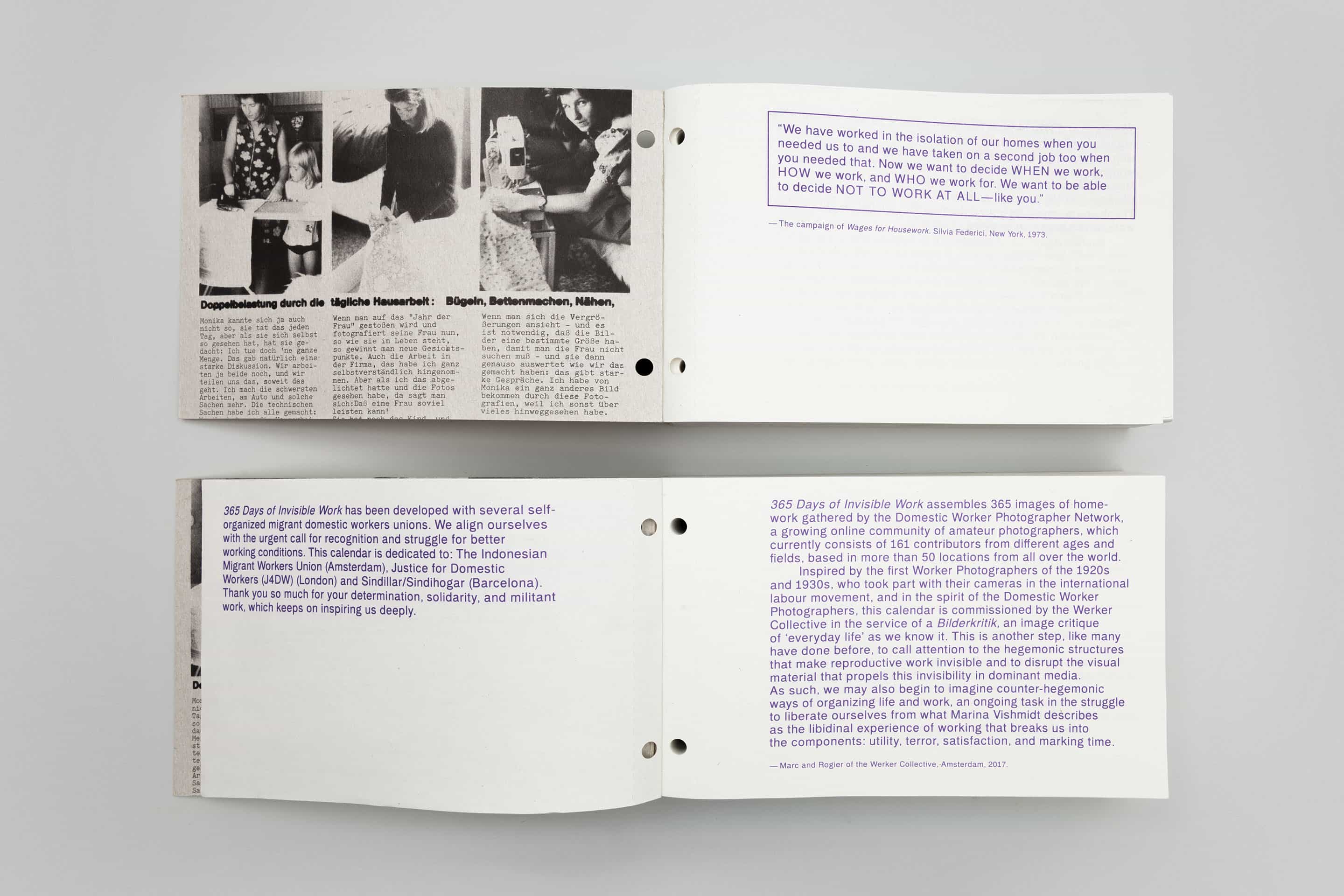
Initiated as an international community of contributors, the so-called 'Domestic Worker Photographer Network', in order to generate a collective and horizontal representation of domestic labour, this project proposes to reflect on today's living and working conditions starting from 'our shared home duties'.
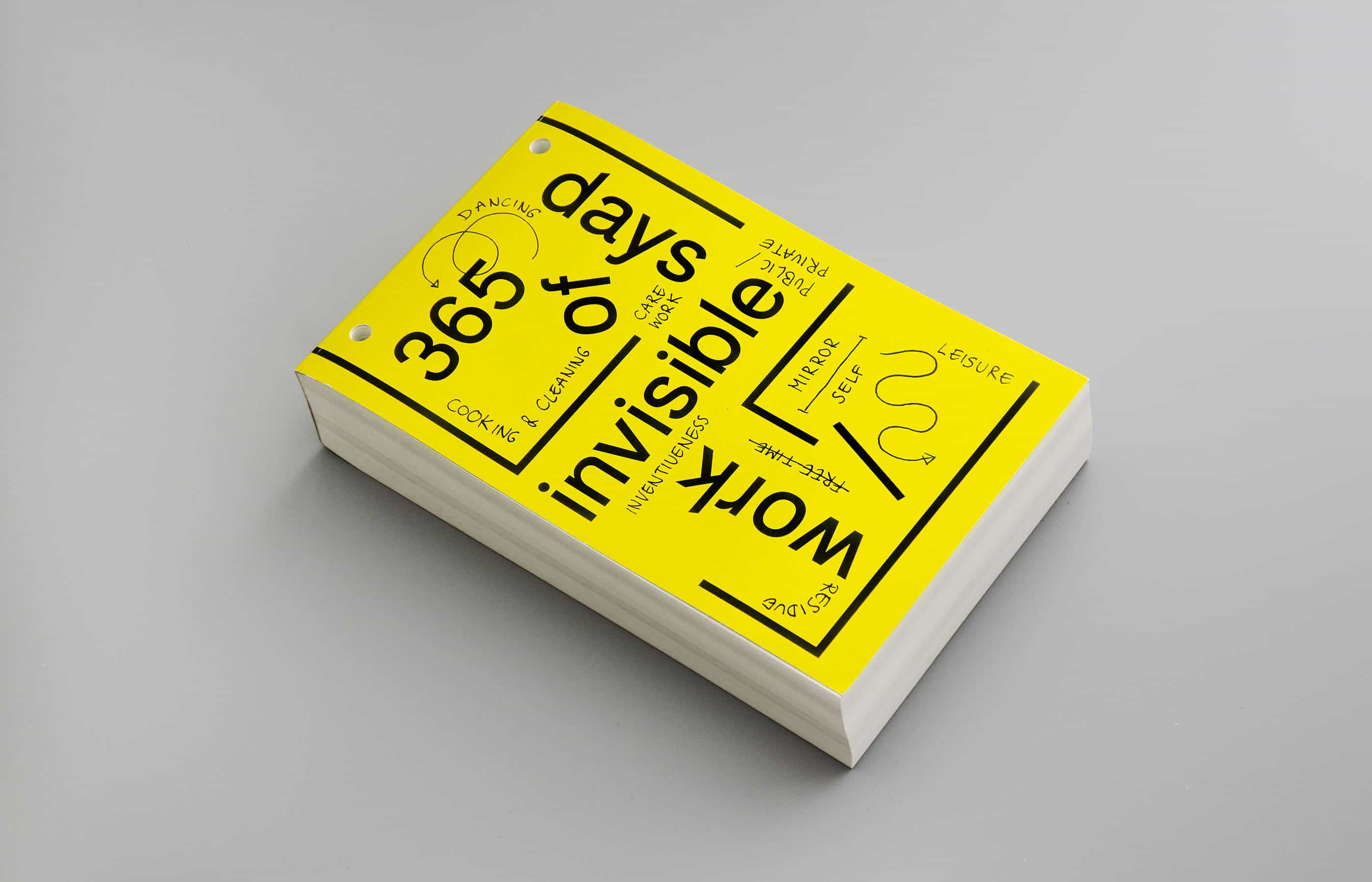
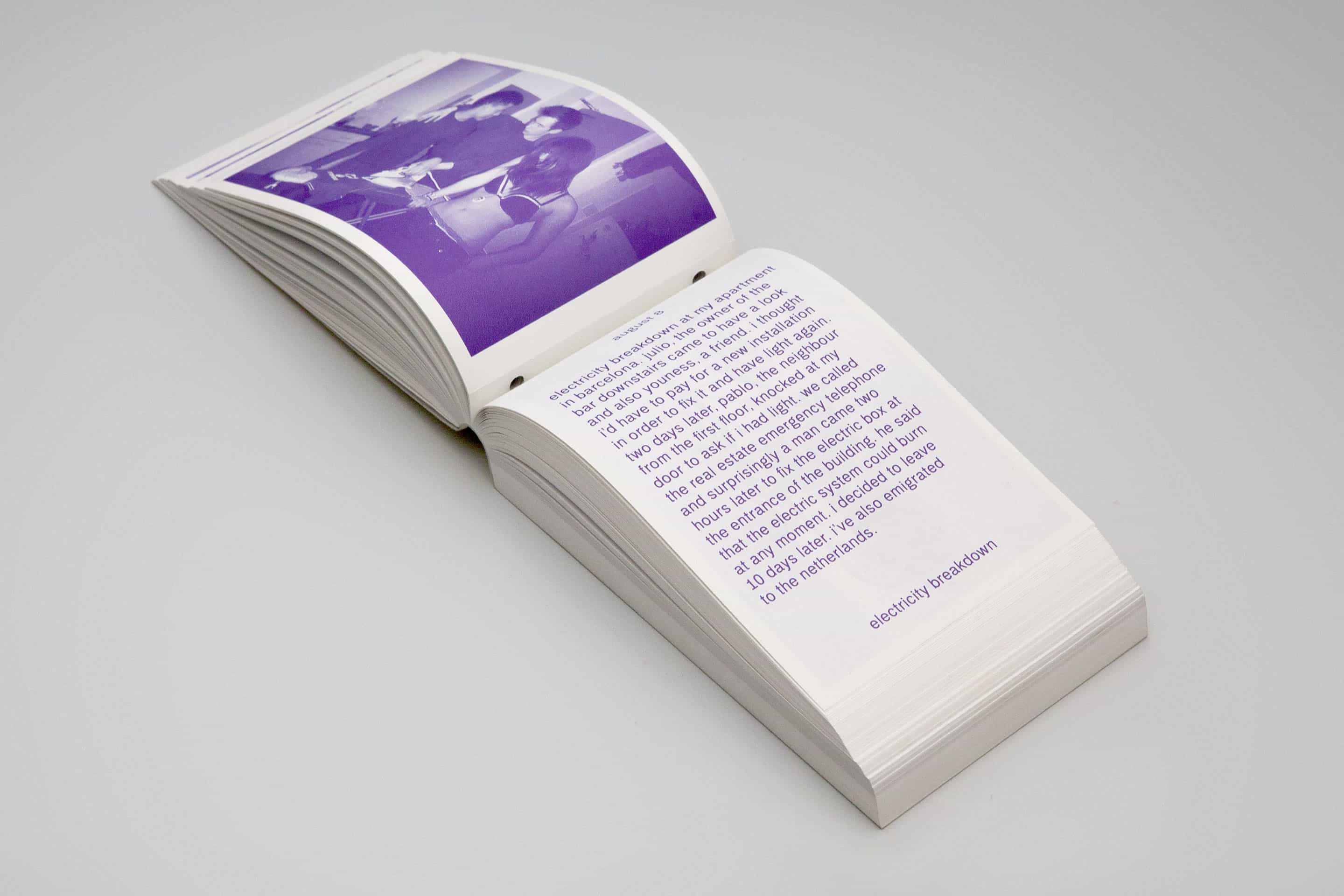
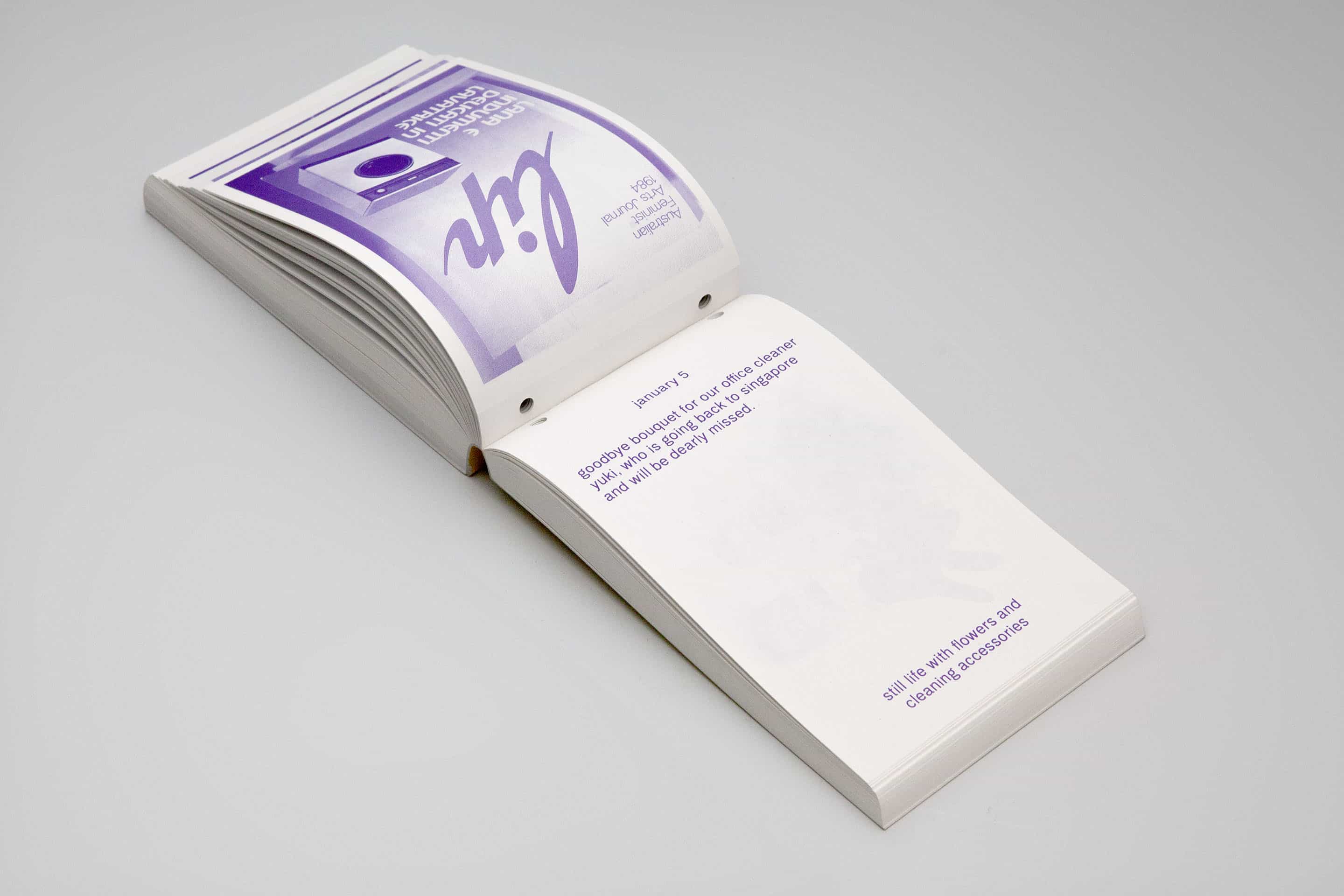
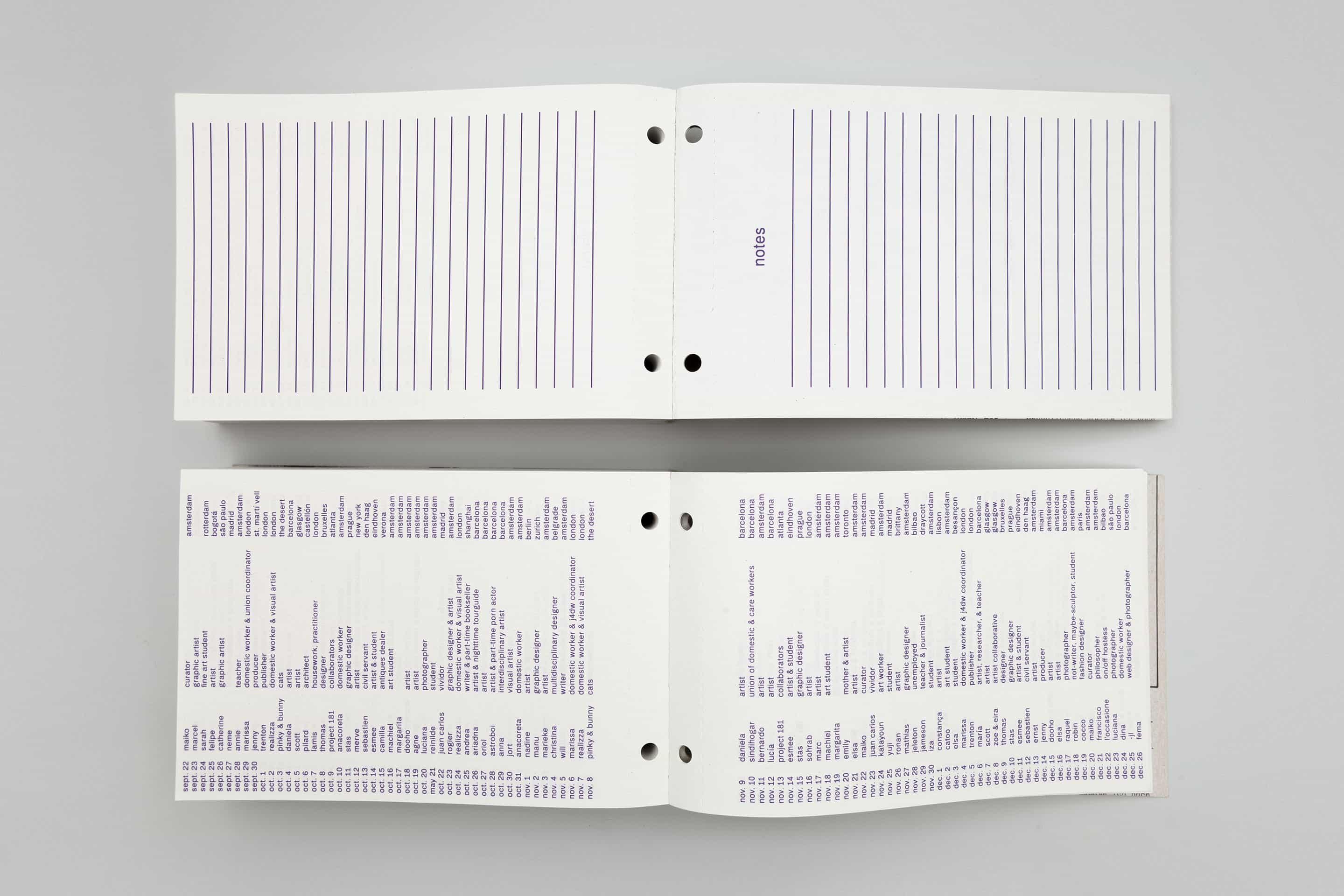
From all contributions received, 12 Bilderkritik (image analysis) sessions are organised together with collectives in affinity. The result of Bilderkritik articulates all knowledge obtained through the online community. 365 Days of Invisible Work (2017) is a publication presenting the first 365 contributions to the 'Domestic Worker Photographer Network'. It is published by Werker Collective with Casco & Spector Books.
Amateurism. Museum für Kunst und Gewerbe, Hamburg 2019.
365 Days of Invisible Work with the Voice of Domestic Workers & the Jo Spence Memorial Archive. Tenderbooks. London, 2018.
365 Days of Invisible Work with Taula en Defensa dels drets de les treballadores de la llar i les cures. MACBA, Barcelona 2017.
Domestic Work is Work, Tensta Konsthall. Stockholm 2014.
The Grand Domestic Revolution — Goes On, City of Woman, Ljubljana 2013.
Work Like This, Tate Modern, London, 2013.
Revolution at Point Zero with Silvia Federici. Casco. Amsterdam 2012.
The Grand Domestic Revolution — User's Manual’ Casco, Utrecht 2011.
(1)
↑ Domestic Worker Photographer Network Campaign. The Grand Domestic Revolution — User's Manual’ Casco, Utrecht 2011.
(2)
↑ Domestic Worker Photographer Network Campaign. The Grand Domestic Revolution — User's Manual’ Casco, Utrecht 2011.
(3)
↑ 365 Days of Invisible Work with the Voice of Domestic Workers & the Jo Spence Memorial Archive. Tenderbooks. London, 2018.
(4)
↑ Embroidering Theory. Amateurism. Museum für Kunst und Gewerbe, Hamburg 2019
(5)
↑ Bilderkritik Workshop with the Voice of Domestic Workers. The Showroom. London, 2013.
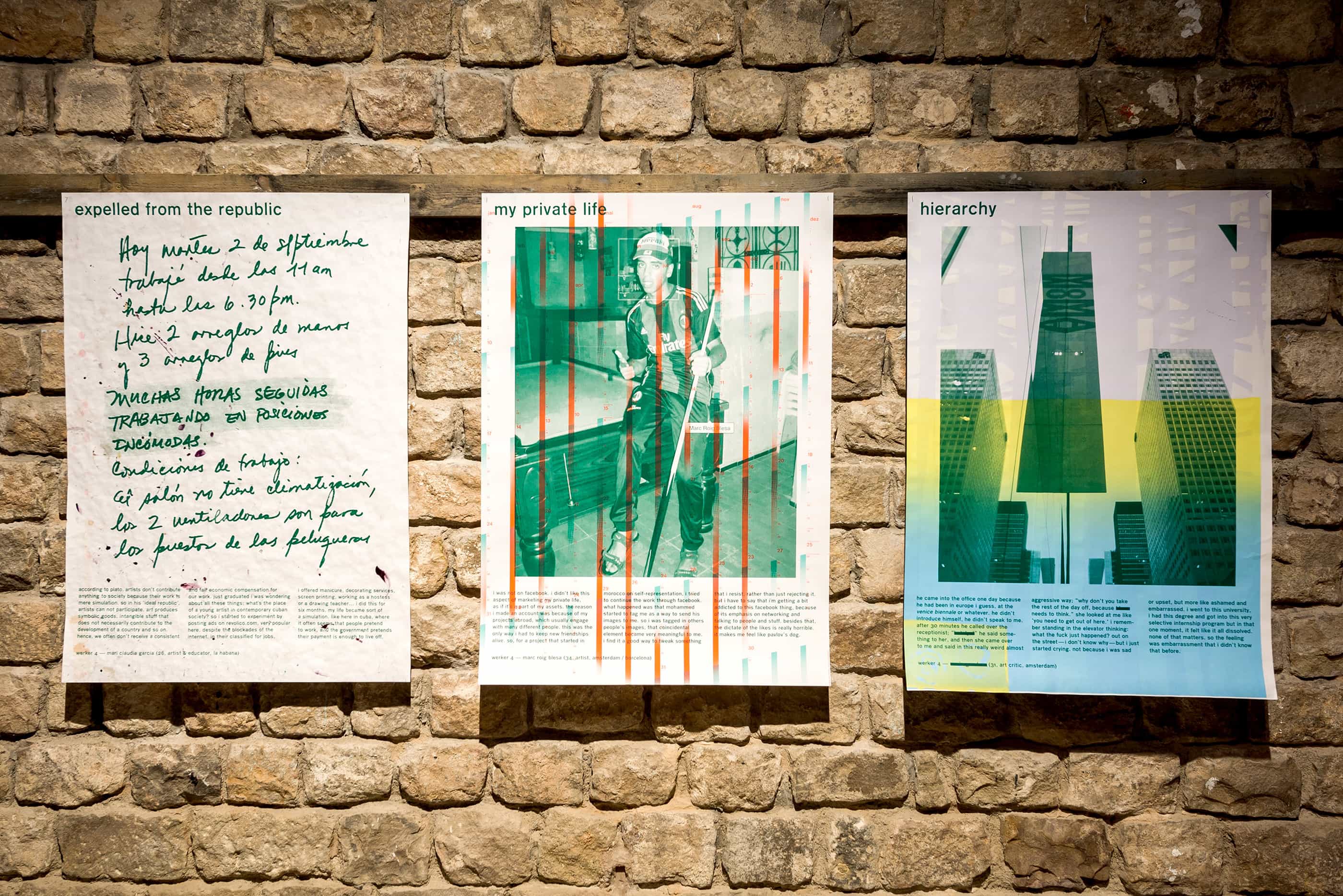
An Economic Portrait of the Young Artist
Inspired by the first illustrated wall-newspapers edited in Russia in the 20's — which could be read in factories, schools, hospitals, worker associations etc. — this issue of Werker Magazine displays, on the gallery walls, an overview of the often unspoken and precarious living and working conditions of young artists. The subjects addressed are: art workforce, canteen, collective housing, diaspora, donation, expelled from the republic, free labour, hierarchy, low wage, my private life, no working permit, part-time job, street value, virtual economy.
Specifications:
Series of 15 screen printed posters on left-over paper, 120×85cm (each). Edition of 10.
Part of the collection of the (link: https://stedelijk.nl/nl/zoeken?query=werker text: Stedelijk Museum Amsterdam) ↗︎
Presentations:
Visceral Blue. La Capella. Barcelona 2016.
Commonplaces. Can Felipa. Barcelona 2014.
Des(okupados). Kiosko Galería. Santa Cruz de la Sierra, 2013.
Our Work is Never Over. PHotoEspaña. Matadero Contemporary Art Center. Madrid 2012.
Access Denied: Working on a new paradigm on migration. Universiteit van Amsterdam, 2012.
Informality. Art, economics, precarity. SMBA, Stedelijk Museum Bureau Amsterdam, 2011.
(1)
↑ Access Denied: Working on a new paradigm on migration. Universiteit van Amsterdam, 2012.
(2)
↑ Informality. Art, economics, precarity. SMBA, Stedelijk Museum Bureau Amsterdam, 2011.
(3)
↑ Informality. Art, economics, precarity. SMBA, Stedelijk Museum Bureau Amsterdam, 2011.
(4)
↑ Informality. Art, economics, precarity. SMBA, Stedelijk Museum Bureau Amsterdam, 2011.
(5)
↑ Our Work is Never Over. PHotoEspaña. Matadero Contemporary Art Center. Madrid 2012.
(6)
↑ Our Work is Never Over. PHotoEspaña. Matadero Contemporary Art Center. Madrid 2012.
(7)
↑ Visceral Blue. La Capella. Barcelona 2016.
Amator Archives: On Queer Reproduction
(as published by WERKER in Camera Austria International 163, 2023)
Queer Reproduction is a term that has been used academically to address the access of non-heteronormative families to assisted reproductive technologies (ART) in order to reproduce asexually. More so than biological reproduction, WERKER understands Queer Reproduction as a passing on of gender and sexual dissident cultures and modes of living, from generation to generation, through social gatherings, parties, art, literature, music, and activism. This understanding of what a Queer Reproduction might be allows for celebrating queer past, present, and future hxstories, beyond comparison to heteronormative modes of procreation.
The research started during a two-year artist-in-residence of WERKER at the Rijksakademie van beeldende kunsten in Amsterdam (2020–22). We transformed our studio into an Open Archive and organized the program Reading Rehearsal, an embodied publishing process that enabled mutual support, care, and togetherness with the local LGTBQIA+ community in Amsterdam through shared study and reflection. The Reading Rehearsal initiators were Rogier Delfos, Iarlaith Ní Fheorais, Pierre Gramond-Dodet, Moa Holgersson, Georgy Mamedov, Aliki Marketou, JeanPaul Paula, Marc Roig Blesa, Natalia Ruhe, Margot Louise Schmidt, Nell Schwan, Joy Mariama Smith, and Leendert Vooijce.
Exploring the potential of the archive as a space for Queer Reproduction is meant to question the history and the authority of the archive through its architectural and material conditions in relation to oppressed queer hxstories and bodies. How could the archive be transformed from being a tool of domination at the service of patriarchy to supporting intersectional and intergenerational processes of personal and collective self-determination?
The origins of queer subcultures in Europe are closely related to processes of self-publishing that took place in Germany in the mid-nineteenth century. Correspondence, pamphlets, magazines, and literary circles allowed for queer communities to emerge. At the same time that juridic and scientific studies were developed to advocate for the decriminalization of non-heteronormative identities, these studies medicalized, racialized, and classified the queer subject into delimiting categories. Today it is necessary to challenge the white male gaze that is at the foundation of the European homosexual liberation movement from an intersectional perspective.
While writing and compiling this contribution to Camera Austria International, governments worldwide have been implementing restrictive policies against queer communities. Russia has banned gender reassignment surgery for trans people. Hungary has banned the sharing of information with minors about non-heteronormative sexualities. Italy has removed non-biological LGTBQIA+ parents from their children’s birth certificates. Uganda has enacted a new, harsh anti-LGBTQIA+ law that includes the death penalty. Queer rights are being undone gradually, yet perpetually.; this affirms that the monopolized patriarchal, heteronormative forms of reproduction are at the seed of our collective lack of welfare.
The documents presented on the following pages are a curated selection of references from WERKER’s archive. The archive analyzes the conflicting narratives that have come to constitute European queer identities. As ongoing research, it preliminarily highlights four different perspectives that have shaped these identities over time. Additionally, they continue to be central topics of discussion within the queer liberation movement. The four perspectives encompass women’s emancipation, the labor movement, (anti-)colonialism, ecology and inter-species solidarity.
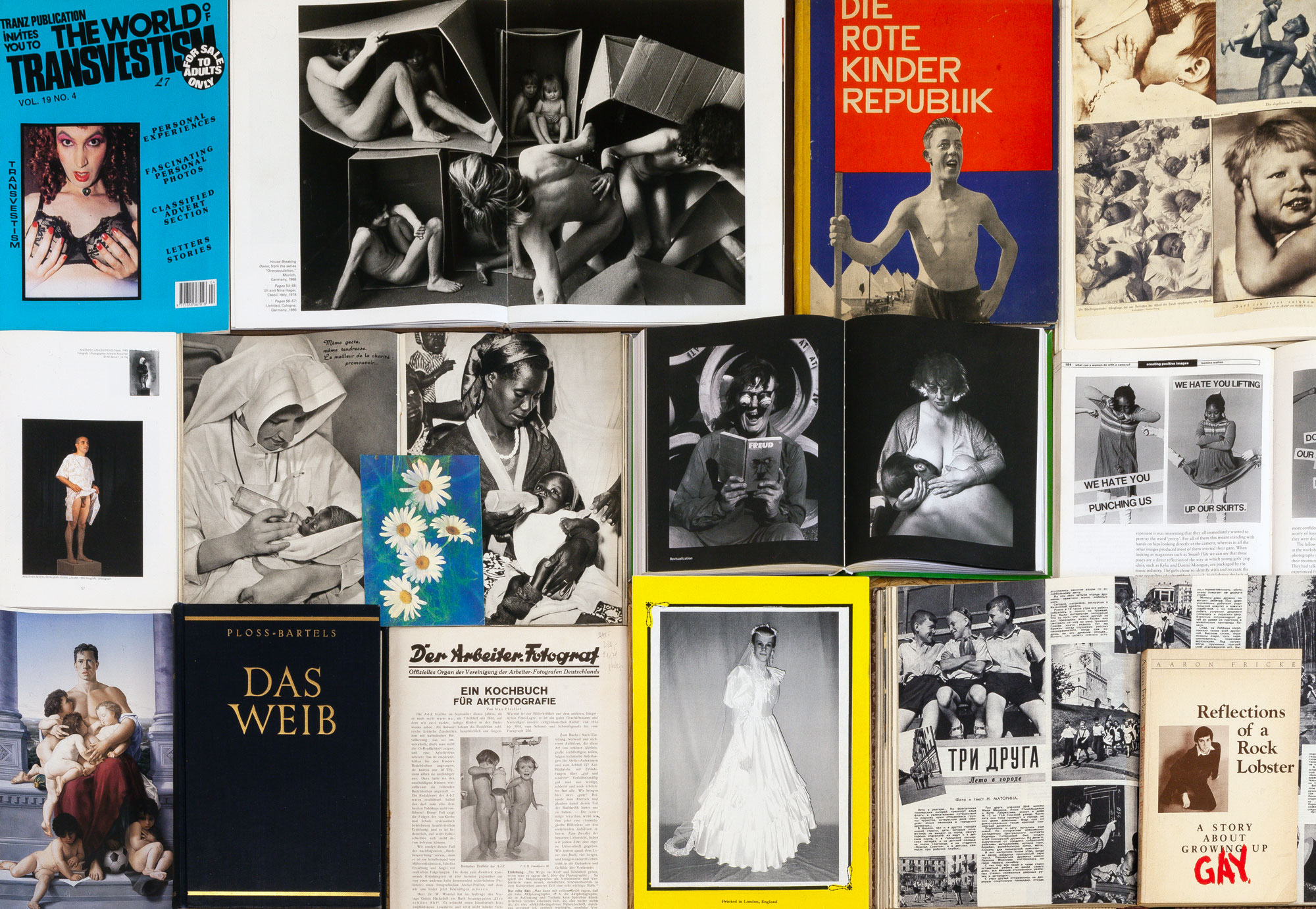
A Story about Growing up Gay. WERKER Archief, Amsterdam 2023. From left to right, top to bottom: reference 1–15 at the bottom of this article.
A Story about Growing up Gay is an autobiographical novel by the gay activist and author Aaron Fricke from 1981. The documents presented in this collage challenge the heteronormative family model by bringing together references from the feminist movement with publications on queer liberation and working-class childhoods. Dr. Magnus Hirschfeld founded the world’s first LGBTQIA+ association in 1897 in Berlin, named the Wissenschaftlich-humanitäres Komitee (Scientific-Humanitarian Committee). Several years later, in 1905, he joined the Bund für Mutterschutz und Sexualreform (League for the Protection of Mothers and Sexual Reform), a feminist organization established by Helene Stöcker in 1903 that campaigned for the decriminalization of abortion. Both Hirschfeld and Stöcker believed in the connection between women’s and queer struggles, and together successfully campaigned to prevent paragraph 175 of the German criminal code, which criminalized sexual relations between men, from being extended to include lesbians.
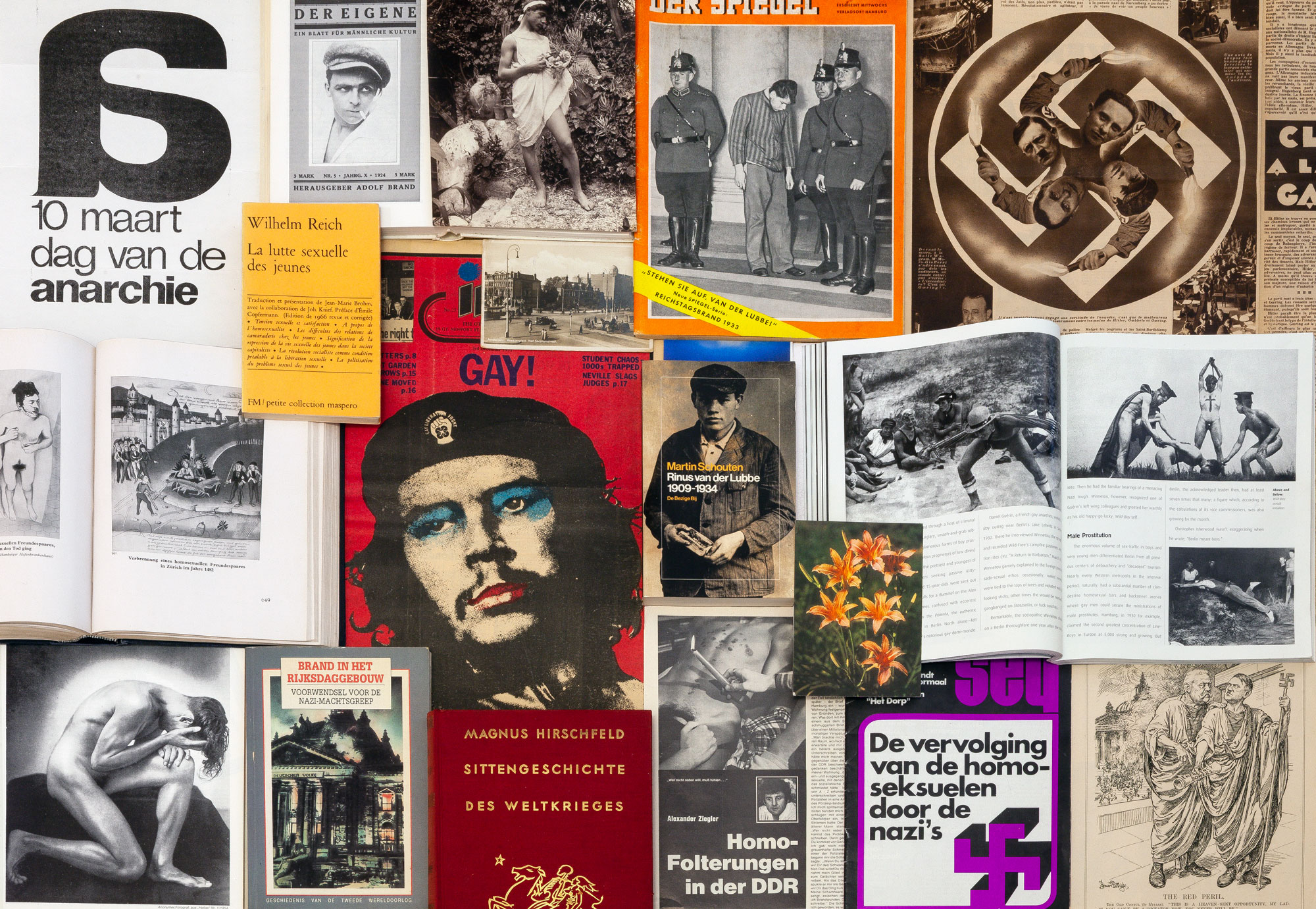
The Sexual Struggle of Youth. WERKER Archief, Amsterdam 2023. From left to right, top to bottom: reference 16–32 at the bottom of this article.
The Sexual Struggle of Youth is the title of a book from 1931 by the socialist sexologist Wilhelm Reich. This selection of documents looks at the political instrumentalization of homosexuality by the Nazi Party and the Communist Party during that period. On February 27, 1933, Marinus van der Lubbe, a twenty-three-year-old Dutch revolutionary, set the Reichstag building on fire as a wake-up call to the German working class to revolt against the rise of fascism. His solitary revolutionary act was discredited in the Braunbuch über Reichstagsbrand und Hitlerterror (The Brown Book of the Reichstag Fire and Hitler Terror, 1933), a bestseller translated into seventeen languages and printed in millions of copies. The Brown Book was edited by Willi Münzenberg, head of propaganda of the German Communist Party (KPD), who portrayed Van der Lubbe as a perverted homosexual working at the orders of Ernst Röhm, the openly homosexual head of the Nazi Sturmabteilung (SA). The trial against Van der Lubbe became a media spectacle, broadcast live on radio and filmed. It made the headlines of newspapers worldwide. Van der Lubbe became the scapegoat of both the Communists and the Nazis. On January 10, 1934, he was executed by guillotine in Leipzig. With his death, the possibility of a queer Communist revolution that had been lurking during the Weimar Republic arrived at an end. In the USSR under Stalin, the fear of a fascist homosexual conspiracy was used to criminalize homosexuality. As Maxim Gorky claimed in a 1934 article in the Russian newspaper Pravda, “Eradicate homosexuals and fascism will disappear.”
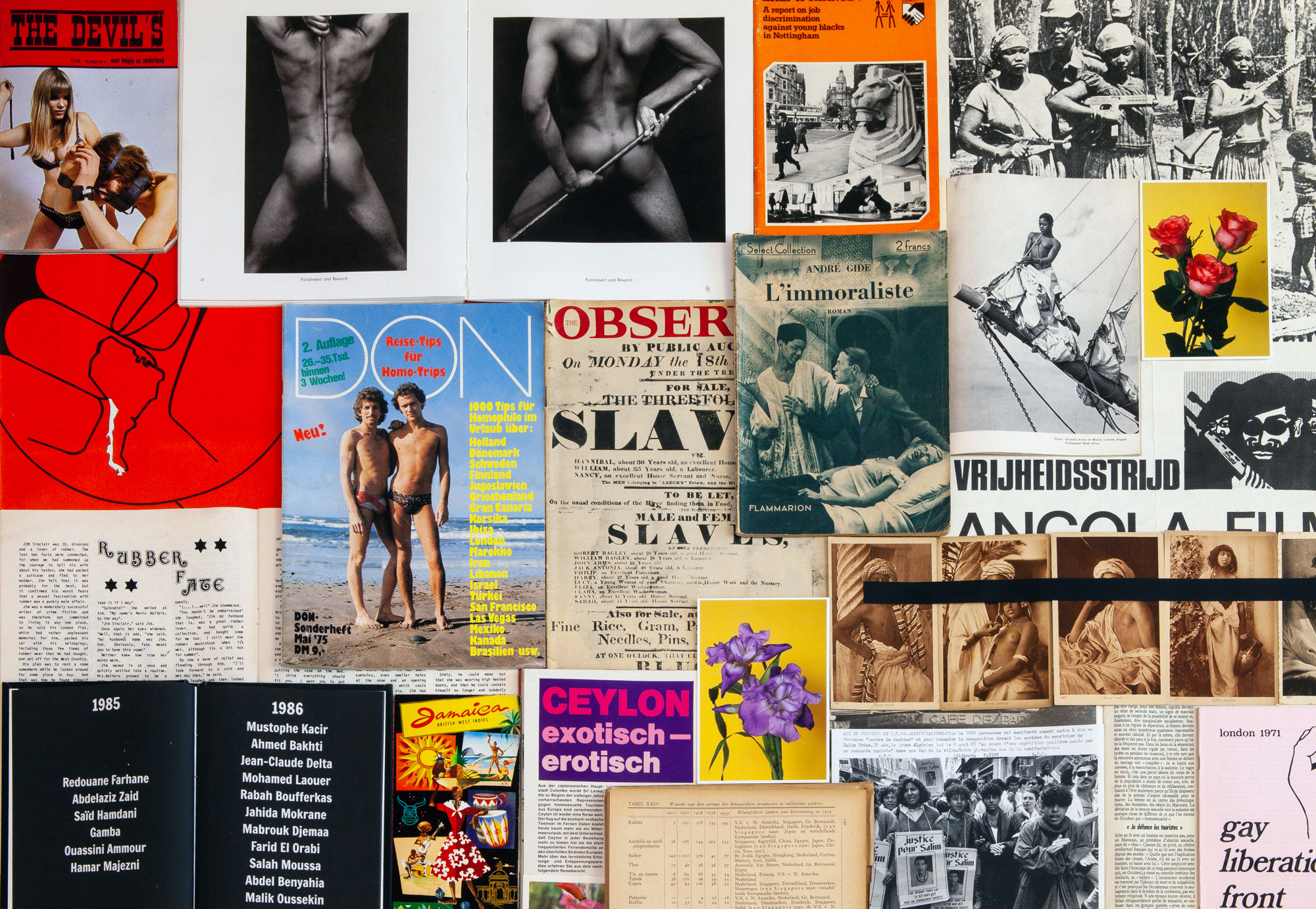
Rubber Fate. WERKER Archief, Amsterdam 2023. From left to right, top to bottom: reference 33–52 at the bottom of this article.
Rubber Fate is the title of an article published in the fetishist magazine Smooth: For Those Appreciative of the Sensual Properties of Rubber by Swish Publications in London, circa 1970. This selection of documents juxtaposes BDSM culture with images from the Nigerian-born British queer photographer Rotimi Fani-Kayode and controversial articles published in German and French gay magazines during the 1970s—such as DON, DU + ICH, and Gai Pied—which promoted sex tourism in non-Western destinations. The name of the magazine Gai Pied was given by the philosopher Michel Foucault. Gai Pied is a homophone of Guêpier (hornet’s nest), which is the house of a community of hornets and figuratively denotes a troublesome or hazardous situation. Gai Pied can also be read as the combination of two words: Gai (fun, gay) and Pied (foot). Prendre son pied is a French expression that is used to express the enjoyment of an intense sexual pleasure. This spread questions colonialism and the racial and class politics of European gay mainstream culture in the 1970 and 1980s. Early twentieth-century orientalist postcards from Tunisia by Lehnert & Landrock are combined with an anti-colonial poster by Angola Film and papers on the anti-racist struggle in France, such as a demonstration in Aix-en-Provence from 1984 by Pierre Ciot or Non-Lieu, an ongoing listing by artist Samir Laghouati-Rashwan with all the names of people killed by police brutality in France.
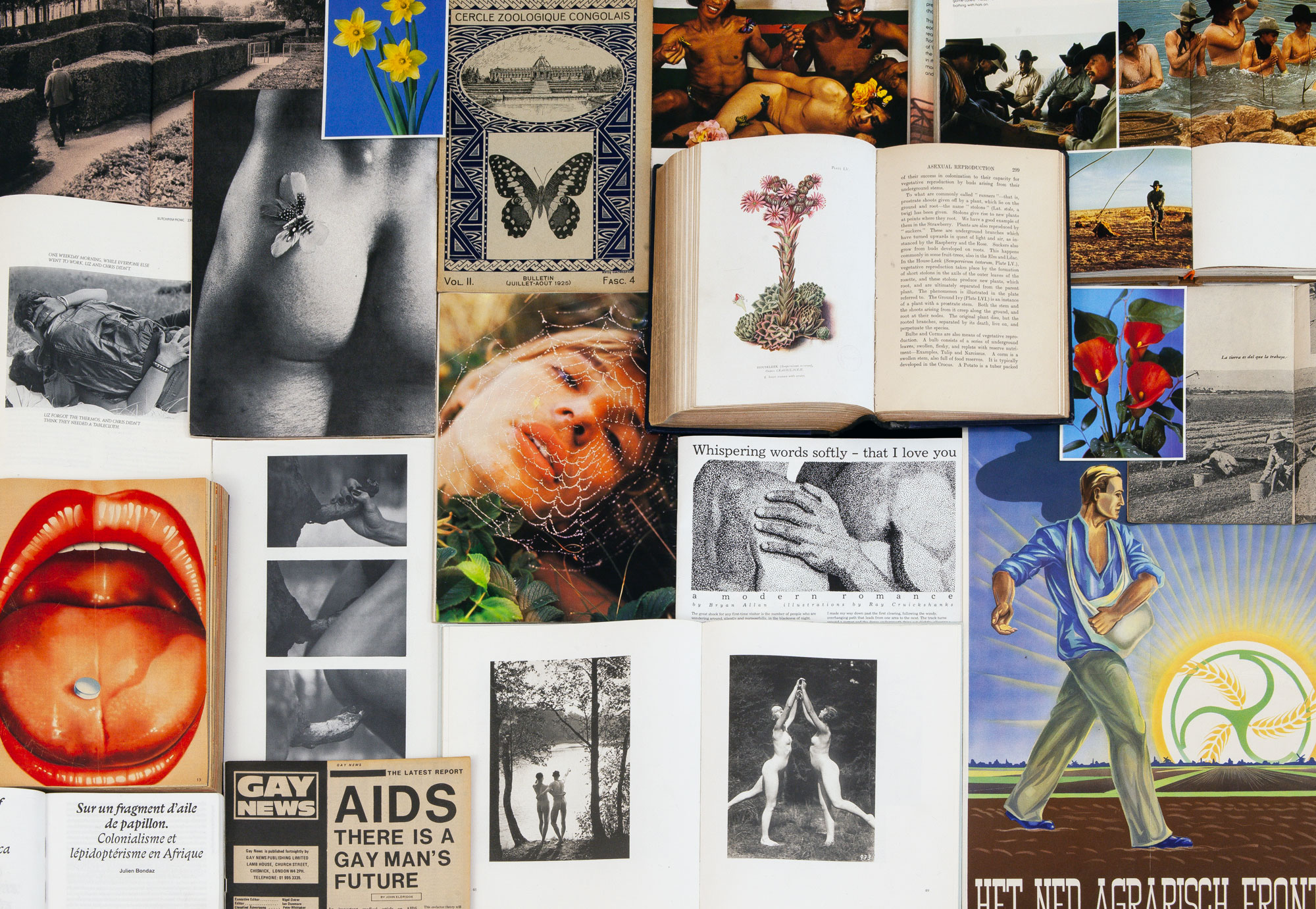
Whispering Words Softly. WERKER Archief, Amsterdam 2023. From left to right, top to bottom: reference 53–70 at the bottom of this article.
Whispering Words Softly is the title of an article in Square Peg no. 3, a magazine founded in Derek Jarman’s living room in 1983. The magazine shed a queer perspective on arts, culture, and politics. Despite the UK mainstream media’s hostility toward LGBTQIA+ content during the early years of the AIDS epidemic, Square Peg fearlessly celebrated queerness and described itself as a “journal for contemporary perverts,” unapologetically embracing a sex-positive approach combined with sexual education, articles about sex-worker rights, and advice for the members of the community who were affected by the epidemic. This fourth composition imparts that Queer Reproduction does not only address non-heteronormative bodies, but that this research aims to serve as a potential blueprint for an inclusive understanding of all forms of reproduction, including all human and non-human bodies that reproduce sexually and asexually. Queer Reproduction opposes the patriarchal understanding of reproduction that sustains the current status quo, based on private property, inheritance, and the passing on of privilege. We claim, “Let’s make books, not babies!”.
—WERKER, 2023
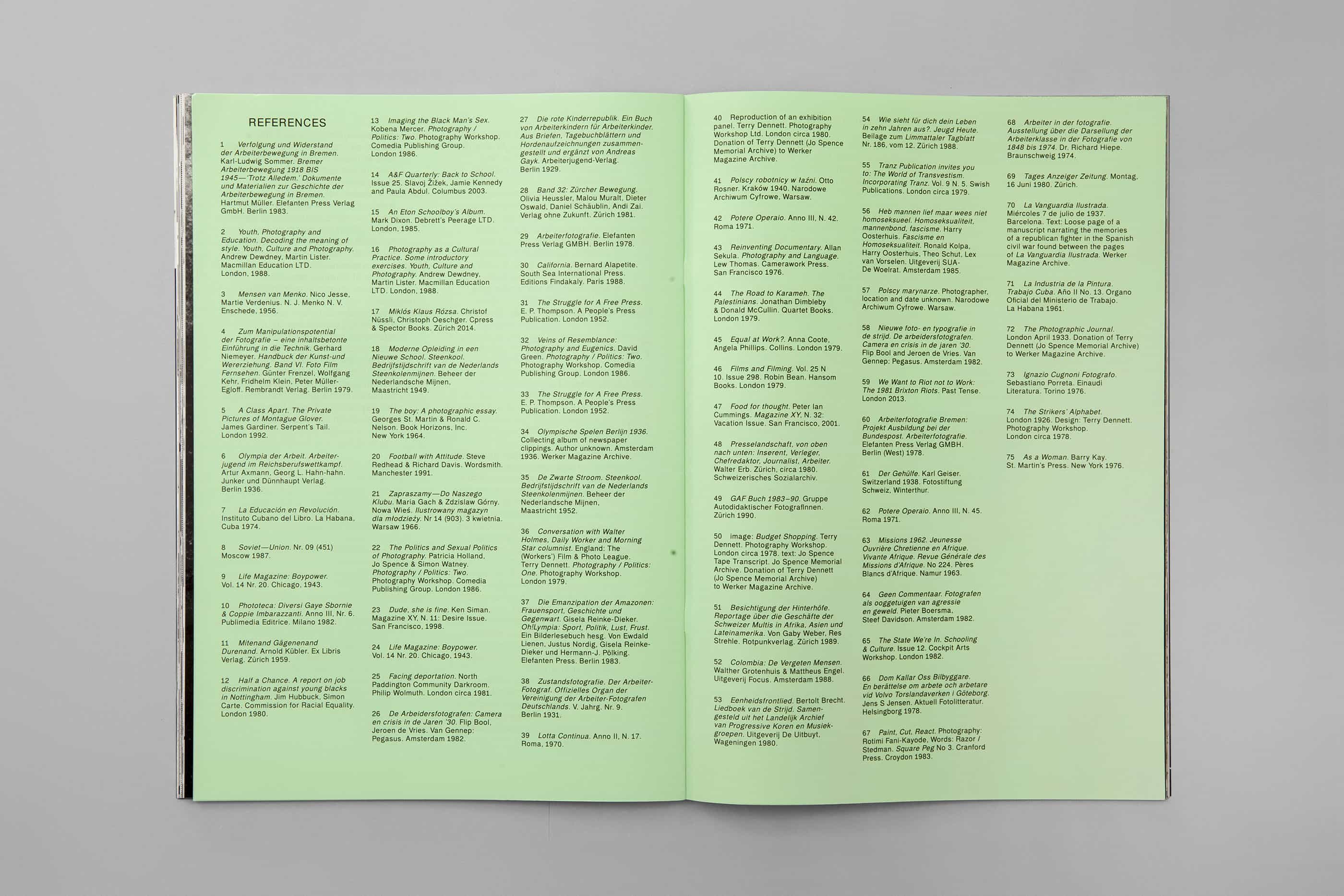
1The World of Transvestism Vol. 19, No. 4. Swish Publications. London circa 1980.
2Coming of Age: Will McBride. Aperture. New York 2005.
3Die Rote Kinder Republik: Ein Buch von Arbeiterkindern für Arbeiterkinder. Andreas Gayk. Arbeiterjugend-Verlag. Berlin 1929.
7Daisies. Ministry of Communications of the USSR. Moscow 1968.
8Jo Spence: Beyond the Perfect Image: Photography, Subjectivity, Antagonism. Terry Dennett, Jorge Ribalta. MACBA. Barcelona 2005.
9What Can a Woman Do with a Camera: Photography for Women. Jo Spence & Joan Solomon. Scarlet Press. London, 1995.
10XY Magazine #41 Psyco. Peter Ian Cummings. San Diego 2003.
11Das Weib in der Natur und Völkerkunde. Ploss–Bartels. Neufeld & Henius Verlag. Berlin 1927.
12Der Arbeiter-Fotograf, III. Jahrgang, Nr. 12. Offizielles Organ der Vereinigung der Arbeiter-Fotografen Deutschlands. Berlin, Dezember 1929.
13The World of Transvestism Vol. 15, No. 7. Swish Publications. London circa 1980.
14Rabotnitsa (The Woman Worker) Year 34, No. 7. Pravda. Moscow 1956.
15Reflections of a Rock Lobster: A Story About Growing Up Gay. Aaron Fricke. Alyson Publications, Inc. Boston, 1981.
1610 Maart, Dag van de Anarchie. Willem Holtrop (Provo). Amsterdam 1966.
17Der Eigene: Ein Blatt für Männliche Kultur. Joachim S. Hohmann. Foerster Verlag. Frankfurt / Berlin 1981.
18A Standing Boy Dressed in Greek Garb, in Gloeden's Garden. Wilhelm von Gloeden. Taormina 1902.
19Der Spiegel, 13. Jahrgang, Nr. 43: Stehen Sie Auf, van der Lubbe!. Hamburg, 21 Oktober 1959.
20Détective 6e Année - No. 258 #2: Le Marin Traqué. Paris 5 octobre 1933.
21Geschlechtskunde IV. Band: Bilderteil. Dr. Magnus Hirschfeld. Julius Püttmann, Verlagsbuchhandlung. Stuttgart 1930.
22La Lutte Sexuelle des Jeunes. Wilhelm Reich. FM/Petite Collection Maspero. Paris 1972.
23Ink, the Other Newspaper: Gay!. London 1971.
24Rinus van der Lubbe 1909–1934. Martin Schouten. De Bezige Bij. Amsterdam 1986.
25Lilium. Ministry of Communications of the USSR. Moscow 1968.
26Voluptuous Panik: The Erotic World of Weimar Berlin. Mel Gordon. Feral House. Port Townsend 2000.
27Der Weg zu Freundschaft und Toleranz: Männliche Homosexualität in den 50er Jahren. Volker Janssen. Verlag Rosa Winkel. Berlin, 1984.
28Brand in het Rijksdaggebouw: Voorwendsel voor de Nazi-Machtsgreep. Geschiedenis van de Tweede Wereldoorlog. B. John Pritchard. Standaard Uitgeverij Antwerpen 1992.
29Sittengeschichte des Weltkrieges I. Magnus Hirschfeld. Verlag für Sexualwissenschaft Schneider & Co. Leipzig / Wien 1930.
30Du + Ich, Heft 7, 10. Jahrgang. Alexander Ziegler. Leine-Verlags GmbH. Hannover, Juli 1978.
31SEQ, Tweede Jaargang, No 3: De Vervolging van de Homoseksuelen door de Nazi's. Nederlandse Vereniging van Homofielen, COC. Amsterdam April/Mai 1970.
32Punch, or the London Charivari: The Red Peril. Bernard Partridge. March 8, 1933.
33The Devil's: Een Blad voor Sadomasochisten voor Belgie en Nederland. (no place, no date).
34Black Male / White Male. Rotimi Fani-Kayode. De Woelrat / GMP. Amsterdam / London 1988.
35Half a Chance? A Report on Job Discrimination Against Young Blacks in Nottingham. Jim Hubbuck, Simon Carter. Commission for Racial Equality. London 1980.
36Unita: Angolese Vrijheidsstrijd. Angola Film. Cineclub Vrijheidsfilms. Amsterdam 1975.
37Chili: Vrijheid voor Alle Politieke Gevangenen! Bautista van Schouwen, Arturo Villavela, Roberto Moreno. Amsterdam 1975.
38Don: Reise-Tips für Homo-Trips. Frankfurt, Mai 1975.
39The Observer. London, October 17, 1965.
40L'Immoraliste. André Gide. Select Collection No. 60. Flammarion. Paris 1937.
41Der Kreis–Le Cercle–The Circle Nr. 9. Homophile Love Amongst Coloured People. Zürich 1958.
63La Reforma Agraria en el 26 de Julio #2. Lisandro Otero, Korda, Raúl Corrales, Tony Evora. Ediciones R. Havana 1960.
64Sekstant, 55e Jaargang Nr. 9: Rooie Flikkers!. Uitgave van de Nederlandse Vereniging voor Sexuele Hervorming. Stichting Uitgeverij NVSH. Den Haag September 1975.
65Volksfoto: Zeitung für Fotografie Nr. 1–6. Dieter Hacker, Andreas Seltzer. Zweitausendeins. Frankfurt am Main 1981.
66Square Peg No. 3. Cranford Press. Croydon 1983.
67Het Ned. Agrarisch Front. Anonymous. De Reproductie Compagnie. Rotterdam 1942.
68Nackt unter Nackten: Utopien der Nacktkultur 1906–1942. Ulf Erdmann Ziegler. Verlag Dirk Nishen GmbH & Co KG. Berlin 1990.
69Ramper, Dédoubler: Collecte Coloniale et Affect. Mathieu K. Abonnenc, Lotte Arndt, Catalina Lozano. Éditions B42. Paris 2016.
70Gay News No. 28. Gay News Publishing Limited. London 1984.
Yes With Us, Never About Us: Art/Workers, Solidarity and Privilege(1)
(as published by WERKER in Collectively, Iaspis, Stockholm 2021)
The history of artists’ engagement in workers’ struggles is as long as the distrust of intelligentsia by the revolutionary working class. After the 1917 Bolshevik Revolution in Russia, more than 160 intellectuals were expelled with their families on so-called ‘Philosophers’ Ships’ from Petrograd (today Saint Petersburg) to Stettin in Germany (today Szczecin, Poland). Later, in 1922, more intellectuals were to be transported by train to Riga or by ship from Odessa to Istanbul. Contemporary examples of artist persecution can be found in the Republic of Cuba or China, where artists and intellectuals are subjected to arbitrary arrest and detention, accused of promoting dissident behaviour. In 2019, The National Assembly of People’s Power in Cuba approved a decree in the new constitution (Decreto 349) that enforces state control over art events and obliges all artists to adhere to official cultural institutions. A new authority has been introduced known as the ‘cultural inspector’, with powers to stop any artistic manifestation considered to not be conforming with the ideals of the revolution.2
Paradoxically, under the dictatorship of the proletariat, art and culture seem to be taken seriously by the state. As potential catalysts of social change, the production of culture in such political contexts must be either channelled by state institutions or repressed otherwise. The seemingly larger degree of individual freedom in our modern democracies contrasts with the often questioned agency of politically engaged art practices and academic critical knowledge. Can socially engaged art bring any real social and political change to society or does it only serve governments as a cosmetic excuse to soothe critical voices and preserve the current status quo?
Written in an Italian fascist prison from 1929 to 1935, Antonio Gramsci’s Prison Notebooks sketch the first Marxist theory to analyse culture as a fundamental part of the superstructure of society. Gramsci’s theory of cultural hegemony describes how civil society creates, through a variety of cultural forms, a ‘common sense’ or consensus that is necessary for any kind of social and economic activity to take place. Analysing Gramsci in the scope of post-truth rhetoric, the presidents Donald Trump, Jair Bolsonaro or Andrzej Duda don’t hesitate to exacerbate social antagonism with ‘fake news’ in order to gain popularity by opposing the local working class to migrant workers, heteronormative families to LGBTQI+ communities, patriarchy to feminist movements, intellectuals to manual workers or white hegemony to multiculturalism. It is plausible to suggest that today’s politics are increasingly influenced by the technological developments that incessantly reshape the way in which culture and ideology are created and shared. To use Gramscian terminology, capitalist societies produce a ‘common sense’ to benefit the ruling class. To subvert the status quo, it is essential to create a culture from below. How can intellectuals and artists contribute to the formation of counterculture? Are artists and intellectuals a part of the dominant class or can they provoke social change from below? Gramsci defined two kinds of intellectuals: the traditional intelligentsia which sees itself as a class apart from society and the ‘organic intellectuals’ which articulate through culture the invisible experiences of the oppressed.
Trends in Income Inequality. WERKER Archief, Amsterdam 2021.
From our perspective, an example of what Gramsci considered an ‘organic intellectual’ would be political activist and communist Willi Münzenberg who founded the Vereinigung der Arbeiter-Fotografen (Association of Worker Photographers) in 1926, which was a group of associations in Germany aimed at making photography accessible to workers and the unemployed. Münzenberg’s network of politicised photo clubs were pioneering in challenging the hierarchy inherent to traditional forms of art and media production, notably the separation between ‘authors’ and ‘subjects’. The Worker Photographers often signed their images under group names, valorizing the collective effort of representing daily struggle over authorship. This experiment of direct participation of workers in the production of representations of daily life lasted until 1933, when the German Communist Party became illegalized by Hitler. Similar collectivist experiences to Münzenberg’s photo clubs took place in the first years of the Bolshevik Revolution in the Soviet Union but rapidly lost its communal nature under Stalin’s totalitarian dictatorship. In 1940, Münzenberg was found dead in Bois de Caugnet, France. The circumstances of his death remain unclear, but evidence seems to indicate that he was killed by a Soviet agent under the orders of Stalin. From 1938 onwards, Münzenberg stood publicly against Stalin’s repressive politics, namely the Great Purge that killed between 600,000 and one million people comprising of rich land owners, members of the intelligentsia and the Soviet Communist Party that Stalin considered potential opponents to his mandate.
In the late 1960s, the research by French Marxist philosopher, Louis Althusser, shed light on how ideology is transferred from the state to the population and became useful to identify less obvious forms of control of artistic expression and critical thinking that take place in our modern democracies. Bureaucratic procedures filter the access to public funds for arts and culture. Commercial interests and sponsors influence the agenda of museums, festivals and academies. Private investors set the market value of artworks. In parallel, meritocracy and cultural elitism regulate which artists and intellectual voices are validated. Differences in class, gender, race, sexuality and religion keep on determining which voices are heard, which artists can financially sustain themselves with their artistic practice and which forms of knowledge are recognized with institutional visibility.
In 1969, the Art Workers’ Coalition in New York wrote a list of 13 demands addressed to city museums to implement economic and political changes and reassess the museum's relationship to artists and society. The list included demands such as the access to welfare for artists, rent control for artist housing and guidelines for museums to properly remunerate their work. There were also demands for measures to increment the presence of P.O.C. and women artists and audiences in the museums. More than 50 years later, these demands are still unfulfilled. Self-organised groups in different geographies such as the Precarious Workers Brigade3, Guerrilla Girls4, or The Black Archives5 are currently campaigning against the exploitation of art workers and the unrecognition and erasure of women and P.O.C. narratives. Beyond the Gramscian opposition between ‘traditional’ and ‘organic’ intellectuals, whose differentiation lies in which ideology and social class artists and thinkers represent in their oeuvre, the Art Workers’ Coalition approached the artist’s relationship to society through the perspective of labour, feminist and civil rights liberation movements. The artist, as a worker, should equivaleate their rights to other professional fields and be protected by a society that is articulated around the dictates of a productive economy. The artist as a woman and/ or a mother should be cared for and compensated by a society that takes reproductive labour for granted and assigns care work to only women. The P.O.C. artist should be cared for and compensated by a society whose wealth is based on hundreds of years of slavery and the exploitation of colonised lands and cultures. In our opinion, to exclude the artist from the possibility of also being a ‘worker’ might have the effect of both mystifying the figure of the artist by assuming (traditional) concepts of authorship and alienating their position in society, thus compromising the political agency of the arts at large.
In the decade following May ’68, the notion of the artist/worker led to artists and intellectuals joining forces with students, labourers, cleaners and factory workers in order to challenge the functioning of art institutions, universities and factories through a set of collaborative practices and political actions. Pioneering exhibitions like Tucumán Arde (1968) by Grupo de Arte de Vanguardia engaged with the struggle of Argentinian workers from the Tucumán region that suffered from the disappearance of the local sugar industry. Berwick Street Film Collective in London supported the effort of the Cleaner’s Action Group to unionise severely underpaid night cleaners from different office buildings in London with the realisation of a documentary film, Nightcleaners (1975). Parisian filmmakers Chris Marker and Jean-Luc Godard contributed technical training and film equipment to the Centre Culturel Populaire Palente Orchamps (CCPPO) to set up the Medvedkin Group which was a film project initiated by politically engaged workers from the Rhodiacéta factory in Besançon and the Peugeot factory in Sochaux and based on the collectivist ideas of soviet filmmaker Alexander Medvedkin6. Simultaneously, in the Soviet Bloc, film clubs in the different countries became more permissive with cultural expressions not conforming to the official Soviet rhetoric and freeing itself from the straitjacket of social realism.
An illuminating internal letter7 published in October 1969 analyses the developments of the Medvedkin Group one year after its foundation, in a moment of crises when there were only three members left in the group. The letter describes the relation between the Parisian support group and the workers in Besançon and Sochaux stating that, “The Medvedkin Group is a myth to which Parisians send their support to.”8 The document shows the difficulty to keep up a continuity in the film activities of the worker-led group and offers some solutions; either the group dissolves and hopes for an organic reactivation by workers themselves or it becomes part of the CCPPO and welcomes intellectual workers to join in. The document ends with an exclamation, “The Medvedkin Group has died! Long live the Medvedkin Section!”9 It is relevant to mention that one of the main activities of a so-called Medvedkin Section would be to create an archive of social struggle, strikes and revolutions for which they would need a skilled archivist to volunteer. This is an example of the difficulty to keep momentum in artistic collaborations between intellectual and manual workers. Are there differences in the dedication that different actors of such collaborations can keep up with? Is there a difference of interests? Are artists willing to integrate a collaborative methodology to their practice, whereas workers might not see the outcome of such a collaboration useful for their militancy? What practice has taught is that there is a physical limitation of artists and workers who usually commute between their regular remunerated jobs and little or non-remunerated activism, which brings us all to a state of exhaustion.10
Looking at histories of the artist as a worker, and the worker as an artist, it is of relevance to determine that geographical, cultural and educational privileges do not dissociate the artist to be a worker, or the worker to be an artist, but still there are differences that prevail. Our common interests and solidarity are crystalized through collaborative educational practices and political actions. Our skills can be shared, but how can our fragile cultural and (under)privileged social positions be unveiled and reworked together? What educational opportunities can we explore, in solidarity against oppressive hegemonies? Cultural studies have helped us to define that, “People have to have a language to speak about where they are and what other possible futures are available to them. […] These futures may not be real; if you try to concretize them immediately, you may find there is nothing there. But what is there, what is real, is the possibility of being someone else, of being in some other social space from the one in which you have already been placed.”11
Examining the home as a social setting in which capitalist exploitation takes place, the Domestic Worker Photographer Network12 initiated by Werker Collective in 2011 as a part of The Grand Domestic Revolution by Casco Art Institute: Working for the Commons in Utrecht, is a critical platform for workers from different fields to share their own experiences of working at home. The network functions as a ‘technology of care’, to invigorate self-representation as a social practice in order to fight the isolation and invisibility of house workers. It calls attention to the hegemonic structures that make reproductive work invisible and aims to disrupt the visual material that propels this invisibility in dominant media. The Domestic Worker Photographer Network proposes a space for ‘imaging’ workers’ solidarity and most importantly supports the current struggle of migrant domestic workers who campaign to demand respect, recognition and equal rights for their care work. This stands in solidarity with the ongoing campaigns of self-organised domestic workers worldwide who demand the ratification of the International Labour Organization’s (ILO) Domestic Workers Convention (C189) to equivalate their labour rights to other professions in terms of working hours, access to social security, unemployment benefits, pension, paid holidays, etc.
Despite obvious differences in terms of social recognition of the work of artists and that of domestic workers, we can identify a correlation between the demands made by domestic workers and the struggle of freelance cultural workers who, in many countries, suffer from irregular income, no right to pension, high rent, unpaid overtime. In addition, a variety of forms of systemic racism and exploitation forces these sectors to accept lower incomes compared to their level of studies. It is important to mention that many migrant domestic workers hold higher education diplomas obtained in their country of origin. Workers that don’t take part in the productive economy of our societies are directly and systematically undervalued, instrumentalized or neglected. Simultaneously, this applies to education and health care workers who suffer from the effects of successive budget cuts and privatisations of their sectors. When it comes to reproductive and care work, its historical undervalorization has an impact on a representational level. Domestic and care work are invisible forms of work and this invisibility is something that concerns us as artists engaged in reassessing the politics of representation in our societies.
Unsolvable oppositions fed by assumptions about professional identities and (non-)privileges have the effect of cancelling the possibility for solidarity and collective action. As mentioned in the above histories, social change is achieved through the sum of intellectual and manual workers uniting against forms of oppression that are always exerted by a few in detriment of a majority. Competition and difference stand opposite of solidarity and commonality. The dismembering of the social body reinforces the oppressive status quo of the dominant class. How can collective action be articulated around the myriad of differences and specificities that our vulnerabilities deserve to be cared for? How can these differences be acknowledged and become part of our common struggle for social justice?
As an assembly of bodies with a multitude of selves, we would like to be identified not just as artists, domestic workers, teachers or mothers. As much as our professions define our position in society, our identities are constructed around parameters of gender, sexuality, class, race and more. This multiplicity of positions and vulnerabilities that are in all of us — which abolishes a monolithic notion of identity divided in binaries — is where solidarities can be articulated; to construct a counterculture of non-conforming bodies that reject the capitalist, white patriarchy. Thus, to create ‘technologies of care’ is a collective task for artists, activists, mothers, workers and oppressed populations at large. It is necessary and urgent to relentlessly rearticulate worker solidarity against the disintegration of the social body that we are facing today, immersed in global pandemics and monitored by surveillance systems that screen our online/offline political activism. Yes with us, never about us.
(1)As mentioned during a meeting between art and domestic workers at The Showroom art gallery in London in 2012 by Marisa Begonia, Coordinator of the Voice of Domestic Workers in London. A self-organized union of migrant domestic workers. www.thevoiceofdomesticworkers.com ↗︎
(2)Ever since the approval of Decreto 349, a self-organised group of Cuban artists have united under the slogan Sin 349 (Without 349) to oppose the implementation of the new decree.
(3)Precarious Workers Brigade (PWB) is a UK-based group of precarious workers in culture and education. They call out in solidarity with all those struggling to make a living in this climate of instability and enforced austerity. The PWB’s praxis springs from a shared commitment to developing research and actions that are practical, relevant and easily shared and applied. If putting an end to precarity is the social justice they seek, their political projects involve developing tactics, strategies, formats, practices, dispositions, knowledges and tools for making this happen.
(4)The Guerrilla Girls are feminists, activists and artists. Over 55 people have been members over the years, some for weeks, some for decades. Their anonymity keeps the focus on the issues, and away from who they might be. They wear gorilla masks in public and use facts, humor and outrageous visuals to expose gender and ethnic bias as well as corruption in politics, art, film and pop culture. www.querrillagirls.com ↗︎
(5)The Black Archives is a unique historical archive for inspiring conversations, activities and literature from Black and other perspectives that are often overlooked elsewhere. The Black Archives documents the history of Black emancipation movements and individuals in the Netherlands. The Black Archives is managed by the New Urban Collective. The Black Archives consists of unique book collections, archives and artifacts that are the legacy of Black Dutch writers and scientists. The approximately 3000 books in the collections focus on racism and race issues, slavery and colonization, gender and feminism, social sciences and development, Suriname, the Netherlands, Antilles, South America, Africa and more.
(6)Alexander Medvedkin conceived a mobile film studio in a train which circulated during the early years of the Soviet Revolution and allowed for the realization and screening of political films in-situ.
(7)We found this risographed document in a bin during a visit to CCPPO in Besançon in 2014. (Werker Archief).
(8)Julia Morandeira Arrizabalaga, “Políticas del sueño — Un texto por el derecho al descanso” Published by Werker Magazine, 2018, http://werkermagazine.org/texts/politicasdelsueno ↗︎
(9)Hua Hsu, “Stuart Hall and the Rise of Cultural Studies” in the New Yorker, www.newyorker.com/books/page-turner/ stuart-hall-and-the-rise-of-cultural-studies ↗︎ (Accessed June 30, 2020).
(10)The Domestic Worker Photographer Network (DWPN) aims to reflect, through the means of photography, on the politics of domestic space and domestic work. Since 2011 the network has gathered more than 500 visual and written testimonies of domestic workers and people working at home. A series of image critique workshops have been organised in order to categorize all contributions made through the website with a set of keywords and a lexicon. This resulted in a publication titled, 365 Days of Invisible Work (2018) and a collaborative textile installation, Embroidering Theory (2019). Within the current crises of COVID-19 the vulnerability of domestic workers has become even more apparent. Similarly telework and online teaching has become an extended practice. The DWPN is a growing community of amateur photographers (online and offline), which currently consists of 200+ contributors with different ages coming from a variety of professional fields, based in more than 50 locations all over the world.
Imaging Dissent: Towards Becoming a Common Subject
(as published by WERKER on e-flux Art & Education in January 2020)
Between 1844 and 1846 in London, just after the First Industrial Revolution, W. Henry Fox Talbot published a book captivatingly titled The Pencil of Nature. In it, he described the potential uses of the recently invented negative-positive photographic process, such as its capacity to create evidence to be used in court and to produce prints of plant leaves for scientific study. But Fox Talbot also introduced the social aspects of photography, like portraiture and the representation of daily life, and noted the unequivocally amateur vocation of the medium, given its near-universal ease of operation.
Less like a pencil of nature and more like a shovel of extraction, the invention of photography paralleled the emergence of other technologies in the nineteenth century that accelerated the speed with which natural resources were appropriated for the accumulation of capital. Water and steam provided the relentless motion that structured the lives of the working class. In 1830, the workday ranged from ten to sixteen hours in a six-day working week; no time was left for the working class for leisure outside the polluted cities, nor for self-organization. The bourgeoisie deployed the technology of photography to develop an archive of “truth”(1) and expand its privileges over the world’s populations, natural resources, and biodiversity.(2) This instrumentalization occurred in tandem with the instrumentalization of the bodies of the working class. New technologies of production developed alongside infrastructures of knowledge that legitimized the authority of the systems in power and reduced the capacity of the working class to revolt.
In the 1920s, several worker organizations were founded around the world, due in part to the progressive implementation of an eight-hour workday. They opposed elitism, competition, and bourgeois ideology, and combined self-education and political activism with leisure, sports, and enjoyment of nature. Many, like the Naturfreundejugend in Germany, abolished gender segregation and adopted practices of naturism.(3) A sense of international worker solidarity emerged through their collective actions: agitprop theatre, worker sports, social hiking, rallies, strikes, and worker-photography. Amateurism became the model of cultural production for the workers’ movement, seeking to challenge the hegemonic capitalist “common sense”(4) that maintained dominant social structures. Instead of profit, the amateur established a relationship to the world based on curiosity, determination, love, and solidarity. The figure of the amateur challenged the hierarchy between intellectual and manual workers, uniting the social body through a set of creative practices.
Worker-photographers learned to master the technical aspects of photography and, more importantly, to develop practices of image analysis and media critique. In the industrialized world, image production proliferated in improvised darkrooms in domestic spaces and union houses affiliated with communist organizations. Traditional notions of authorship and authenticity were set aside and replaced by a collective political interest. As materials were often exchanged and republished, groups of worker-photographers formed an international network and a shared archive of resistance.(5) They constructed an environment of images and documents around the bodily needs of the worker; care work and reproductive and housing issues were addressed as much as self-organization and leisure activities. In 1933 the National Socialist German Workers’ Party assumed power and banned the activities of the worker-photographers in Germany. Many members of communist and socialist organizations were arrested and interned in concentration camps, and much of their archive was destroyed or lost. In the postwar United States, the disarticulation of a self-organized working class continued under McCarthyism, with growing anti-worker sentiment during the Cold War. Meanwhile, in the Soviet bloc, the implementation of strict control over the press professionalized photojournalism. The direct engagement of amateur workers in the production of images and documents of real life came to an end.
A second wave of radical documentary emerged on both sides of the Iron Curtain beginning in the late 1960s. In 1979, the pamphlet The Worker-Photographer, published by the London collective Photography Workshop, included an editorial entitled “The Hidden History of Worker Photographers,” which called for the reconstitution of the lost archive of the worker-photography movement. Inspired by the worker-photographers from the 1920s to visualize their struggles, self-organized action groups, associations, and community centers adopted collaborative methods of image production. Fifty years on, the subjects depicted in the images of the first movement were enhanced by feminist and early postcolonial theory. The aim remained the same: to mobilize society through self-representation.(6) In Berlin, artist Dieter Hacker initiated the 7. Produzentengalerie in 1971, a noncommercial exhibition space dedicated to the analysis and renegotiation of the social and political function of art. Work, family, childhood, sexuality, and eroticism were addressed through a critical and provocative questioning of vernacular photography and the family album. Hacker’s initiative supplemented the more dogmatic leftist approaches of the first movement with gender and identity politics, emphasizing the collective body formed by the working class—one that is human, animal, sexual, queer, and in contact with nature.
Following the rise of neoliberalism in the 1980s, a pattern would repeat worldwide: budget cuts affected educational institutions, health care, social housing, and (leftist) culture. Community centers and associations suffered, and financial asphyxiation continued under a new bureaucracy designed to regulate and control the activities taking place in community centers. Radical documentary groups that had always rejected public funding persisted for some years,(7) but many other initiatives ceased to exist or became depoliticized soon after new policies were implemented. Parallel to this, a conservative campaign was orchestrated to delegitimize working-class self-organization and demonize the poor.(8) Charity replaced the state as a guarantor of basic human needs. Individualism, consumerism, and private property won the ideological battle for hegemony over “common sense” in the Western world. The Soviet Union was dismantled.
Contemporary processes of mechanization, robotization, and digitalization of labor have blurred the division between work and life yet again. It is increasingly difficult to capture an accurate image of what work looks like today. Most factories prohibit photography on site, while training cameras on workers to optimize their productivity. Domestic, reproductive, and care work—the labor that involves the maintenance and reproduction of our bodies—persists as an endless source of oppressive, invisible, informal, and unpaid work. Those who are remunerated for it are often racialized and gendered migrant workers who face precarious working conditions.(9) The “gig economy,” which drives the labor market further into the pits of casualization by reconceptualizing labor as an “event,”(10) has become predominant in fields like food delivery, hired transport, and care work. Creative work—always subjected to the infrastructures of freelance contracting—has been devalued. Potential alignments between the bodies that do cognitive cultural work, the “gig” economy, and visa-tied domestic work have yet to be mobilized. Work doesn’t begin, because it never stops.
The internet has nonetheless opened new possibilities for the articulation of a collective archive. Inspired by rhizomatic structures, autonomous movements in the early 2000s managed to challenge the server-client logic. P2P (peer-to-peer) file-sharing platforms enhanced amateur communities in different fields and enabled “copyleft” modes of working. Sampling and reproduction technologies became cheaper, thus actualizing the modernist notion of montage. But the tradition of “the pencil of nature,” rather than elevating amateurism, has once again favored copyrighted image banks and search engines that monitor our creativity. Social media—by definition a collectively generated archive—has rendered life an advertisement and capitalized on every aspect of our individual bodies. The aesthetic of social media mimicks the mainstream glamour media that is used to validate and indulge the lifestyles of the dominant class, which has controlled and shaped this aesthetic since the very beginning of the illustrated press. Online creativity is delimited to likes, subscribers, followers, and sponsorships. This form of creativity reinforces repressive structures, as the predominant aesthetic of social media rewards the most successful 1 percent of “content creators” with wealth and riches. For the rest of social-media users, the ambition is to possess an aesthetic and lifestyle that corresponds with the monoculture of the elite.
We have seen in recent history that social media has great potential to mobilize the collective body,(11) especially when online and offline collectivities invigorate each other to demand equal rights, equal pay, and respect. Yet our body is an archive of gestures, of “photographic” drawings—an ecosystem of its own that is also enmeshed with the biosphere. Just as our bodies host millions of living organisms, they host millions of cultural artifacts. Archiving documents, publications, and images, and creating new ones to document our current struggles, are ways to access the collective memory that shapes our individual and communal body. With their cameras, the worker-photographers of the 1920s created the first international archive of class struggle. The second wave in the 1970s aimed to reconstitute the lost archive of their predecessors and reactivate it with their own struggles. Today, the articulation of our own counter-archives of labor, in solidarity with other oppressed bodies—human and nonhuman—seems a necessary step towards becoming a common subject.(12) Extraction and exhaustion must be replaced by an ecosystem of respect and care in balance with other forms of life. The current paradigm of the distribution of knowledge and “common sense” must be challenged by an “infrastructure of dissent”(13) based on the ideals of the amateur: curiosity, determination, love, and solidarity. There must be a DIY infrastructure to reconfigure our collective and individual bodies that have been shattered by capitalist greed, restoring them to a state of balance with nature.
—WERKER, 2020
1An “archive” of truth, stemming from the Greek arkheion: initially a house, a domicile, an address, the residence of the superior magistrates, the archons, those who commanded. “The citizens who thus held and signified political power were considered to possess the right to make or to represent the law. On account of their publicly recognised authority, it is at their home, in that place which is their house (private house, family house, or employee’s house), that official documents are filed.” Jacques Derrida, “Archive Fever: A Freudian Impression,” Diacritics 25, no 2 (1995).
2Donna Haraway states in Simians, Cyborgs, and Women that “Twentieth-century people are used to the idea that all photographs are constructs in some sense, and that the appearance that a photograph gives of being a 'message without a code', that is, what is pictured being simply there, is an effect of many layers of history, including prominently, technology.” Haraway, Simians, Cyborgs, and Women: The Reinvention of Nature (London: Routledge, 1991), 221.
3With the rise of the National Socialist German Workers’ Party, certain naturist ideologists endorsed eugenics and defended the use of forced sterilization on individuals who exhibited so-called “anti-social behavior.”
4A term coined by Antonio Gramsci to describe the active maintenance of the status quo through cultural production.
5As exemplified by the documentary Borinage by Joris Ivens and Henri Storck (Le Club de l’Ecran, Brussels 1934), which uses material from the newsreel America Today & The World in Review by Leo Seltzer (Film and Photo League of the Workers International Relief, USA, 1932–34). Both films are discussed later in this article.
6An emblematic example is the CCPPO, an association in Besançon, France that invited Chris Marker to help activate a worker-run film initiative called the Medvedkine Groups. Simultaneously, in the Soviet bloc, cine clubs were organized within factories. Workers had access to film equipment and managed to create critical narratives around gender, sexuality, media, work, and family. A selection of these films from Poland can be seen in the Enthusiasts Archive, which has just been integrated into the collection of the Museum of Modern Art in Warsaw.
7Such as Photography Workshop Ltd. from London, 1974–92, led by Jo Spence and Terry Dennet. This group actively engaged in the politics of photography and class struggle in the UK from a historical-materialist perspective, training amateurs in photography, image critique, and the importance of self-representation.
8Described by Owen Jones in Chavs: the Demonization of the Working Class (London: Verso, 2011), 37: “To admit that some people are poorer than others because of the social injustice inherent in our society would require government action […]. Claiming that people are largely responsible for their circumstances facilitates the opposite conclusion.”
9Self-organized unions for migrant domestic workers like The Voice of Domestic Workers in London, Sindillar in Barcelona, and Territorio Doméstico in Madrid campaign for domestic and care workers to have the same rights as other workers. They demand respect and recognition for domestic work.
10“The Gig Economy: New Name for Old Exploitation,” Revolutionary Communist Group, December 7, 2016.
11Some examples include the Arab Spring, the Occupy Movement, and the current wave of insurrections worldwide.
12“Overcoming this oblivion is where a feminist perspective teaches us to start in our reconstruction of the commons. No common is possible unless we refuse to see ourselves as separate from them. Indeed if ‘commoning’ has any meaning, it must be the production of ourselves as a common subject. This is how we must understand the slogan ‘no commons without community.’ But ‘community’ not intended as a gated reality, a grouping of people joined by exclusive interests separating them from others, as with community formed on the basis of religion or ethnicity. Community as a quality of relations, a principle of cooperation and responsibility; to each other, the earth, the forests, the seas, the animals. Feminism and the politics of the common in an era of primitive accumulation.” Silvia Federici, Revolution at Point Zero: Housework, Reproduction, and Feminist Struggle (Brooklyn: Common Notions, 2012), 145.
13This concept comes from author Alan Sears.
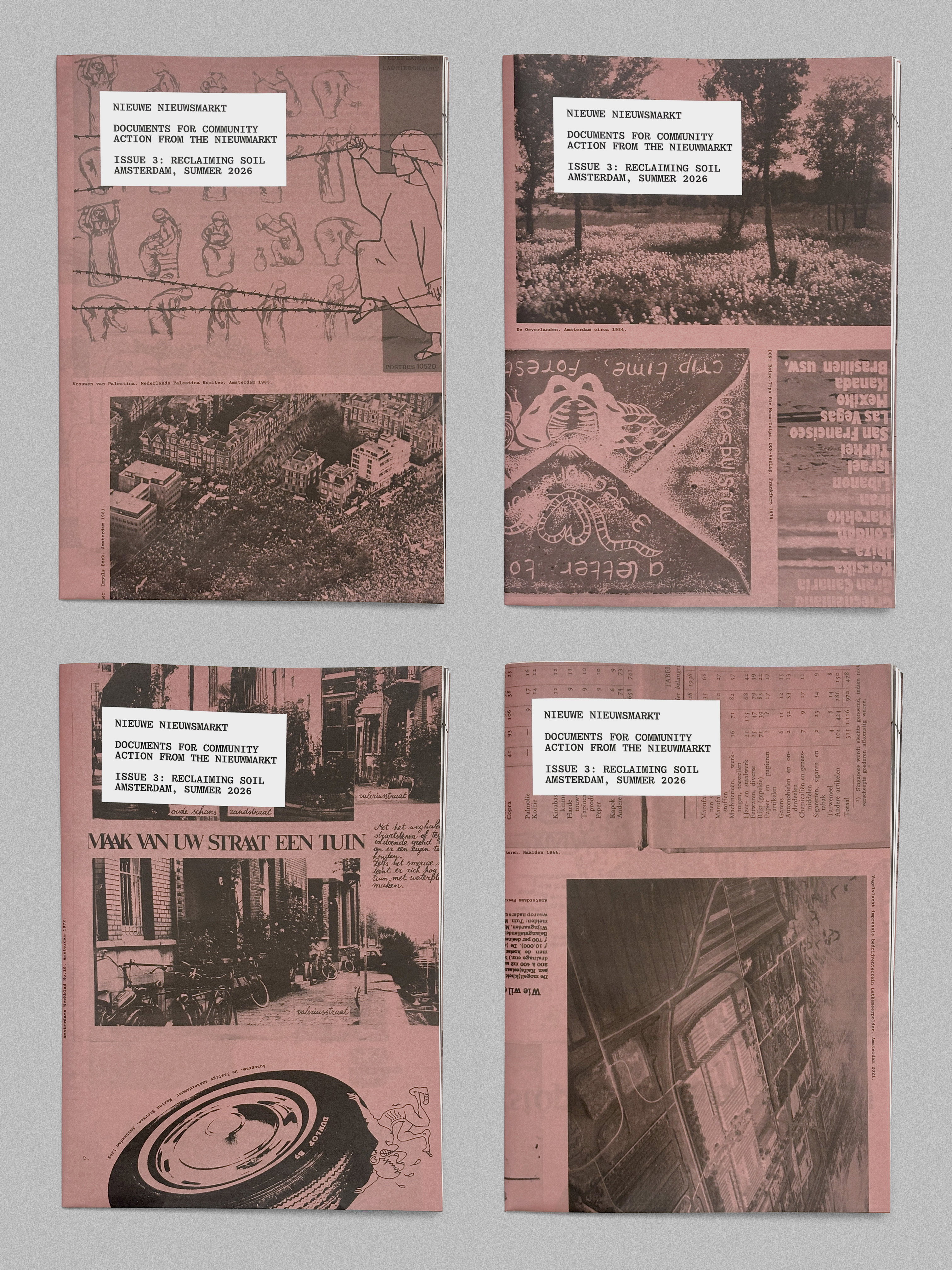
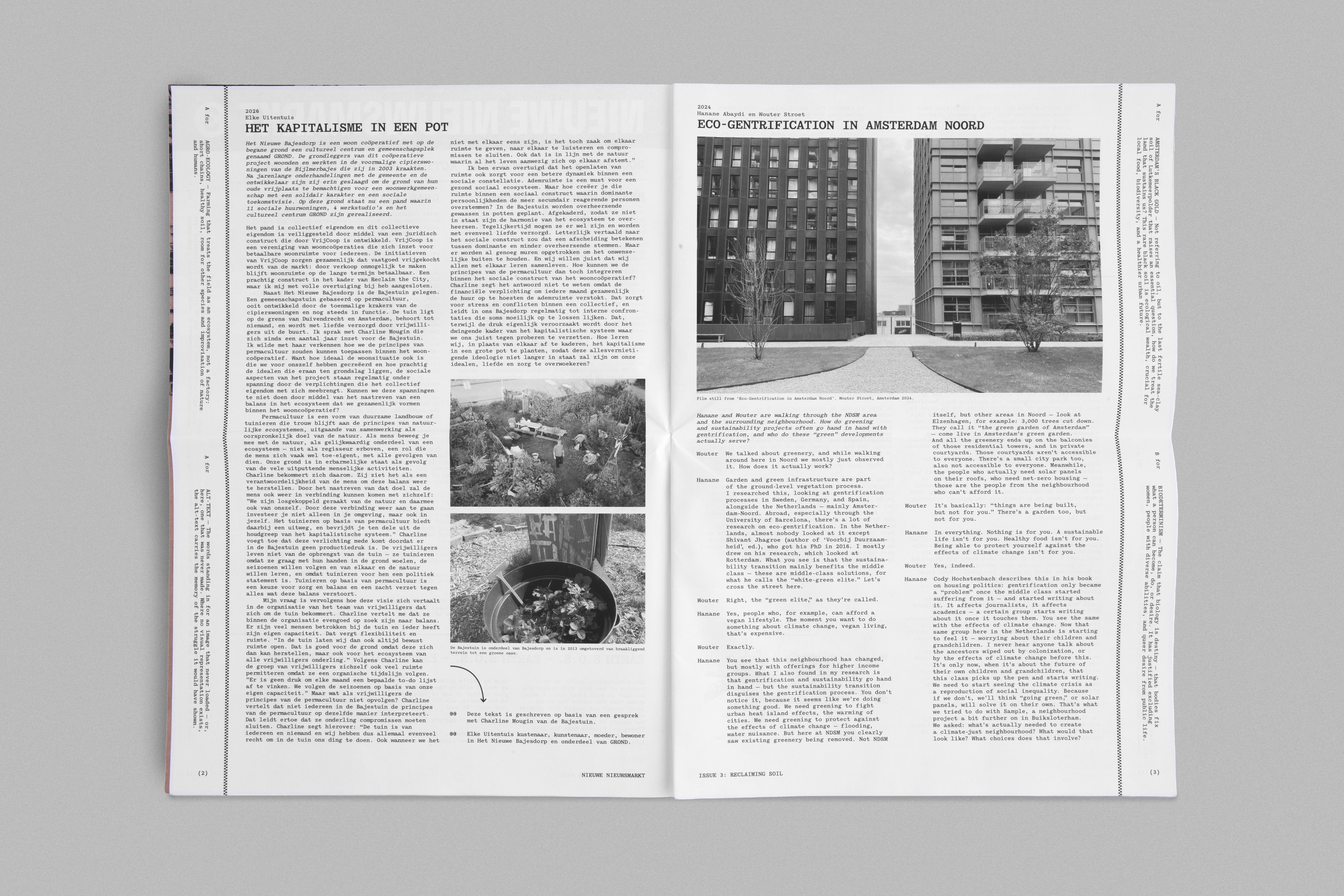
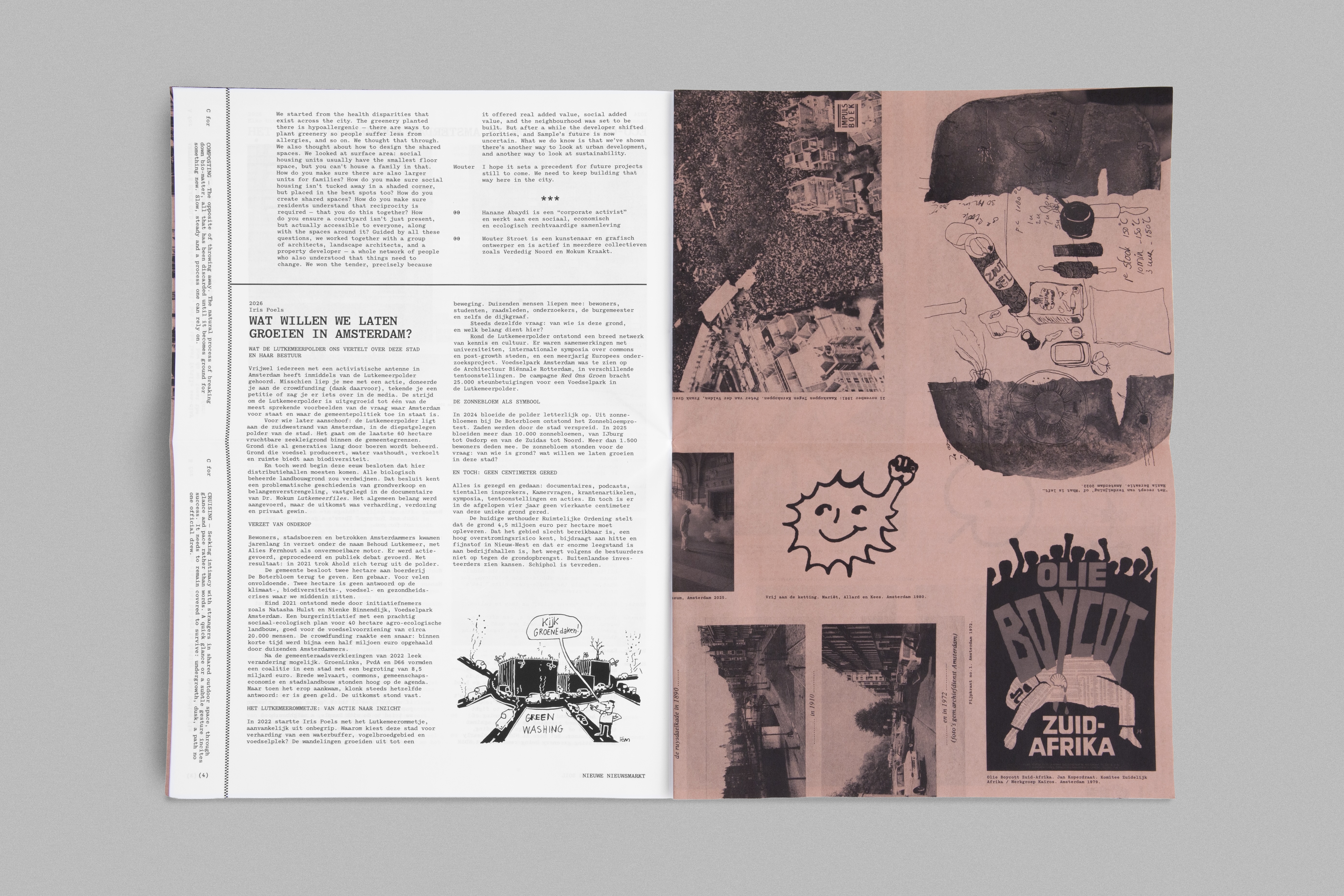
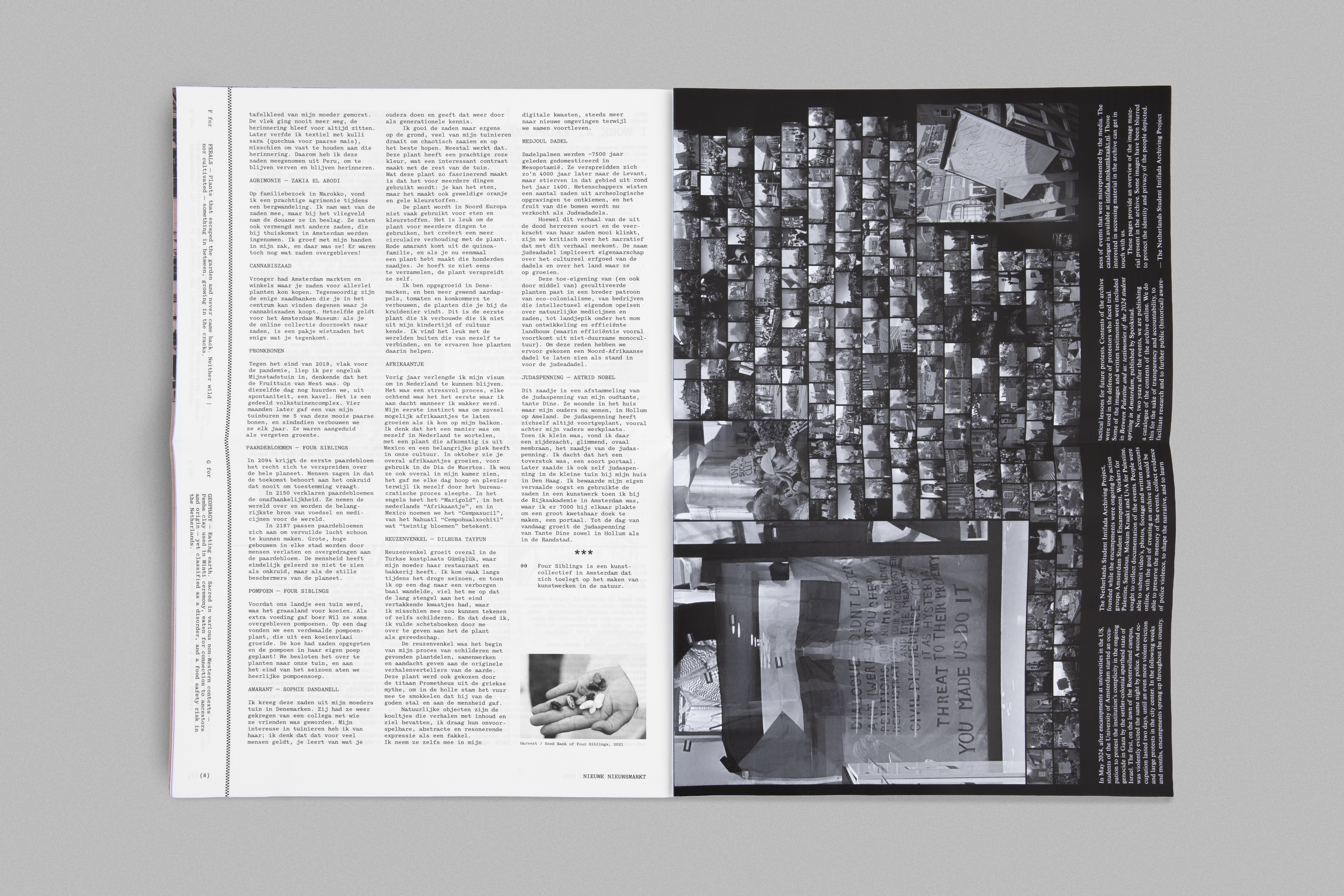
Nieuwe Nieuwsmarkt: Documents for Community Action
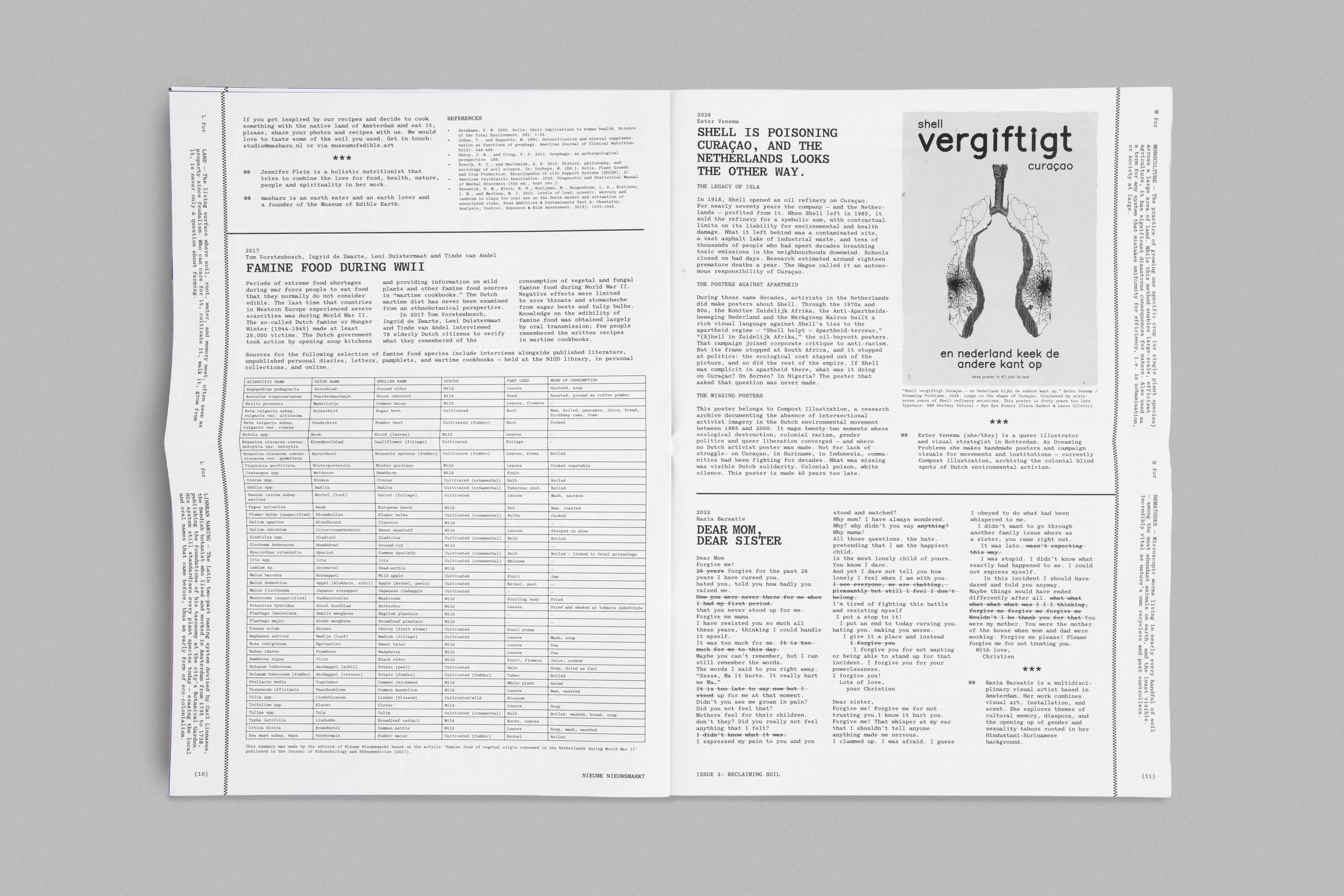
Issue 3: Reclaiming Soil
Who gets to cultivate, walk, grow, and live on the soil that Amsterdam occupies? Who gets pushed out, and what damage continues to be done to the ecosystems our city is built on? Soil holds the memory of what was here before the pavement, and the question of what is allowed to grow — and by whom. We exchange seeds, build cooperatives, turn concrete into gardens, eat earth, make love in nature, demand restitution for our colonised ancestors, and oppose today's wars that fuel neocolonial extractivism. We won't wait any longer for our politicians to take the protection of the environment seriously. It is time to act together!
With contributions by: Razia Barsatie, Milena Bonilla, Nino Cadeau & Lindsharry (Precious Liquid), Jules Davis-Dufayard & Tony Kritzer, Sasha Dupont, Famine Food in WW2 (Tom Vorstenbosch, Ingrid de Zwarte, Leni Duistermaat and Tinde van Andel), Four Siblings, masharu & Jennifer Plein (Museum of Edible Earth), Iris Poels (Voedselpark Amsterdam), Reclaim the Seeds, Barnaby Savage, Mark Schalken (Koeien Monument), Rens Spanjaard, Spookstad (Student Intifada), Wouter Stroet & Hanane Abaydi (Verdedig Noord), Mirelle van Tulder (Roots to Fruits), Elke Uitentuis (GROND) & Charline Mougin (Bajestuin), Ester Venema (Dreaming Problems), and Marieke Zwart.
Editors: Müge Yilmaz and WERKER Collective
Design: WERKER Collective (Marc Roig Blesa, Rogier Delfos and Vincent Becher)
28 pages, 42×29.7 cm, single color offset, with a poster by Spookstad. Languages: English, Dutch, Spanish.
Price: €7.00
Shipping: €5.90 Netherlands / €11.90 Worldwide
(1)
(2)
(3)
(4)
(5)
(6)
(7)
Nieuwe Nieuwsmarkt: Documents for Community Action
Issue 2: Body Politics, Spring 2025
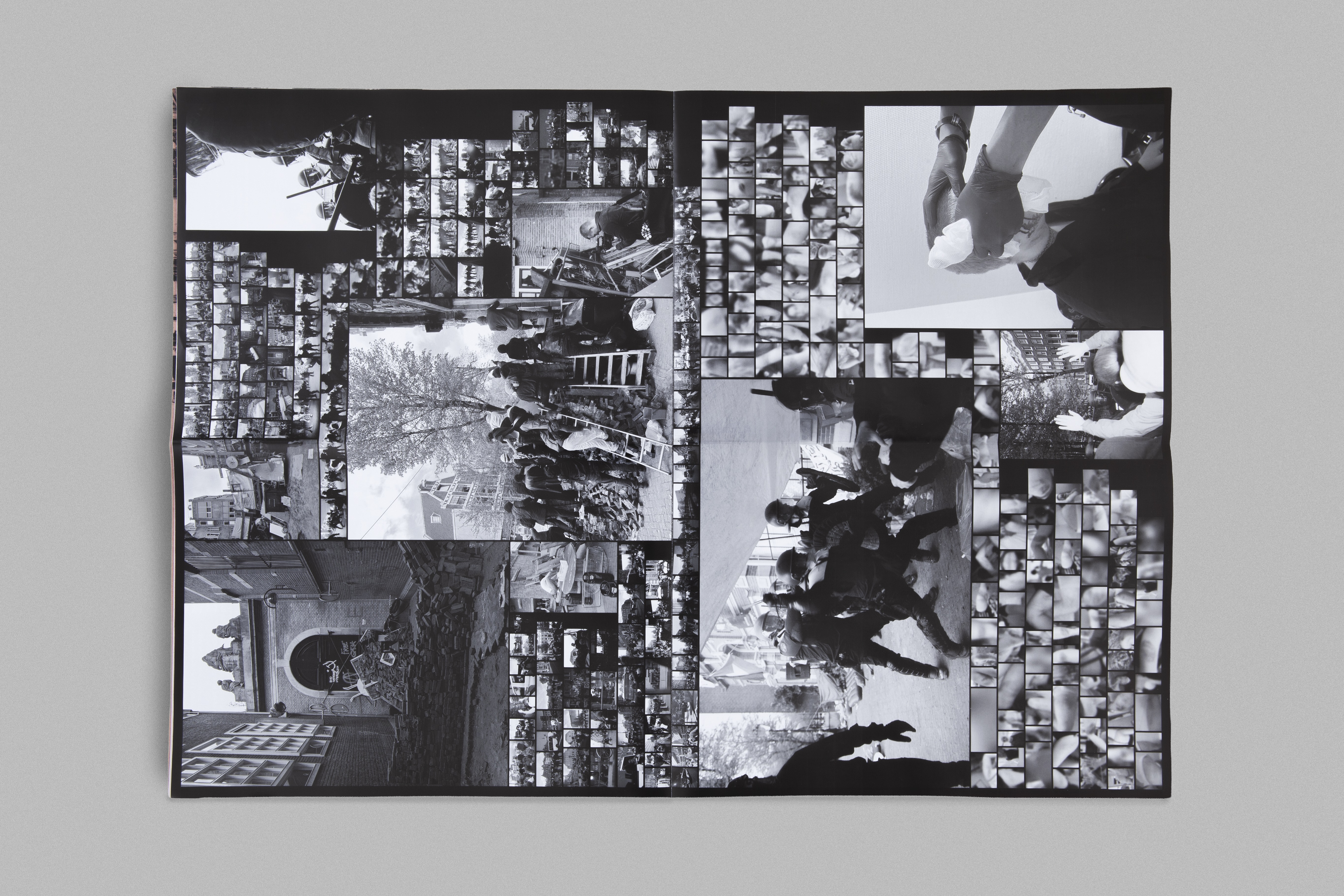
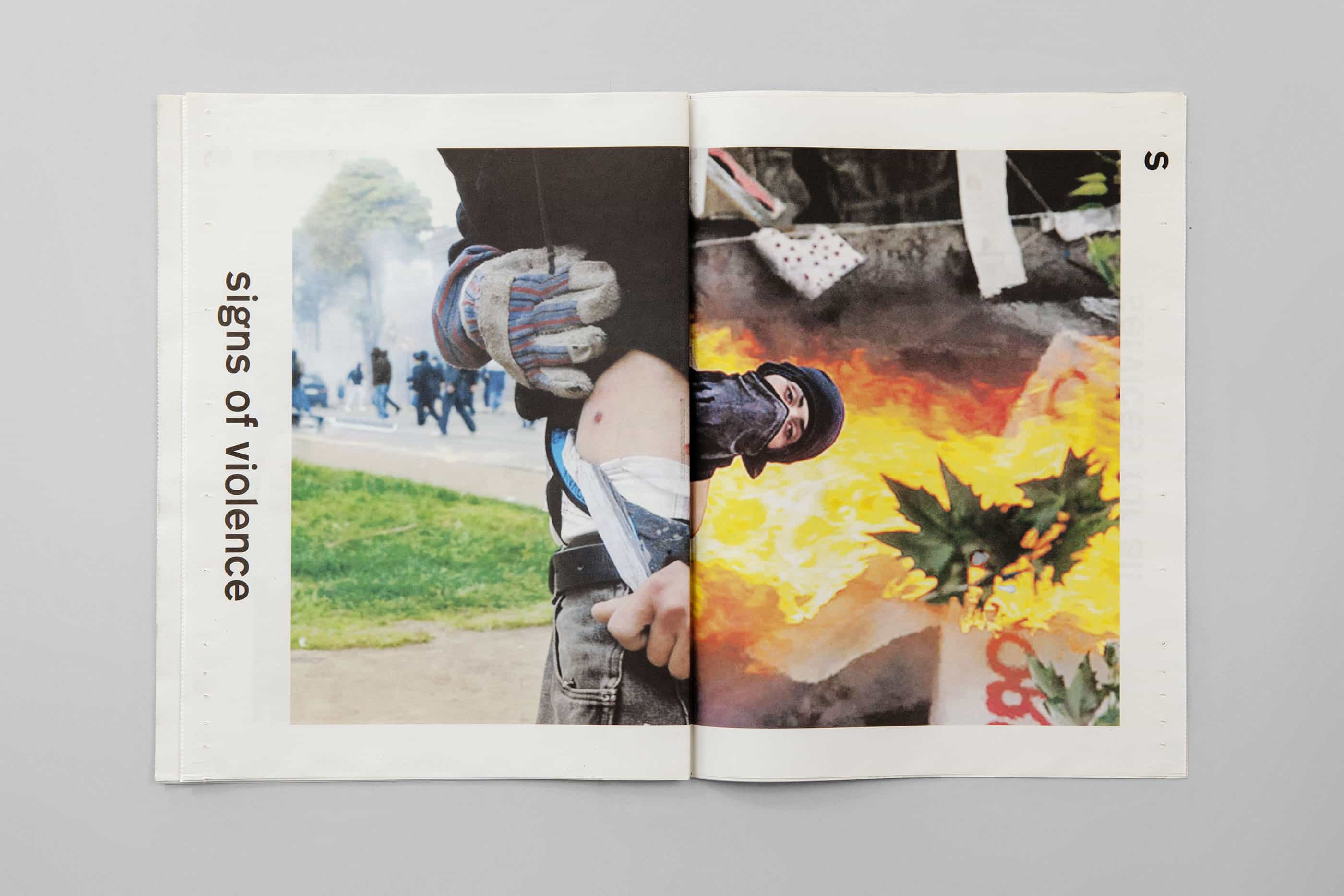
One-third of discrimination reports nationwide concern sexual orientation, with over 10% of LGBTQIA+ people facing physical or sexual violence — rising to 17% for transgender and 22% for intersex individuals. Meanwhile, the rights of protesters, migrants, and asylum seekers in the city are increasingly diminished. As discrimination rises, especially for those with intersecting marginalized identities, collective action is essential to resist systemic oppression and the violence threatening our lives.
Which bodies live, are represented, or accepted in our city? Who regulates them, and why do some have more rights than others? How do we reclaim our bodies and desires? Nieuwe Nieuwsmarkt 2: Body Politics explores how Amsterdammers have fought for justice and autonomy, in the past and the present, aiming to contribute to a body language for collective emancipation, making Amsterdam a welcoming and safe city for us all.
With contributions by: Jessica de Abreu, Radio AvA, Bar Bario, Francisco Camacho Herrera, Lisa Corcoran, Mijke van der Drift, Sierra Durgaram, Charles Goudsmit, The House of Hopelezz, Patricia Kaersenhout, Pennie Key, Pieter Koenders, Mokum Kraakt, Sandra Lange, YuJing Liu, Saman Mahdavi, Sands Murray-Wassink, Golrokh Nafasi, Nancy & Mercy, Tabea Nixdorff, Robel Sank, Fort van Sjakoo, Joy Mariama Smith, Taka Taka, Archival Textures, Ester Venema, John Wesly, Anisa Xhomaqi.
Editors: Joy Mariama Smith with Werker
Design: Werker with Vincent Becher.
An initiative by Werker Collective
24 pages, 42 ✕ 29.7 cm, single color offset, with a poster by Sands Murray-Wassink. Languages: English, Dutch, Chinese.
For more information, to purchase and/or subscribe to Nieuwe Nieuwsmarkt, visit nieuwenieuwsmarkt.online
Price: €7.00
Shipping: €5.90 Netherlands / €11.90 Worldwide
(1)
(2)
(3)
(4)
(5)
(6)
(7)
Nieuwe Nieuwsmarkt: Documents for Community Action
Issue 1: Housing Struggle, Spring 2024
Nieuwe Nieuwsmarkt is a biannual magazine for, about, and from the Nieuwmarkt neighbourhood. NNM is an initiative of Werker Collective and aims to address urgent matters affecting our lives in Amsterdam. By presenting stories, documents, and photos from both the past and the present, we create space for new collective actions. Nieuwe Nieuwsmarkt takes its name from Nieuwsmarkt, a bulletin issued between 1971 and 1972 by the Action Group Nieuwmarkt in protest against the municipality’s plans to demolish the Nieuwmarkt and Lastage neighbourhoods to build a highway and metro line. How did citizens of the past resist homelessness and speculation in Amsterdam? What resources does the new generation of Amsterdammers have? Nieuwe Nieuwsmarkt can be seen as a toolkit to thoroughly remodel the neoliberalism that has sold our city. Nieuwe Nieuwsmarkt is for all Amsterdammers who collectively want to create a more caring, diverse, fair, and sustainable city.
With contributions by: Adam Adriss, Aktiegroep Nieuwmarkt, Annegriet Wietsma, Amator Archives, Bijlmerkrakers, Boudewijn Ruckert, Bruno Ruggeri, D, Elke Uitentuis, Elsa Baslé, Experimental Jetset, Femke Dekker (Loma Doom), Fort van Sjakoo, Guilly Delano Koster, Hasan Halilov, Het Vrije Archief, Luna Hupperetz, Niet te Koop, Nur Horsanalı, Quirine Kennedy, Rob Stolk, Siri Tvorup, Spookstad, Teferi Mekonen, Villa Intifada, We Are Here, Wilfried Jansen Op Den Haar, Wouter Stroet.
Editors: Femke Dekker with Werker
Design: Hasan Halilov with Werker
An initiative by Werker Collective
24 pages, 42 ✕ 29.7 cm, single color offset, with a poster by Experimental Jetset. Languages: English, Dutch.
For more information, to purchase and/or subscribe to Nieuwe Nieuwsmarkt, visit nieuwenieuwsmarkt.online
Price: €7.00
Shipping: €5.90 Netherlands / €11.90 Worldwide
(1)
(2)
(3)
(4)
(5)
(6)
Werker 2 — A Gestural History of the Young Worker (2023)
Drawing inspiration from the Worker Photography Movement of the 1920s, which saw photographers collaborating with workers and trade unions to visualize societal and political conditions from a working-class perspective, Werker Collective reconsiders the relationship between labour and its photographic representation — in the past and in the present. Werker 2 — A Gestural History of the Young Worker takes as its starting point the representation of the working body in the former Soviet Union (USSR), where workers were depicted with strong, athletic bodies and resolute expressions on their faces. The publication combines imagery from Soviet magazines, propaganda, and archives, with documents from the Werker Archief in Amsterdam with which it aims to interrogate the normative visualization and glorification of the worker’s body and the associated oppression of non-normative bodies. The themes explored include gender, feminism, and queerness.
Presentations: Public Research Residency, Looiersgracht 60. Amsterdam, 2023.
Credits: Werker with Georgy Mamedov. Realised with the support of the Dutch Embassy in Russia, Jaap Hartenfonds and Mondriaan fonds.
Werker Materials 4 / 5 / 6 — A People’s Memory of a Working Class Neighbourhood
A collaborative photographic documentation activated by Werker Collective in Barcelona’s neighbourhoods of La Marina de Port i La Marina del Prat Vermell, emblematic for the city worker’s history. The project was initiated by Pla de Barris, a project of the municipality to revert the lack of investment in underprivileged areas of the city. The collection of 40 images that were created by the inhabitants themselves is presented with fragment of conversations that took place in the task of photographing.
Presentations: Werker Materials 4 / 5 / 6 — Memòria Popular d’un Barri Obrer, La Bàscula, Barcelona 2019. Werker Materials 4 / 5 / 6 — Memòria Popular d’un Barri Obrer, Sala Pepita Casanellas, Barcelona 2019. Setze Barris, Mil Ciutats, Edifici Borsí, Barcelona 2019.
Credits: editors (Werker), text & images (Werker Collective with Memorial Democràtic dels Treballadors de Seat, Casino Seat, Plataforma Reivindicativa de la Marea Pensionista de Catalunya, Companyia de Teatre Vulnus (El Graner), La Inefable (Teatre dels Sentits), La Marina Viva, Ateneu Popular de l’Engranatge, Asociació Guineocatalana Bisila, Arrels (Radio La Marina), She’s i La Marina és Rap (La Bàscula), Associació de Veïns de les Cases Barates i la Colònia Bausili, Treballadors de la Fàbrica Santiveri i del Forn d’Arnes), design (Werker), publisher (Werker), funding (Pla de Barris, Arxiu Fotogràfic de Barcelona, Barcelona City Hall)
Price: €12.00
Shipping: €5.90 Netherlands / €11.90 Worldwide
(1)
(2)
(3)
(4)
(5)
(6)
(7)
Werker 2 — A Spoken History of the Young Worker
This publication presents images and documents that have been compiled from secondhand bookstores, online booksellers, personal archives, and street markets over the last few years. How can documents, that originate from different geographies and historical contexts, be performed by its readers? Pre-organized collectives or any engaged visitors are invited to perform an Image Act using the microphones and scenography provided in the exhibition space. The performances can take any shape but only its sound is recorded. Transcending the borders of the institution into the local context, the recordings are broadcast in public space. A website will keep on expanding, revealing fragments of the recordings and the locations of broadcast.
Presentations: The Applicant, Embassy of the Netherlands. Berlin, Germany. Werker 2 — A Spoken History of the Young Worker, Manifesta 11 Parallel Events. Winterthur Fotomuseum, Switzerland. Imagineering — (Re)activating the Photographic, Krakow Photomonth. Poland.
For worldwide shipping, you can also refer to Antenne Books.
Sold out.
(1)
(2)
(3)
(4)
(5)
(6)
(7)
(8)
365 Days of Invisible Work
365 Days of Invisible Work contains 365 images collected and compiled by the Domestic Worker Photographer Network. Members of this open network took photographs of themselves and others as gardeners, dishwashers, domestic workers, mothers, interns, artists, and as migrant workers, generating a collective and political representation of domestic space. 365 Days of Invisible Work depicts a critical view of domestic work and work at home, as seen through the eyes of contemporary amateur photographers. 365 Days of Invisible Work was conceived as part of the Grand Domestic Revolution, a “living research” project by Casco, Utrecht, that ran from 2009/10–12.
Presentations: 365 Days of Invisible Work (with the Voice of Domestic Workers & the Jo Spence Memorial Archive) Tenderbooks. London, 2018. 365 Days of Invisible Work & Bilderkritik 12 — Corridor, Garage, Terrace & Balcony. Sint Lucas Academy of the Arts, Antwerp 2018. 365 Days of Invisible Work (with Taula en Defensa dels drets de les treballadores de la llar i les cures) MACBA, Barcelona 2017. 365 Days of Invisible Work. & Bilderkritik 11 — Street. Casco, Utrecht 2017.
Sold out.
(1)
(2)
(3)
(4)
(5)
(6)
Werker 6 — Cinema Diary
This publication presents images and work documents of Matthijs Diederiks (28, artist & filmmaker, Amsterdam). It is photographed and collected during his side job at Cinema Pathé Arena in Amsterdam from 2008 until 2010. Cinema Diary is the first issue of Werker 6, a collection of photo-diaries that reflect on the current working conditions of the youth through modes of self-representation and amateur photography.
Credits: Editors (Werker), Text (Cinema Pathé Arena), Images (Matthijs Diederiks), Design (Werker), Publisher (Werker), Funding (Amsterdam Fonds voor de Kunst).
Presentations: Werker 6 — Cinema Diary, San Serriffe. Amsterdam, The Netherlands. Our Work is Never Over, Matadero. PHotoEspaña. Madrid, Spain.
Price: €20.00
Shipping: €5.90 Netherlands / €11.90 Worldwide
(1)
(2)
(3)
(4)
(5)
(6)
(7)
Werker 7 — The Language of Revolution
This publication s meant to be read and discussed collectively. Display its pages on a wall at home, at school or on the floor of a public square… What is a revolutionary image? Which aesthetic elements are involved in the making of a revolution? Does revolution have a global language? What role does photography and the mass-media play in all this? This issue of Werker takes its title from The Language of Revolution — Tidings from the East, a 2011 lecture given by Ariella Azoulay, at the Museu d’Art Contemporani de Barcelona. Her analysis of Egypt’s revolution, through images from the internet, became the inspiration of this work. highly recommended!
Credits: Editors (Werker), Text (Ariella Azoulay), Images (Werker Archive), Design (Werker), Publisher (Werker), Funding (Espai Cultural Caja Madrid).
Presentations: New Grammars of The Body in Protest. Kunstraum. London, 2014. Werker 7 – The Language of Revolution. San Serriffe. Amsterdam, 2014. Werker 7 – The Language of Revolution. Composició de lloc III, Espai Cultural Caja Madrid. Barcelona, 2012.
For worldwide shipping, you can also refer to Spector Books ↗︎
Price: €20.00
Shipping: €5.90 Netherlands / €11.90 Worldwide
(1)
(2)
(3)
(4)
(5)
(6)
(7)
Werker Materials 1 / 2 / 3 — On Art Education
This publication presents a sequence of three documents on the subject of progressive art education. These documents were gathered in consideration of the recent austerity politics in the Netherlands that add hazard to public education. In 2014 the dutch government passed a bill that turned all previous student grants into loans. Graduates from higher education and University will now start their work life as debt citizens with an average due of between €21.000 and €25.000. The paradigm of education as a universal human right is thus further defied by this transformation. Werker Materials is a series of documents that consecutively build an alternative perspective to the current timeframe and its political issues. Werker Materials 1 / 2 / 3 is published on the occasion of To Be Continued: Een Geshiedenis van de Gerrit Rietveld Academie. Amsterdam 2016.
Credits: Editors (Werker), Text (J. Niegman, De 8 en Opbow, No 5, Amsterdam 1938), Images (Barbara Esser, Amsterdam 1965, Bart Molendijk, Amsterdam 1987), Design (Werker), Publisher (Gerrit Rietveld Academie)
Presentations: To Be Continued: Een Geshiedenis van de Gerrit Rietveld Academie. Jan van Adrichem, Amsterdam 2016.
Price: €12.00
Shipping: €5.90 Netherlands / €11.90 Worldwide
(1)
(2)
(3)
(4)
(5)
(6)
(7)
A Gestural History of the Young Worker, Print Punch (2023)
Accompanying the launch of Werker 2 — A Gestural History of the Young Worker (2023), co-published with Spector Books, 30 copies of the publication (numbered and stamped) are distributed together with an original artwork by Werker.
Print Punch (2023) is a series of double-sided screen prints conceived as a fundraiser to support the maintenance of the collective, its archive and its expanded community.
The series was created during Werker’s Public Research Residency: On Erasure and Invisible Labour at Looiersgracht 60 in Amsterdam in March 2023. It has been produced as an on-going research into alternative economic models to support collaborative art practices. The conversation surrounding this model is based on fair remuneration and redistribution of resources for artists, communities, collectors and galleries and takes in consideration the larger ecology in which collaborative art practices function in the art world.
Screen printed by Werker. White ink on Sirio Ultra Black 300 gr. Fedrigoni paper. The print and the frame are double sided, both sides can be displayed, standing or hanging.
Inspired by The Artist’s Reserved Rights Transfer and Sale Agreement created by Seth Sigelaub in 1971, the work comes with a digital certificate of authenticity on DAB (Digital Artwork on Blockchain) which ensures a fair redistribution of funds amongst all parties involved, in the present and in the future, in the production and maintenance of the artwork.
(1)
↑ Print Punch 1, Side A
(2)
↑ Print Punch 1, Side B
(3)
↑ Print Punch 2, Side A
(4)
↑ Print Punch 2, Side B
(5)
↑ Print Punch 3, Side A
(6)
↑ Print Punch 3, Side B
WERKER was founded in Amsterdam in 2009 by Marc Roig Blesa and Rogier Delfos, alumni of the Rijksakademie van Beeldende Kunsten (2020-22).
WERKER holds a lecturer position in Collaborative Practice at the Gerrit Rietveld Academie in Amsterdam (2013–present) and has been teaching at the Royal Institute of Art, Stockholm (2020–2021) and the Dutch Art Institute, Roaming Academy, Artez University of the Arts (2018–2019).
WERKER has imparted seminars and workshops at Koninklijke Academie van Beeldende Kunsten, Den Haag, The Netherlands. (2024); Central Saint-Martins, London, U.K. (2021) and Sandberg Institute, Amsterdam, The Netherlands. (2016) among others.
Solo Shows
2026(Upcoming) Yser / IJser Printing CO-OP. Kanal Centre Pompidou. Brussels, Belgium.
2025Becoming Uncommon Subjects. Radius CCA, Delft, The Netherlands.
2025A Moving History of the Young Worker. Paradys: Arcadia Triennial. Leeuwarden, The Netherlands.
2025After & Against Work. S.M.A.K. Gent, Belgium.
2024A Gestural History of the Young Worker, Print Punch. Ellen de Bruijne Projects. Amsterdam, The Netherlands.
2024Testing Patterns. Half-Rhyme. Plaatsmaken. Arnhem, The Netherlands.
2023A Gestural History of the Young Worker. Gropius Bau. Berlin, Germany.
2023A Gestural History of the Young Worker, Condition Report. Looiersgracht 60. Amsterdam, The Netherlands.
2022Amator Archives: On Strategies of Self-Determination. Manifesta 14. Prishtina, Kosovo.
2022Amator Archives: On Queer Reproduction. Rijksakademie Open Studios. Amsterdam, The Netherlands.
2021Textiles of Resistance: Growing, Weaving, Printing, Archiving. Sonsbeek20→24. Force Times Distance: On Labour and its Sonic Ecologies. Arnhem, The Netherlands.
2021Textiles of Resistance: Growing, Weaving, Printing Archiving. Rijksakadeime Open Studios. Amsterdam, The Netherlands.
2019Werker 2 — A Gestural History of the Young Worker. 5th Ural Industrial Biennial of Contemporary Art. Yekaterinburg, Russia.
2018Werker 10 — Escola de fotografia popular. Fundació Antoni Tàpies. Barcelona, Spain.
2018Queer2Peer Cine Club. CCA Ujazdowski Castle. Warsaw, Poland.
2018365 Days of Invisible Work. (With the Voice of Domestic Workers & the Jo Spence Memorial Archive) Tenderbooks. London, U.K.
2017Apprendre à ne pas travailler. Frac Sud. Marseille, France.
2016Werker 2—A Spoken History of the Young Worker. Manifesta 11. Fotomuseum Winterthur, Switzerland.
2015Werker 10—Escuela de fotografía popular. Centro De Arte 2 De Mayo. Móstoles, Spain.
2014Werker 10—Community Darkroom. The Showroom. London, U.K.
2013Werker Sweatshop. García Galería. Madrid, Spain.
2013Boy Politics. Gerrit Rietveld Academy. Amsterdam, The Netherlands.
2012Werker 7—The Language of Revolution. Espai Cultural Caja Madrid. Barcelona, Spain.
Group Shows
2026El Vértigo de las Imágenes. Fotonoviembre. TEA. Tenerife, Spain.
2025New New Babylon. Kunstmuseum, Den Haag, The Netherlands.
2025Universal Equity. Dutch Pavilion. Osaka World Expo. Nieuwe Instituut. Osaka, Japan.
2024Half Rhyme. Plaatsmaken, Arnhem. The Netherlands.
2023Beautiful Soup. Art Council Korea and Dutch Culture. De Appel, Amsterdam, The Netherlands.
2022The Love of Work, The Queer of Labour. Pratt Manhattan Gallery. New York, USA.
2022Rats! Rats! Rats! The Poetic Grammar of Hacking. Caixaforum. Barcelona, Spain.
2022Tomorrow is a Different Day. Collection 1980–Now. Stedelijk Museum. Amsterdam, The Netherlands.
2022The MAST Collection: A Visual Alphabet of Industry, Work and Technology. Fondazione Mast. Bologna, Italy.
2021MZHK-1980: Place on Earth. 6th Ural Industrial Biennial of Contemporary Art. Yeltsin Center Gallery. Yekaterinburg, Russia.
2020In the Presence of Absence: Proposals for the Museum Collection. Stedelijk Museum. Amsterdam, The Netherlands.
2019Der Amateur: Vom Bauhaus zu Instagram. Museum Für Kunst Und Gewerbe. Hamburg, Germany.
2019Setze Barris, Mil Ciutats. El Borsí. Barcelona, Spain.
2018A Short Century: MACBA Collection. Barcelona, Spain.
2018Fanfare Inc. Manifesta 12. Palermo, Italy.
20182 Unlimited. De Appel. Amsterdam, The Netherlands.
2018Fotografies com a Espai Públic. Sala Bòlit. Girona, Spain.
2017Fotografies com a Espai Públic. Arts Santa Mónica. Barcelona, Spain.
2017Wat nu, Koetsier…? Amsterdam, The Netherlands.
2017Signals from the Periphery. Tallinn Art Hall, Estonia.
2017Collectivism: Collectives and Their Quest for Value. Foam. Amsterdam, The Netherlands.
2017All Heal (Valerian). Rongwrong. Amsterdam, The Netherlands.
2016Imagineering — (Re)Activating The Photographic. Krakow Photomonth. Poland.
2016Comercio de Rescate. Galeria Servando. Havana, Cuba.
2016Visceral Blue. La Capella. Barcelona, Spain.
2015Motion, Labour, Machinery. Tent. Rotterdam, The Netherlands.
2015Industry, Society and Territory. Fondazione MAST. Bologna, Italy.
2015Centro de Investigación Técnicamente Imprevisible. Sala de Arte Joven. Madrid, Spain.
2015Sin Oficio, ni Beneficio. XII Havana Biennial. Cuba.
2015Beyond Evidence: An Incomplete Narratology of Photographic Truths. Format Festival. Derby, U.K.
2014Puisqu'on vous dit que c'est possible. Saline Royale. Arc-et-Senans, France.
2014On The Move. Stedelijk Museum. Amsterdam, The Netherlands.
2014Communal Knowledge. The Showroom. London, U.K.
2017Self is Plural / The Construction of an Alternate Ego. Gerrit Rietveld Academie. Amsterdam, The Netherlands.
2016Parallel Curriculum. Gerrit Rietveld Academie. Amsterdam, The Netherlands.
2016Manual to Leisure. Gerrit Rietveld Academie. Amsterdam, The Netherlands.
2016(Un)Common Views. Gerrit Rietveld Academie. Amsterdam, The Netherlands.
2014All You Can Read!. Gerrit Rietveld Academie. Amsterdam, The Netherlands.
2013Werker 9 — Radical Sports Centre. Gerrit Rietveld Academie. Amsterdam, The Netherlands.
Workshops
2026Werker 2 — A Moving History of the Young Worker, Cine Club. Ca' Buccari. Venice, Italy
2025Testing Patterns. Ass Book Fair, Brussels, Belgium.
2023Lazy Study Group Against Work. General Idea: Retrospective. Gropius Bau. Berlin, Germany.
2023Camera Austria International Field School. Forget Photography? The Library Project. Graz, Austria.
2022Amator Archives: On Queer Reproduction. The Shelf. Hannover, Germany.
2021Imaging the Sonic. Decolonial Futures Exchange Program. Sonsbeek 20/24, Sandberg Institute, Gerrit Rietveld Academie, Framer Framed, Amsterdam and Funda Community College, Soweto.
2021Textiles of Resistance: Growing, Weaving, Printing, Archiving. With Art Worker Rights, Queer Reproduction, We Sell Reality and Studio Bonbon. Rijksakademie Van Beeldende Kunsten & Sonsbeek 20/24, The Netherlands.
2018365 Days of Invisible Work. With Taula en Defensa dels Drets de les Treballadores de la Llar i les Cures. Macba, Barcelona.
2018Bilderkritik 11 — Street. Casco, Utrecht.
2018Werker 10 — Escola De Fotografia Popular. (Series Of 12 Workshops With Dar Chabab, Baixem Al Carrer, Susoespai & Table In Defence Of House, Care Workers & Cleaners). Fundació Antoni Tàpies. Barcelona, Spain.
2015Young Worker's Camera. Motion, Labour, Machinery. Tent. Rotterdam, The Netherlands.
2014Bilderkritik 6 – Bedroom. With Sindihogar / Sindillar, Can Felipa. Barcelona, Spain.
2014Escuela de Fotografía Popular. Centro de Arte Dos de Mayo. Móstoles, Spain.
2014Communal Knowledge. The Showroom. London, U.K.
2013Bilderkritik 3 — Laundry. Work Like This. Tate Modern, London, U.K.
2013Bilderkritik 2 — Doors & Windows. With Justice for Domestic Workers. The Showroom. London, U.K.
Events
2026Nieuwe Nieuwsmarkt 3: Reclaiming Soil. Buurtwerkplaats Noorderhof, Amsterdam, The Netherlands.
2025Nieuwe Nieuwsmarkt 2: Body Politics. Bar Bario. Amsterdam, The Netherlands.
2024Nieuwe Nieuwsmarkt 1: Housing Struggle. Book Launch and Live Radio with Ja Ja Ja Nee Nee Nee. San Serriffe. Amsterdam, The Netherlands.
2021CompArte. Caravana Zapatista. De Bouwput, Amsterdam.
2019Werker Materials 4/5/6 — Memòria Popular d'un Barri Obrer. Sala Pepita Casanellas, Barcelona.
2018Preliminary Studies Towards de Nieuwe Nieuwsmarkt. With Rietlanden Womens Office & Experimental Jetset. de Appel, Amsterdam, The Netherlands.
2018Queer2Peer Cine Club. CCA Ujazdowski Castle. Warsaw, Poland.
2017Salon Rebel Rebel: Fanzine, Art & Culture. Frac Sud. Marseille, France.
2016Retrouvailles. Fanfare. Amsterdam, The Netherlands.
2016The Applicant. Lisette Smits. Embassy of the Netherlands. Berlin, Germany.
2016Communal Knowledge at Work. The Showroom. London, U.K.
2014Bilderkritik 8 – Bathroom. Domestic Work is Work. Tensta Konsthall. Stockholm, Sweden.